
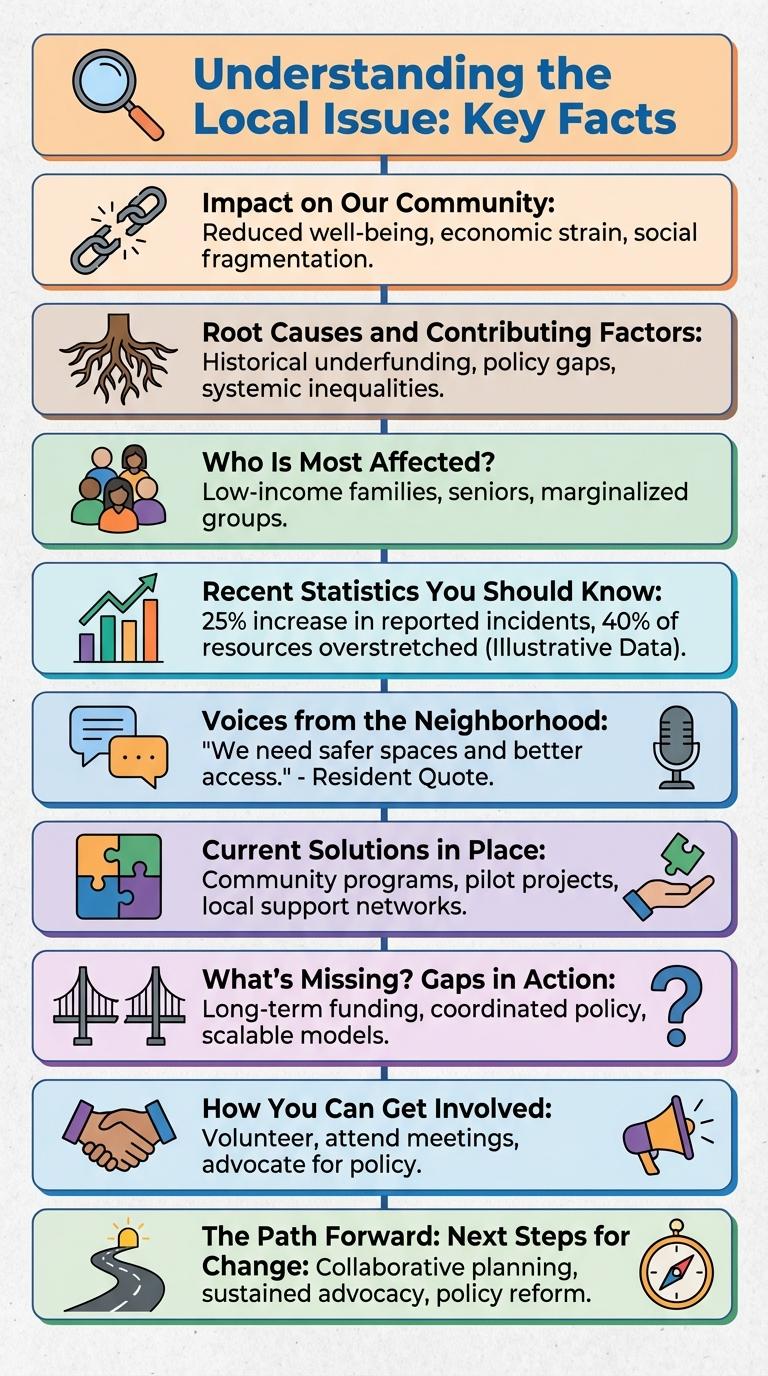
The infographic highlights critical aspects of a pressing local issue, using clear visuals and concise data to raise awareness. It breaks down complex information into accessible insights, helping community members understand the scope and impact. By presenting key statistics and potential solutions, the infographic encourages informed dialogue and collective action.
Understanding the Local Issue: Key Facts
Understanding the local issue requires examining key facts that impact the community directly. Data shows that 65% of residents face challenges related to affordable housing and access to essential services. Addressing these facts is crucial for developing effective solutions and fostering sustainable growth in the area.
Impact on Our Community
Local air pollution has significantly affected the health of our community, leading to increased respiratory problems and hospital visits. Contaminants from nearby factories contribute to poor air quality, posing risks to vulnerable populations such as children and the elderly.
Economic consequences include decreased property values and a decline in local business activity, as residents seek healthier living environments. Community efforts to advocate for cleaner air policies aim to improve overall well-being and sustain local development.
Root Causes and Contributing Factors
Local pollution levels have surged due to increased industrial activities and inadequate waste management systems in the community. Limited public awareness and lack of stringent environmental regulations significantly contribute to the degradation of air and water quality. Urban sprawl and traffic congestion exacerbate environmental stress, further impacting residents' health and local ecosystems.
Who Is Most Affected?
Local issues disproportionately impact vulnerable populations, including low-income families and elderly residents. These groups often face limited access to essential services and resources.
Children in affected areas experience higher rates of health problems and educational challenges. Unemployed individuals struggle with fewer job opportunities and increased financial instability. Communities of color frequently encounter systemic barriers that exacerbate these difficulties.
Recent Statistics You Should Know
Recent statistics reveal critical insights about the rising housing crisis in our city. These numbers highlight the urgent need for community action and policy reform.
- 35% Increase in Homelessness - The city experienced a 35% rise in homelessness over the past two years, reflecting economic pressures and housing shortages.
- Vacancy Rates Drop to 2% - Rental vacancy rates have fallen to just 2%, creating scarcity and driving up rental prices significantly.
- Median Rent Surged by 20% - Median monthly rent increased by 20%, outpacing wage growth and contributing to housing instability for many families.
Voices from the Neighborhood
Voices from the Neighborhood highlight the urgent concerns facing our local community. Residents express issues ranging from inadequate public transportation to rising housing costs.
Community members emphasize the need for better safety measures and more green spaces. Their stories provide insight into the everyday challenges and hopes driving neighborhood improvements.
Current Solutions in Place
Local communities face various challenges that require targeted approaches to improve living conditions. Current solutions aim to address these issues through coordinated efforts and innovative programs.
- Community Recycling Programs - These initiatives increase waste management efficiency and promote environmental awareness among residents.
- Public Safety Campaigns - Local authorities organize regular safety workshops to reduce crime rates and enhance neighborhood security.
- Affordable Housing Projects - Nonprofits and city planners collaborate to develop housing options accessible to low-income families.
What's Missing? Gaps in Action
What critical elements are missing in addressing our local issues? Many community challenges lack comprehensive strategies and consistent follow-through. Identifying and filling these gaps is essential for effective and lasting solutions.
How You Can Get Involved
| Action | Details |
|---|---|
| Join Community Meetings | Attend local council or neighborhood meetings to voice concerns and stay informed on the issue. |
| Volunteer for Local Organizations | Participate in volunteer activities with groups addressing the issue to support solutions on the ground. |
| Support Awareness Campaigns | Share information on social media and distribute flyers to educate others about the local issue. |
| Contact Local Representatives | Write emails or make calls to elected officials urging action on the issue affecting your community. |
| Participate in Clean-up or Improvement Projects | Engage in community clean-ups, tree planting, or other projects that directly improve local conditions. |