
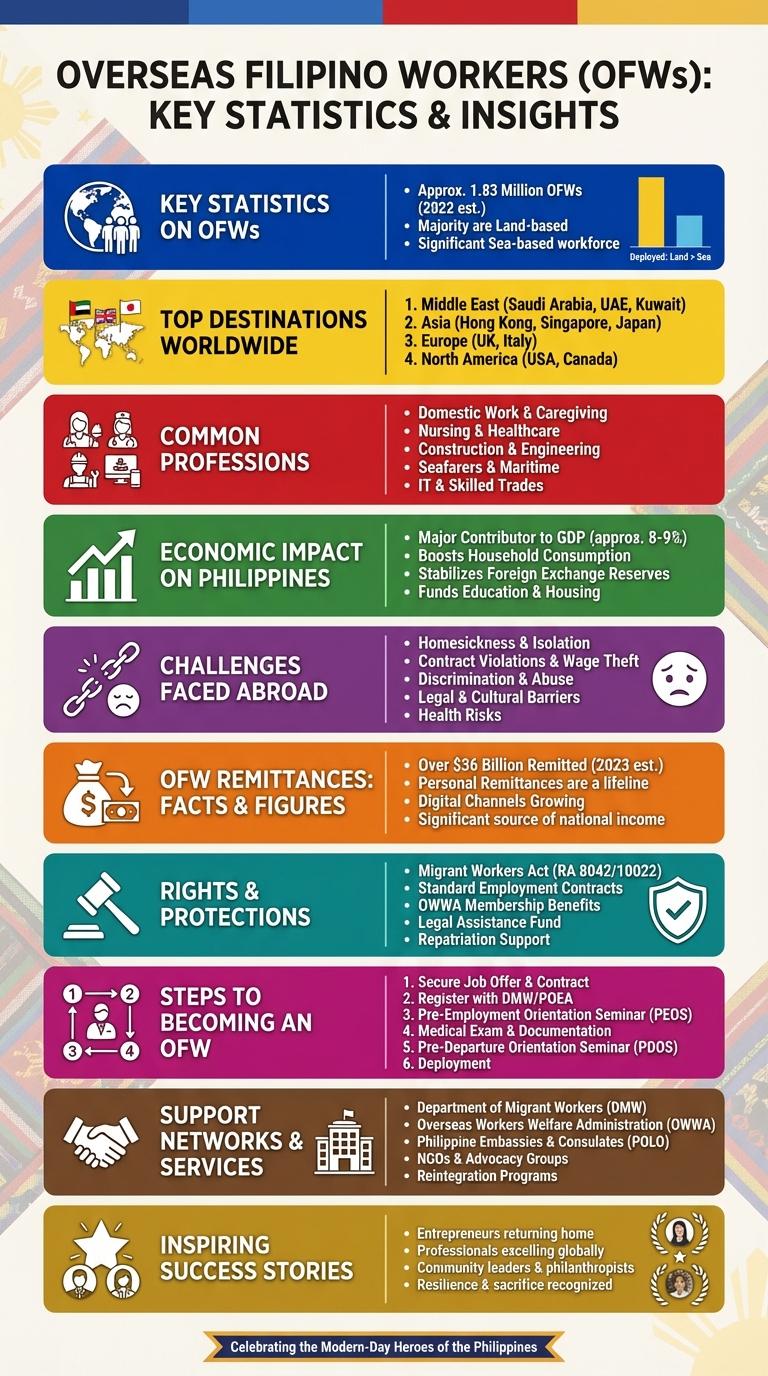
Overseas Filipino Workers (OFWs) play a vital role in boosting the Philippine economy through their remittances and global contributions. This infographic highlights key data on OFW demographics, employment sectors, and financial impact. Understanding these insights sheds light on the challenges and opportunities faced by Filipino workers abroad.
Key Statistics on Overseas Filipino Workers (OFWs)
Overseas Filipino Workers (OFWs) play a vital role in the Philippines' economy, with over 2.3 million Filipinos working abroad as of 2023. Remittances from OFWs reached approximately $36 billion, making up nearly 10% of the country's GDP.
The top destinations for OFWs include the United States, Saudi Arabia, and the United Arab Emirates. Approximately 55% of OFWs are women, and many are employed in healthcare, domestic work, and construction sectors.
Top Destinations for OFWs Worldwide
Overseas Filipino Workers (OFWs) predominantly seek employment in countries across the Middle East, Asia, and North America. The top destinations include Saudi Arabia, the United Arab Emirates, Hong Kong, Canada, and Singapore, known for their high demand for skilled and unskilled Filipino labor. These countries offer diverse job opportunities in sectors such as healthcare, domestic work, construction, and information technology.
Common Professions of OFWs
Overseas Filipino Workers (OFWs) contribute significantly to the global workforce, with many employed in key sectors worldwide. Common professions include healthcare, engineering, domestic work, information technology, and maritime services. These professions not only provide livelihood for millions but also support the Philippine economy through remittances.
Economic Impact of OFWs on the Philippines
Overseas Filipino Workers (OFWs) play a crucial role in bolstering the Philippine economy through substantial remittances. These financial inflows significantly support household incomes and national economic growth.
- Remittance Contribution - OFWs remit over $30 billion annually, making the Philippines one of the top remittance-receiving countries worldwide.
- GDP Impact - Remittances account for approximately 10% of the Philippines' Gross Domestic Product (GDP), highlighting their economic importance.
- Employment Generation - The income from OFWs supports millions of Filipino families, driving demand in local markets and sustaining employment.
The economic activities fueled by OFW remittances enhance the country's financial stability and development prospects.
Challenges Faced by OFWs Abroad
Overseas Filipino Workers (OFWs) encounter numerous challenges while working abroad. These difficulties impact their personal well-being and professional growth.
Language barriers often hinder effective communication in the workplace. Many OFWs face cultural differences that create adjustment challenges. Limited access to legal aid increases their vulnerability to exploitation and abuse.
OFW Remittances: Facts and Figures
| Key Fact | Data |
|---|---|
| Total Annual Remittances | USD 36 billion (2023) |
| Top Destinations of OFWs | Saudi Arabia, UAE, USA, Qatar, Singapore |
| Percentage of GDP | Approx. 9.3% |
| Number of Overseas Filipino Workers | Around 2.2 million |
| Primary Sectors of Employment | Healthcare, Construction, Domestic Work, IT Services |
Rights and Protections for OFWs
What rights and protections are guaranteed for Overseas Filipino Workers (OFWs)? OFWs have the right to fair wages, safe working conditions, and protection from exploitation. The Philippine government and international agencies work together to uphold these rights through various programs and legal frameworks.
How does the Philippine government ensure the welfare of OFWs? The Philippine Overseas Employment Administration (POEA) regulates recruitment agencies and enforces contracts to safeguard OFWs. The Overseas Workers Welfare Administration (OWWA) provides social services, legal assistance, and reintegration programs.
What legal protections exist for OFWs facing abuse or exploitation? Republic Act No. 10022 enhances the Migrant Workers and Overseas Filipinos Act, offering legal support and mechanisms for repatriation. Embassies also provide consular assistance to address cases of abuse or unfair labor practices.
Which international agreements benefit OFWs' rights? The Philippines is a signatory to the International Labour Organization (ILO) conventions that protect migrant workers' rights. Bilateral agreements with host countries establish minimum labor standards and dispute resolution processes.
How can OFWs access support during emergencies abroad? The Department of Foreign Affairs operates a 24/7 OFW Helpdesk for immediate assistance. Emergency repatriation programs and financial aid are available in cases of conflict, natural disasters, or job loss.
Steps to Becoming an OFW
Becoming an Overseas Filipino Worker (OFW) requires careful preparation and compliance with government protocols. Understanding the necessary steps helps ensure a smooth transition to working abroad.
The first step involves securing a valid job offer from a licensed foreign employer or agency. Next, aspiring OFWs must complete pre-employment requirements including medical examinations and attendance at a Pre-Departure Orientation Seminar (PDOS).
Support Networks and Services for OFWs
Overseas Filipino Workers (OFWs) face unique challenges while working abroad, making robust support networks essential. Various organizations and government services provide critical assistance to ensure their welfare and rights.
- Philippine Overseas Labor Offices (POLO) - These offices assist OFWs with legal concerns, documentation, and employment issues in host countries.
- Overseas Workers Welfare Administration (OWWA) - OWWA offers welfare programs, education, and livelihood services to OFWs and their families.
- Filipino Community Associations - These groups foster cultural connection and provide social support in foreign countries.