
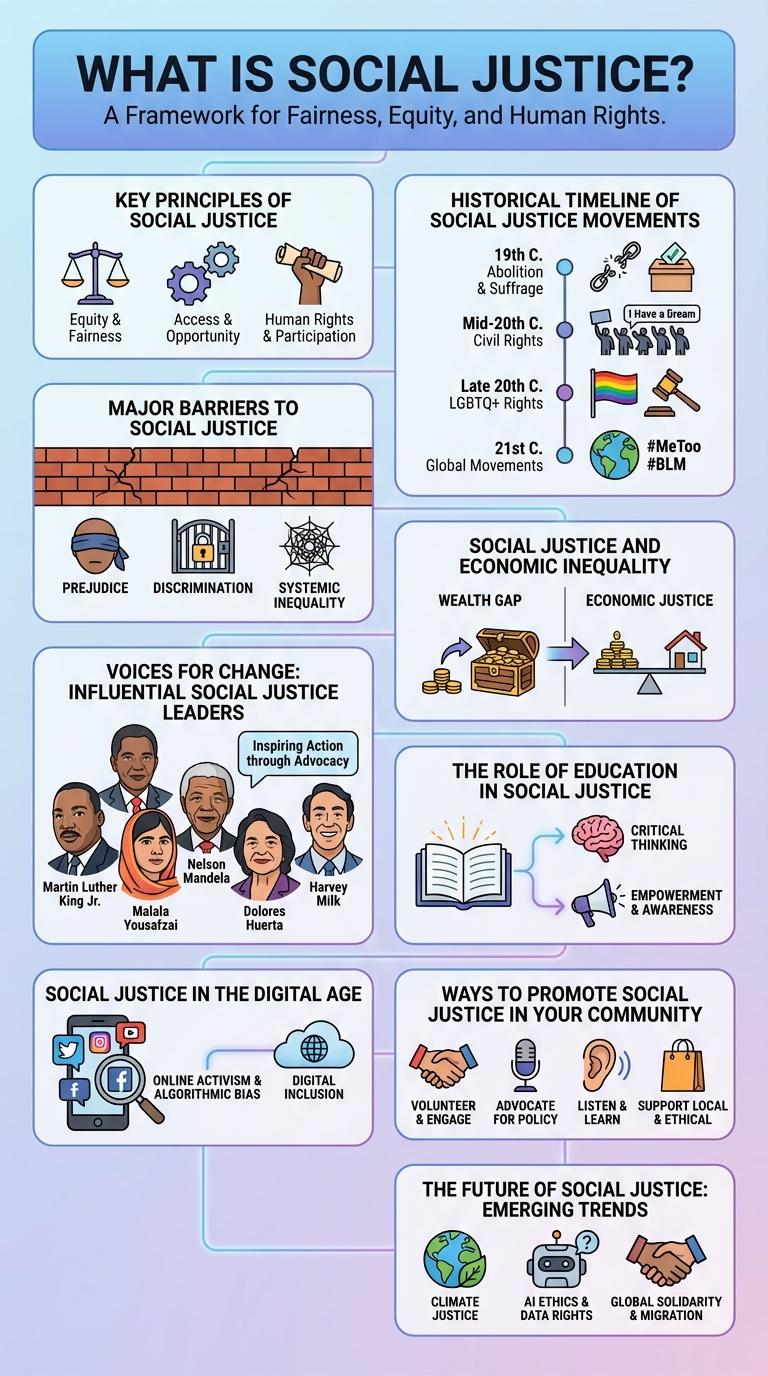
Social justice infographics visually simplify complex issues such as inequality, discrimination, and human rights. They use clear graphics and data to highlight disparities and promote awareness. These tools drive engagement and inspire action toward creating a more equitable society.
What Is Social Justice?
Social justice refers to the fair and equitable distribution of resources, opportunities, and privileges within a society. It emphasizes the protection of human rights and the elimination of inequalities based on race, gender, class, or other characteristics.
Social justice involves addressing systemic barriers that prevent marginalized groups from achieving equal status. It promotes policies and actions that support equal access to education, healthcare, and employment. The goal is to create an inclusive society where all individuals have the chance to thrive.
Key Principles of Social Justice
Social justice is a framework aimed at creating a fair and equitable society where all individuals have access to the same opportunities and rights. It addresses issues like inequality, discrimination, and systemic barriers in various social structures.
- Equity - Ensures fair treatment, access, and opportunity for all people, recognizing different needs and circumstances.
- Access - Guarantees that resources and services are available for everyone without discrimination or exclusion.
- Participation - Promotes the inclusion of all individuals in decision-making processes affecting their lives and communities.
Implementing social justice principles fosters a more inclusive and balanced society where human dignity is respected.
Historical Timeline of Social Justice Movements
Social justice movements have shaped societies by advocating for equality and human rights across history. Key milestones include the abolition of slavery, women's suffrage, civil rights, LGBTQ+ rights, and environmental justice. This infographic presents a concise historical timeline highlighting these pivotal social justice movements.
| Year | Movement |
|---|---|
| 1833 | Abolition of Slavery (UK) |
| 1920 | Women's Suffrage (US) |
| 1964 | Civil Rights Act (US) |
| 1969 | Stonewall Riots (LGBTQ+ Rights) |
| 2015 | Paris Agreement (Environmental Justice) |
Major Barriers to Social Justice
Social justice aims for equal rights and opportunities for all individuals, but numerous barriers impede progress. Understanding these obstacles is crucial for fostering a fair and inclusive society.
- Systemic Inequality - Institutional policies and practices create unequal access to resources across different social groups.
- Discrimination - Prejudice based on race, gender, or other identities limits individual freedoms and opportunities.
- Economic Disparities - Wealth gaps lead to unequal education, healthcare, and employment prospects among communities.
Social Justice and Economic Inequality
Social justice addresses the fair distribution of wealth, opportunities, and privileges within a society. Economic inequality remains a critical barrier to achieving social justice worldwide.
- Income Disparity - The top 10% earners globally hold over 50% of total wealth, highlighting vast income gaps.
- Access to Education - Economic inequality limits access to quality education for lower-income communities, perpetuating poverty cycles.
- Wealth Redistribution Policies - Progressive taxation and social programs aim to reduce economic disparities and promote social equity.
Voices for Change: Influential Social Justice Leaders
Social justice advocates strive to promote equality, human rights, and fair treatment across diverse communities. Influential leaders have shaped movements that address systemic racism, gender inequality, and economic disparity.
Voices for Change highlight pioneers like Martin Luther King Jr., Malala Yousafzai, and Angela Davis, who inspire generations worldwide. Their dedication advances social reforms, empowering marginalized groups and fostering inclusion.
The Role of Education in Social Justice
Education serves as a fundamental pillar in advancing social justice by promoting equality, equity, and inclusion across diverse communities. It empowers individuals with the knowledge and critical thinking skills needed to challenge systemic discrimination and advocate for their rights.
Access to quality education reduces social disparities and creates opportunities for marginalized groups to improve their socio-economic status. Educational institutions foster awareness of social issues, encouraging active citizenship and participation in creating a just society.
Social Justice in the Digital Age
Social justice in the digital age emphasizes equal access to technology, data privacy, and digital literacy for all individuals. The digital divide disproportionately affects marginalized communities, limiting their opportunities for education, employment, and civic participation. Promoting inclusive policies and ethical technology development ensures fairness and empowers underrepresented groups in a connected world.
Ways to Promote Social Justice in Your Community
How can individuals actively promote social justice in their communities? Supporting local advocacy groups raises awareness and amplifies marginalized voices. Volunteering at community centers builds solidarity and fosters equitable resource distribution.
What role does education play in advancing social justice? Educating yourself and others about systemic inequalities encourages empathy and informed action. Hosting workshops or discussion groups helps dismantle prejudices and promotes inclusivity.
How can economic participation contribute to social justice? Patronizing minority-owned businesses helps reduce economic disparities and empowers underrepresented entrepreneurs. Advocating for fair wages and equitable employment practices supports financial justice for all community members.
Why is political engagement important for social justice? Voting for candidates who prioritize equity influences policy changes that address social inequalities. Participating in peaceful protests or petitions can pressure leaders to enact reforms benefiting marginalized populations.
How do community partnerships aid social justice efforts? Collaborating with diverse organizations pools resources and expertise to tackle complex issues effectively. Building networks encourages mutual support and creates sustainable change within the community.