
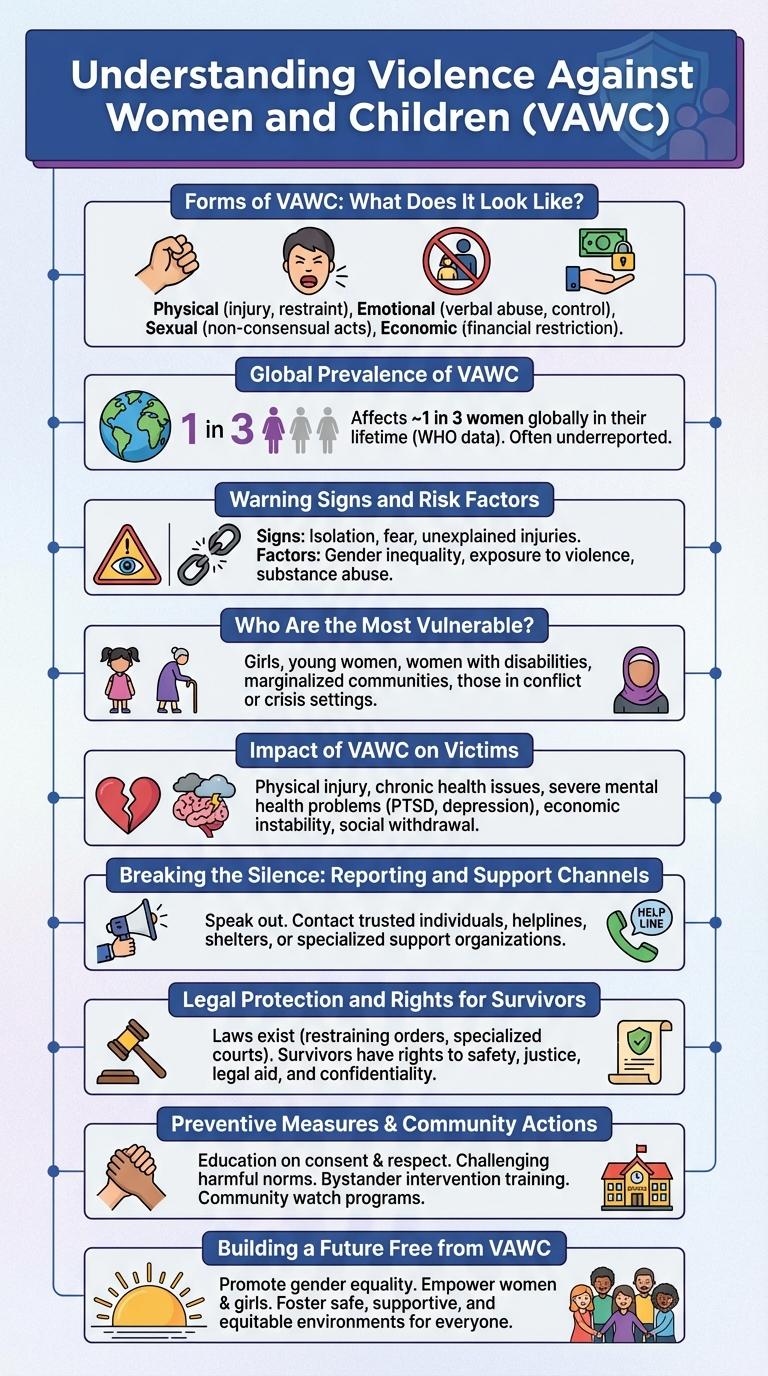
Understanding Violence Against Women and Children (VAWC) is crucial for creating safe communities. This infographic highlights key statistics, risk factors, and support resources related to VAWC. Empowering individuals with knowledge helps in preventing abuse and promoting healing for survivors.
Understanding Violence Against Women and Children (VAWC)
Violence Against Women and Children (VAWC) encompasses physical, emotional, and psychological abuse targeted at women and children. It affects millions globally, cutting across age, race, and socioeconomic status.
Understanding VAWC is crucial for prevention and support services. Awareness empowers communities to recognize signs and take action against abuse.
Forms of VAWC: What Does It Look Like?
Violence Against Women and Children (VAWC) encompasses various forms of abuse, each displaying distinct characteristics. Physical abuse involves acts causing bodily harm, such as hitting or restraining. Emotional abuse manifests as verbal insults, intimidation, or constant criticism, while sexual abuse includes any non-consensual sexual acts or exploitation.
Global Prevalence of VAWC
Violence Against Women and Children (VAWC) remains a critical global issue affecting millions across diverse regions. Understanding the prevalence aids in shaping effective interventions for protection and prevention.
VAWC impacts all ages and socio-economic groups, with data revealing alarming statistics worldwide.
- 1 in 3 women - Globally experience physical or sexual violence by an intimate partner at some point in their lives.
- 1 in 4 children - Endure physical abuse or neglect annually, with many cases unreported due to stigma.
- Higher prevalence in low-income countries - Regions with limited resources report significantly increased rates of domestic violence and child abuse.
Warning Signs and Risk Factors
What are the warning signs of Violence Against Women and Children (VAWC)? Warning signs include sudden changes in behavior, unexplained injuries, and withdrawal from social activities. Recognizing these indicators early can help provide timely support and intervention.
Which risk factors increase the likelihood of VAWC? Risk factors involve low socioeconomic status, history of family violence, substance abuse, and lack of social support. Understanding these factors aids in identifying vulnerable individuals and preventing abuse.
Who Are the Most Vulnerable?
Violence Against Women and Children (VAWC) affects diverse groups, but certain populations face higher risks due to vulnerabilities. Identifying these groups helps target prevention and support efforts effectively.
- Women aged 15-49 - This age group experiences the highest rates of intimate partner violence worldwide.
- Children under 18 - Young individuals are at significant risk of physical, emotional, and sexual abuse.
- Individuals in low-income communities - Economic hardship increases exposure to domestic violence and reduces access to support services.
Targeted interventions for these vulnerable groups are essential to reduce the prevalence and impact of VAWC.
Impact of VAWC on Victims
Violence Against Women and Children (VAWC) causes severe physical injuries and long-term psychological trauma for victims. It disrupts victims' social relationships and often leads to isolation and decreased self-esteem. Economic consequences include loss of productivity and increased healthcare costs, compounding the overall impact on victims' well-being.
Breaking the Silence: Reporting and Support Channels
Violence Against Women and Children (VAWC) remains a critical issue worldwide. Breaking the silence is essential to ensure victims receive the help they need.
Multiple reporting and support channels are available to assist survivors of VAWC. Hotlines, shelters, and counseling centers provide immediate and ongoing support. Awareness of these resources empowers victims to seek help safely and confidentially.
Legal Protection and Rights for Survivors
Legal protection for survivors of violence against women and children (VAWC) is essential in ensuring safety, justice, and rehabilitation. Laws and policies are designed to uphold the rights of survivors and provide mechanisms for legal recourse.
- Right to Protection - Survivors have the legal right to protection orders that prevent abusers from contacting or approaching them.
- Access to Justice - Survivors can file complaints and pursue criminal charges with the support of government agencies and legal aid services.
- Confidentiality Rights - Legal frameworks guarantee confidentiality to protect survivors' identities during investigations and court proceedings.
- Victim Support Services - Laws mandate the provision of counseling, medical care, and shelter to assist survivors in their recovery.
- Non-Discrimination Clause - Survivors are entitled to equal treatment under the law without bias based on gender, age, or socioeconomic status.
Preventive Measures & Community Actions
Violence Against Women and Children (VAWC) remains a critical issue that requires proactive preventive measures. Education and awareness programs empower communities to recognize and combat abuse effectively.
Community actions such as support groups and local partnerships provide essential resources and safe spaces for survivors. Collaborative efforts strengthen social networks, promoting a culture of respect and protection.