
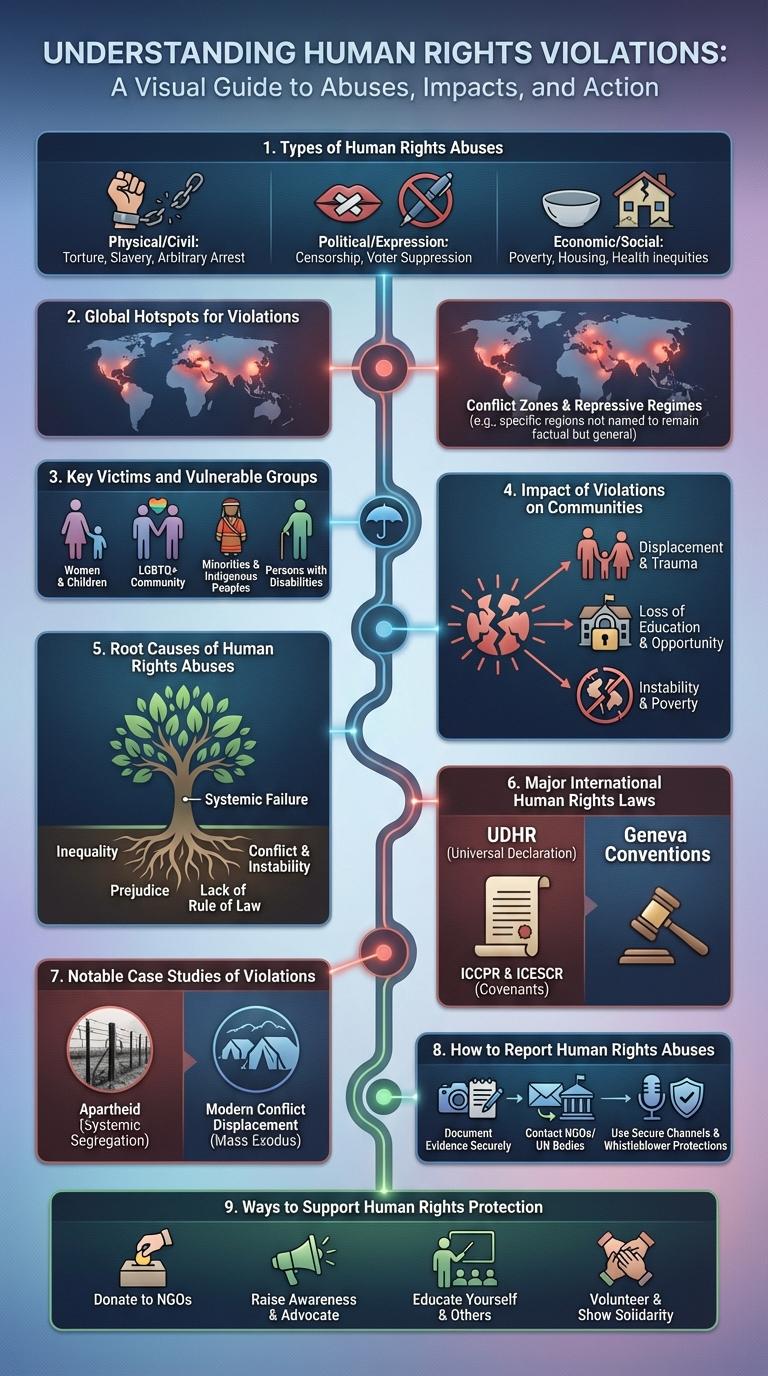
Human rights violations undermine fundamental freedoms and dignity worldwide, affecting millions across diverse communities. Visualizing these abuses through an infographic highlights patterns, regions most affected, and the types of violations occurring. This approach fosters awareness and encourages collective action to promote justice and equality.
Understanding Human Rights Violations
| Aspect | Description |
|---|---|
| Definition | Human rights violations refer to actions that violate the fundamental rights and freedoms entitled to every individual by international law. |
| Common Types | Torture, arbitrary detention, discrimination, suppression of freedom of speech, and denial of education. |
| Causes | Authoritarian governance, social inequality, armed conflicts, and systemic discrimination contribute to violations. |
| Impact | Loss of life, psychological trauma, social unrest, and erosion of justice and democracy. |
| Protection Mechanisms | International treaties like the Universal Declaration of Human Rights, human rights organizations, and legal frameworks at national and international levels. |
Types of Human Rights Abuses
Human rights violations encompass various forms of abuse that undermine the dignity and freedoms of individuals worldwide. Recognizing the types of human rights abuses is essential for protection and advocacy efforts.
- Torture and Inhumane Treatment - Physical or psychological harm inflicted to punish, intimidate, or extract information.
- Discrimination - Unequal treatment based on race, gender, ethnicity, religion, or other status.
- Arbitrary Arrest and Detention - Detaining individuals without due process or legal justification.
Global Hotspots for Violations
Human rights violations persist globally, with certain regions facing more severe and widespread abuses. These hotspots reveal critical challenges in protecting basic freedoms and ensuring justice.
Countries in conflict zones and authoritarian regimes report the highest incidents of violations such as torture, political repression, and freedom of speech suppression. Understanding these areas helps target international efforts for human rights protection.
Key Victims and Vulnerable Groups
Human rights violations disproportionately affect certain key victims and vulnerable groups worldwide. These populations often face systemic discrimination, exploitation, and denial of fundamental freedoms.
Women, children, ethnic minorities, refugees, and persons with disabilities are among the most at risk. Understanding these groups helps in developing targeted protections and advocacy strategies.
Impact of Violations on Communities
Human rights violations profoundly affect the social and economic fabric of communities. The repercussions extend beyond individuals, disrupting collective well-being and development.
- Social Fragmentation - Violations foster mistrust and division, weakening community cohesion and solidarity.
- Economic Decline - Restricted access to resources and opportunities undermines local economies and increases poverty.
- Psychological Trauma - Exposure to abuse and injustice causes widespread mental health issues within affected populations.
Root Causes of Human Rights Abuses
Human rights violations stem from a variety of deeply rooted causes that impact societies globally. Understanding these origins is essential for effective prevention and protection strategies.
- Political Oppression - Authoritarian regimes often suppress dissent, leading to systemic abuses against individuals and groups.
- Economic Inequality - Disparities in wealth create conditions where marginalized populations are more vulnerable to exploitation and rights violations.
- Social Discrimination - Prejudices based on race, gender, religion, or ethnicity fuel discriminatory practices and violence.
Addressing these root causes is crucial for the advancement of universal human rights and justice.
Major International Human Rights Laws
What are the major international human rights laws protecting individuals worldwide?
International human rights laws establish standards to safeguard fundamental freedoms and dignity. These laws guide governments in promoting equality, justice, and protection against abuses.
| Law / Treaty | Description |
|---|---|
| Universal Declaration of Human Rights (UDHR) | Adopted in 1948, it outlines fundamental human rights applicable to all people globally. |
| International Covenant on Civil and Political Rights (ICCPR) | Focuses on protecting civil and political freedoms such as freedom of speech and fair trial rights. |
| International Covenant on Economic, Social and Cultural Rights (ICESCR) | Guarantees rights related to work, education, health, and an adequate standard of living. |
| Convention Against Torture (CAT) | Prohibits torture and cruel, inhuman or degrading treatment or punishment worldwide. |
| Convention on the Elimination of All Forms of Discrimination Against Women (CEDAW) | Seeks to end discrimination against women in all spheres of life. |
Notable Case Studies of Violations
Human rights violations continue to impact millions globally, with notable case studies highlighting the severity and diversity of abuses. Cases such as the Rohingya crisis in Myanmar, apartheid-era South Africa, and the Tiananmen Square massacre in China illustrate systemic violations including ethnic cleansing, racial segregation, and suppression of peaceful protests. These examples emphasize the urgent need for international attention and accountability mechanisms to protect fundamental freedoms.
How to Report Human Rights Abuses
Human rights violations undermine fundamental freedoms and dignity worldwide. Reporting these abuses is essential to promote justice and protect victims.
To report human rights abuses, contact local human rights organizations or governmental bodies dedicated to human rights protection. Document all evidence, including photos, videos, and witness testimonies, to strengthen your report. Confidentiality and safety precautions are crucial when submitting information to avoid retaliation.