
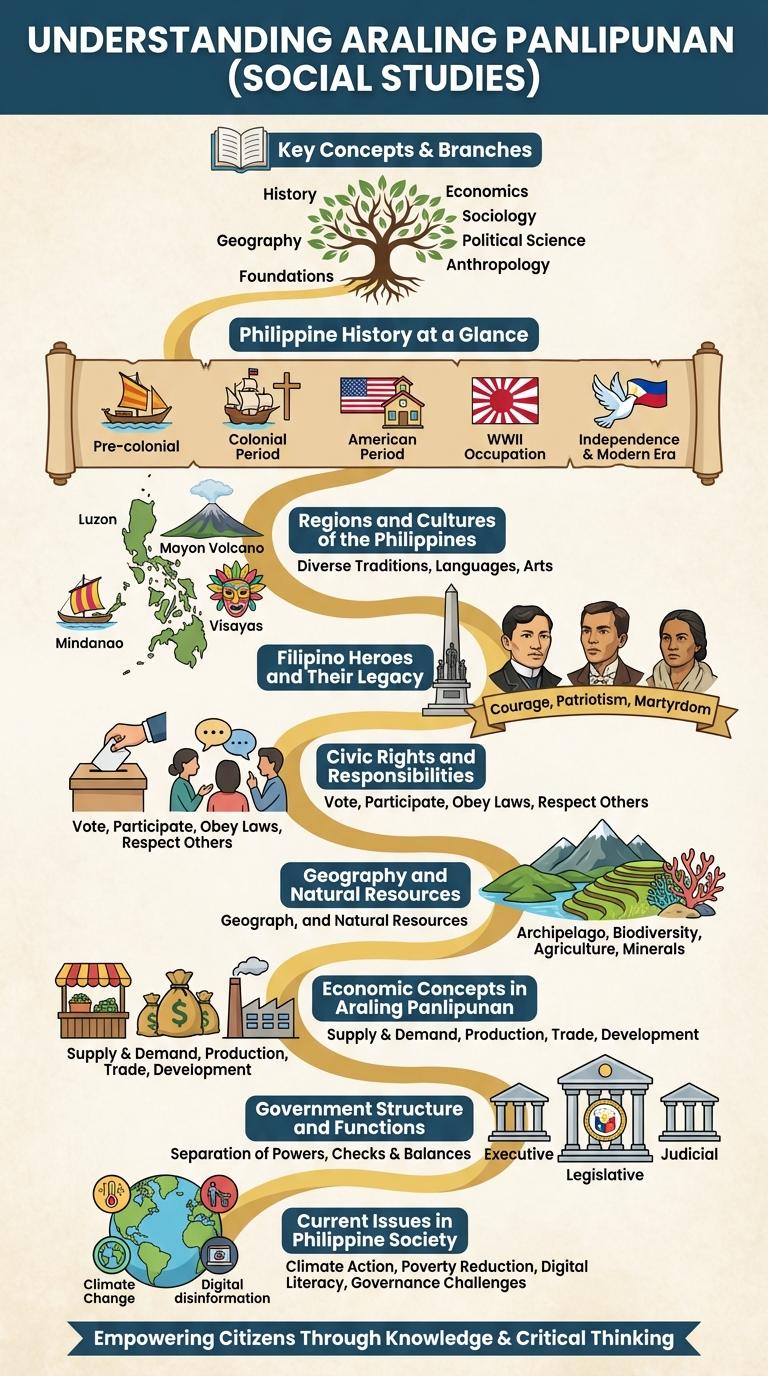
Araling Panlipunan explores history, geography, culture, and society, offering valuable insights into the Philippines and the world. Visual infographics simplify complex topics, enhancing comprehension and retention of key concepts. Interactive elements engage learners, making education more dynamic and accessible.
Understanding Araling Panlipunan
Araling Panlipunan is a core subject in the Philippine educational curriculum focused on social studies. It explores history, geography, culture, and government to foster informed citizenship.
Understanding Araling Panlipunan helps students develop critical thinking about societal issues and their roles as active members of the community. The subject connects past events with present realities, promoting national identity and social responsibility.
Key Branches of Araling Panlipunan
| Branch | Description |
|---|---|
| History | Study of past events, peoples, and cultures shaping Philippine society. |
| Geography | Examination of physical features, climate, and resources affecting communities. |
| Civics | Understanding government structures, citizenship responsibilities, and laws. |
| Economics | Analysis of production, distribution, and consumption of goods and services. |
| Culture | Exploration of traditions, values, arts, and languages of Filipino people. |
Philippine History at a Glance
Araling Panlipunan explores the rich tapestry of Philippine history, tracing key events from pre-colonial times to contemporary society. Significant milestones include the arrival of early settlers, Spanish colonization, and the declaration of independence in 1898. This subject fosters a deep understanding of Filipino identity, culture, and national heritage through historical perspectives.
Regions and Cultures of the Philippines
The Philippines is divided into 17 regions, each with distinct cultural identities shaped by history and geography. These regions showcase a rich diversity of languages, traditions, and festivals that reflect the country's vibrant heritage.
- Luzon - The largest island group, home to the Tagalog and Ilocano cultures, with Manila as the political and economic center.
- Visayas - Known for its Cebuano-speaking population and colorful festivals like Sinulog and Ati-Atihan.
- Mindanao - Characterized by a mix of indigenous tribes and Muslim communities, featuring the unique Maranao and Tausug cultures.
Understanding the regions and cultures of the Philippines is essential for appreciating the nation's social dynamics and historical development.
Filipino Heroes and Their Legacy
Araling Panlipunan highlights the vital contributions of Filipino heroes in shaping the nation's history and identity. Their legacies continue to inspire patriotism and social awareness among Filipinos.
- Jose Rizal - National hero remembered for his writings that inspired the Philippine revolution against Spanish colonization.
- Andres Bonifacio - Founder of the Katipunan who led the fight for Philippine independence through armed resistance.
- Gabriela Silang - A revolutionary leader recognized as the first female figure in Philippine history to lead a revolt against colonial rule.
Civic Rights and Responsibilities
Araling Panlipunan explores the relationship between citizens and the state, emphasizing the balance between rights and responsibilities. Civic rights guarantee freedoms, while responsibilities promote active and ethical participation in society.
- Right to Vote - Citizens have the right to choose their leaders and influence government policies through elections.
- Freedom of Speech - Individuals can express opinions openly without fear of censorship or punishment.
- Civic Duty to Pay Taxes - Paying taxes supports public services and infrastructure essential for community well-being.
Geography and Natural Resources
Araling Panlipunan explores the geography of the Philippines, highlighting its archipelagic nature composed of over 7,000 islands. Understanding the country's physical features, including mountains, plains, and coastal areas, is essential for grasping its environmental diversity.
The Philippines is rich in natural resources such as minerals, forests, and marine biodiversity. These resources play a crucial role in the nation's economy, supporting agriculture, fishing, and mining industries.
Economic Concepts in Araling Panlipunan
Economic concepts in Araling Panlipunan explore the principles of supply and demand, production, and consumption within the Philippine context. These concepts help students understand how resources are allocated, the role of government policies, and the impact of globalization on local economies. Mastery of economic concepts builds awareness of sustainability and community development crucial for national progress.
Government Structure and Functions
What is the structure of the Philippine government? The government is divided into three branches: the Executive, the Legislative, and the Judicial. Each branch has distinct functions that ensure a balance of power within the state.
| Government Branch | Primary Function |
|---|---|
| Executive | Implements laws and oversees the administration of government agencies. |
| Legislative | Makes laws and represents the interests of the people through Congress. |
| Judicial | Interprets laws and administers justice through the court system. |
How does the government maintain checks and balances? The Constitution provides each branch specific powers to limit the others, preventing any single branch from becoming too powerful. This system promotes accountability and protects democratic governance.