
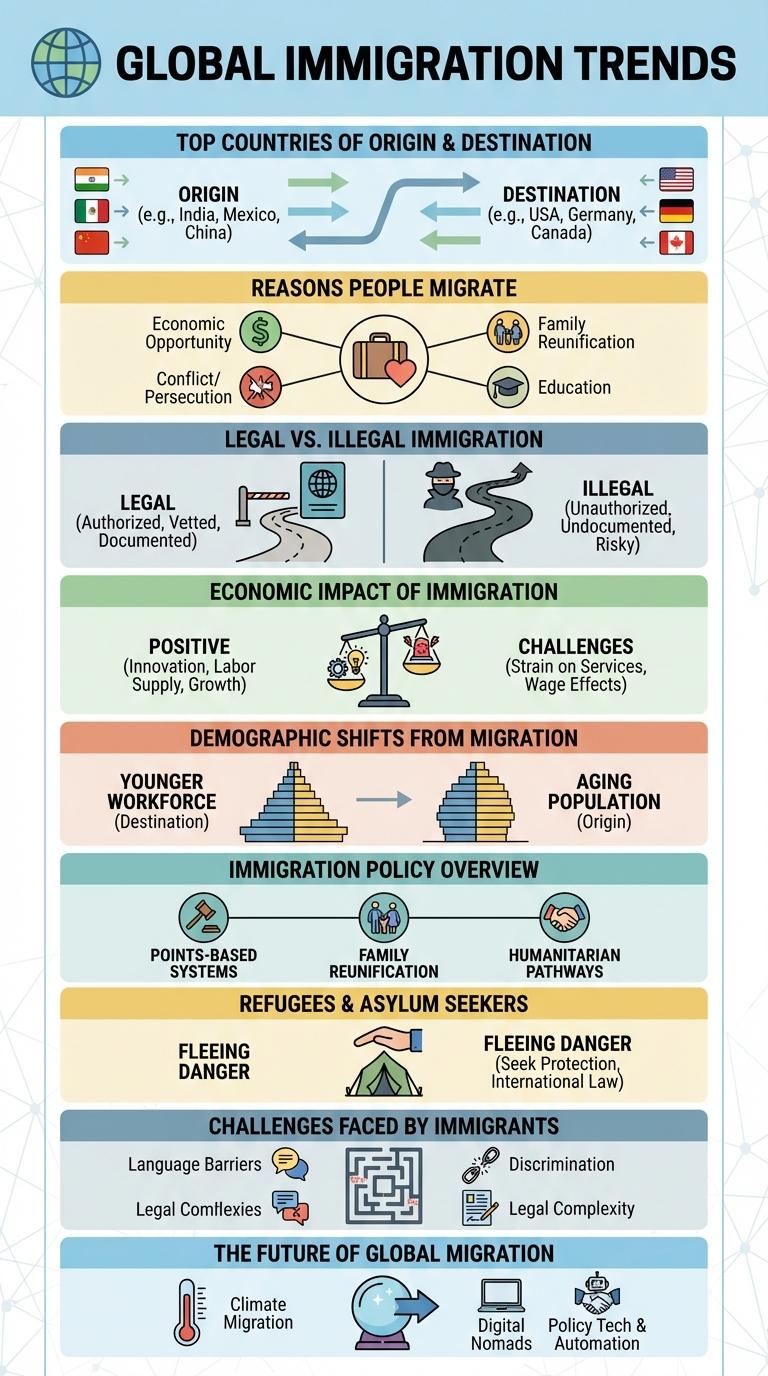
Immigration shapes societies by influencing cultural diversity, economic growth, and demographic trends. Visual data in an infographic highlights key statistics, policy impacts, and migration patterns worldwide. This tool helps readers quickly grasp complex information about global immigration dynamics.
Global Immigration Trends
Global immigration patterns reveal significant shifts influenced by economic, political, and environmental factors. These trends shape population dynamics and labor markets across continents.
- Rising Migration Flows - The number of international migrants reached 281 million in 2020, marking a steady increase over the past decade.
- Regional Migration Hubs - North America, Europe, and Asia host the largest immigrant populations, reflecting major destinations for work and asylum.
- Climate Change Impact - Environmental displacement is becoming a significant driver, with millions moving due to natural disasters and resource scarcity.
Top Countries of Origin and Destination
Which countries lead global immigration trends in terms of origin and destination? Immigration patterns reveal that India, Mexico, and China are among the top countries of origin. The United States, Germany, and Saudi Arabia stand out as the primary destinations for immigrants worldwide.
| Top Countries of Origin | Top Countries of Destination |
|---|---|
| India | United States |
| Mexico | Germany |
| China | Saudi Arabia |
| Philippines | United Kingdom |
| Ukraine | Canada |
Reasons People Migrate
Immigration is driven by a variety of factors that compel individuals to seek new opportunities and better living conditions. Understanding these reasons helps illuminate global migration patterns and social dynamics.
Economic opportunities are a primary reason people migrate, as individuals often move to countries with better job prospects and higher wages. Political instability and conflict also force many to leave their home countries in search of safety. Additionally, family reunification and educational opportunities contribute significantly to migration decisions.
Legal vs. Illegal Immigration
Immigration to the United States includes both legal and illegal entries, impacting the nation's economy, society, and security. Legal immigration involves authorized entry through visas or asylum, contributing to workforce diversity and population growth. Illegal immigration occurs without official permission, often creating challenges in enforcement, social services, and employment regulation.
Economic Impact of Immigration
Immigration significantly influences the economy by contributing to workforce growth and innovation. Understanding these impacts helps shape informed economic policies.
- Job Creation - Immigrants start businesses at higher rates, generating new jobs and economic opportunities.
- Labor Market Contribution - Immigrant workers fill essential roles across industries, supporting both low-skill and high-skill sectors.
- Fiscal Impact - Immigrants contribute more in taxes than the cost of public services they use, positively affecting public budgets.
Economic benefits from immigration support long-term growth and competitiveness in global markets.
Demographic Shifts from Migration
Migration significantly influences demographic changes worldwide, reshaping population structures. Understanding these shifts helps to anticipate economic and social impacts on communities.
Immigration alters age distribution, often rejuvenating aging populations. It diversifies cultural and ethnic compositions, enriching societal fabric. Migration trends affect urban growth, driving expansion in metropolitan areas.
- Population Rejuvenation - Immigrants generally skew younger, contributing to a lower median age in host countries.
- Cultural Diversity - Influx of migrants increases ethnic and cultural heterogeneity in local populations.
- Urban Expansion - Concentrated migration causes rapid growth in city populations, impacting infrastructure and services.
Immigration Policy Overview
Immigration policy governs the rules and regulations that determine who can enter, stay, and work in a country. It balances national security, economic needs, and humanitarian concerns to manage the flow of immigrants. Key elements include visa issuance, asylum procedures, and citizenship pathways.
Refugees and Asylum Seekers
| Topic | Key Facts |
|---|---|
| Global Refugee Population | Over 32.5 million refugees worldwide as of 2024, according to UNHCR. |
| Primary Causes | Conflict, persecution, human rights violations, and environmental disasters. |
| Top Host Countries | Turkey, Colombia, Pakistan, Uganda, Germany host the largest refugee populations. |
| Asylum Seekers | Approximately 4.6 million people filed asylum applications globally in 2023. |
| Challenges Faced | Legal protection gaps, access to healthcare, education, and employment barriers. |
Challenges Faced by Immigrants
Immigrants often confront significant language barriers that hinder effective communication and access to services. Cultural differences can lead to social isolation and challenges in community integration.
Employment opportunities are frequently limited due to credential recognition issues and discrimination. Accessing healthcare and education may also be difficult because of legal and financial constraints.