
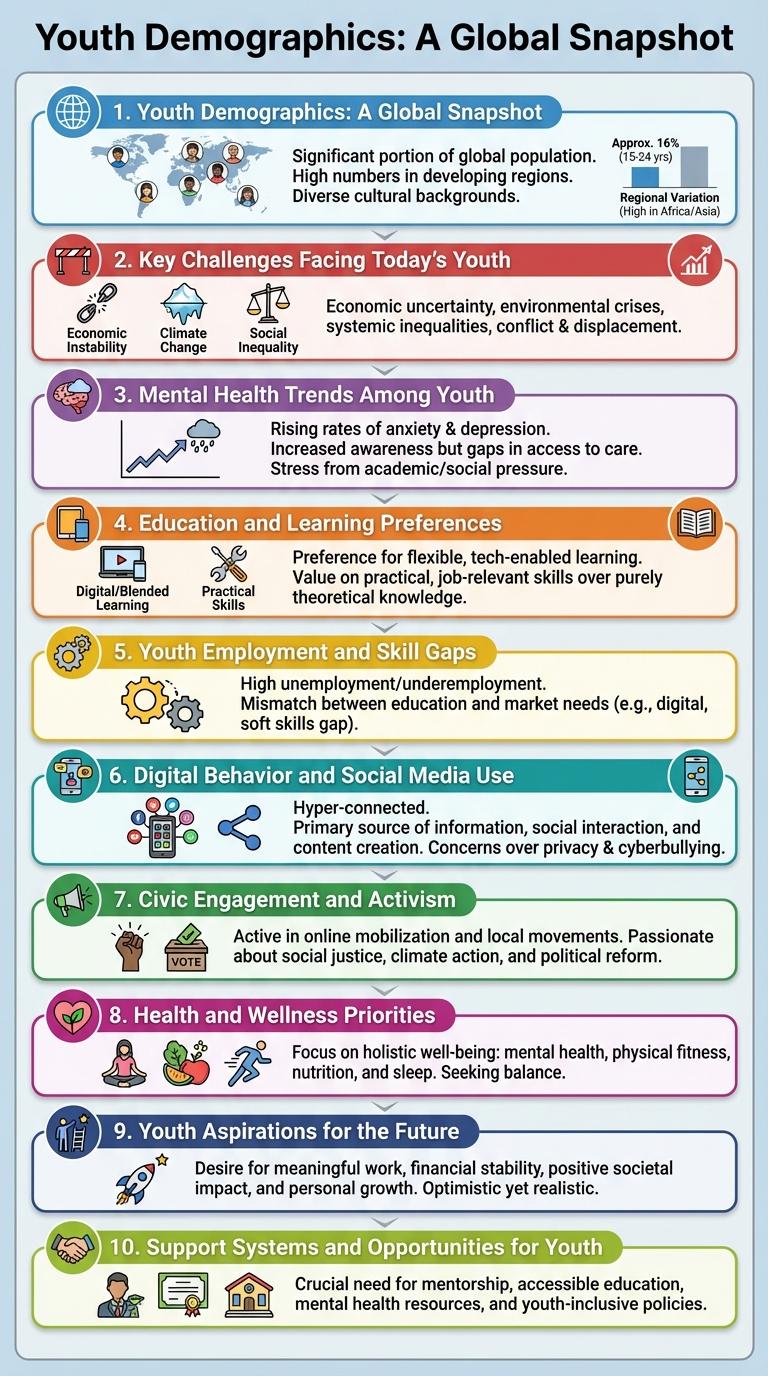
Youth represents a dynamic and influential segment of the global population, shaping cultural trends, technological innovation, and social movements. Infographics about youth highlight key statistics on education, employment, mental health, and digital engagement, offering valuable insights into their challenges and opportunities. Visualizing this data helps policymakers, educators, and communities better understand and support young people's development and well-being.
Youth Demographics: A Global Snapshot
Youth demographics reveal critical insights into global population trends and economic potential. Understanding the distribution and characteristics of young people aids in policy-making and resource allocation.
- Population Share - Youth aged 15-24 constitute approximately 16% of the world population as of 2024.
- Regional Concentration - Africa holds the highest percentage of youth, with over 60% of its population under 25 years old.
- Urbanization Trends - More than 50% of youth worldwide live in urban areas, influencing economic and social development.
These demographic factors play a pivotal role in shaping the future workforce and global social dynamics.
Key Challenges Facing Today's Youth
Youth today encounter a variety of complex challenges that affect their development and future prospects. Understanding these key issues is crucial for creating supportive policies and environments.
The infographic highlights the primary obstacles faced by young people in the current social and economic landscape.
- Unemployment - High rates of youth unemployment limit access to financial independence and career growth opportunities.
- Mental Health - Increasing mental health concerns, including anxiety and depression, impact overall well-being and productivity.
- Education Access - Barriers to quality education hinder skill development necessary for competitive job markets.
- Social Inequality - Disparities in income, race, and gender contribute to unequal opportunities and social exclusion.
- Environmental Anxiety - Growing fears about climate change affect youth optimism and future planning.
Mental Health Trends Among Youth
Youth mental health has seen significant changes over the past decade, with increased rates of anxiety and depression reported globally. Social media usage and academic pressure are key factors influencing these rising trends.
Access to mental health resources remains limited for many young people, impacting early diagnosis and treatment. Awareness campaigns and digital therapy options show promising potential in addressing these mental health challenges.
Education and Learning Preferences
Youth today prioritize digital learning, with 78% preferring online courses over traditional classrooms. Interactive methods such as videos, quizzes, and gamified content significantly increase engagement and knowledge retention. Personalized learning paths and flexible schedules cater to diverse educational needs, making education more accessible and effective for young learners.
Youth Employment and Skill Gaps
What are the main challenges facing youth employment today?
Youth unemployment rates remain significantly higher than the global average, with skill gaps as a major barrier. Employers frequently report a mismatch between available job skills and those possessed by young job seekers.
How do skill gaps affect the employability of young people?
Skill gaps limit youth access to quality jobs, leading to underemployment or unemployment. Training programs that align with labor market needs can improve youth employability and career prospects.
What sectors are most impacted by youth skill gaps?
Technology, manufacturing, and healthcare sectors experience the highest demand for skilled youth workers. Emerging industries require digital literacy, problem-solving, and technical skills not always included in traditional education.
What is the role of governments and organizations in addressing youth skill gaps?
Governments and organizations develop vocational training, apprenticeships, and partnerships with industry to bridge skill gaps. Supporting entrepreneurship and lifelong learning initiatives fosters youth workforce integration and economic growth.
How can youth themselves overcome skill gaps to improve employment outcomes?
Young people can pursue continuous education, online courses, and skill certification to stay competitive. Networking, internships, and practical experience boost skills alignment with market demands.
Digital Behavior and Social Media Use
Youth today exhibit diverse digital behavior shaped by constant connectivity and access to multiple devices. Social media platforms dominate their online interactions, profoundly influencing communication patterns and self-expression.
Popular social media apps among youth include Instagram, TikTok, Snapchat, and YouTube, each serving unique content preferences and engagement styles. The average daily screen time for individuals aged 13-24 reaches approximately 3 to 4 hours, underscoring the importance of digital literacy and balanced usage.
Civic Engagement and Activism
Youth Civic Engagement and Activism drive social change by empowering young people to participate in community and political processes. Engagement activities include volunteering, voting, advocacy, and organizing protests to influence policies and promote justice. Data shows that 60% of youth aged 16-24 engage in at least one form of civic activity annually, highlighting their critical role in shaping the future.
Health and Wellness Priorities
| Health & Wellness Priority | Key Insight |
|---|---|
| Mental Health | Over 70% of youth identify anxiety and stress management as top concerns. |
| Physical Activity | 60% engage in regular exercise at least 3 times per week to boost well-being. |
| Nutrition | Focus on balanced diets, with 55% prioritizing healthy food choices to support energy levels. |
| Sleep | Sleep quality recognized as critical; 65% aim for 7-9 hours nightly for optimal health. |
| Preventive Care | Immunizations and routine check-ups valued by 50% as part of long-term health strategy. |
Youth Aspirations for the Future
Youth today hold ambitious aspirations for the future, driven by innovation and social impact. Their goals encompass career success, personal growth, and community contribution.
Many young individuals prioritize education and skill development to secure meaningful employment. Environmental sustainability and social justice are key areas of focus for their future endeavors. Technology and entrepreneurship serve as essential tools in achieving their aspirations.