
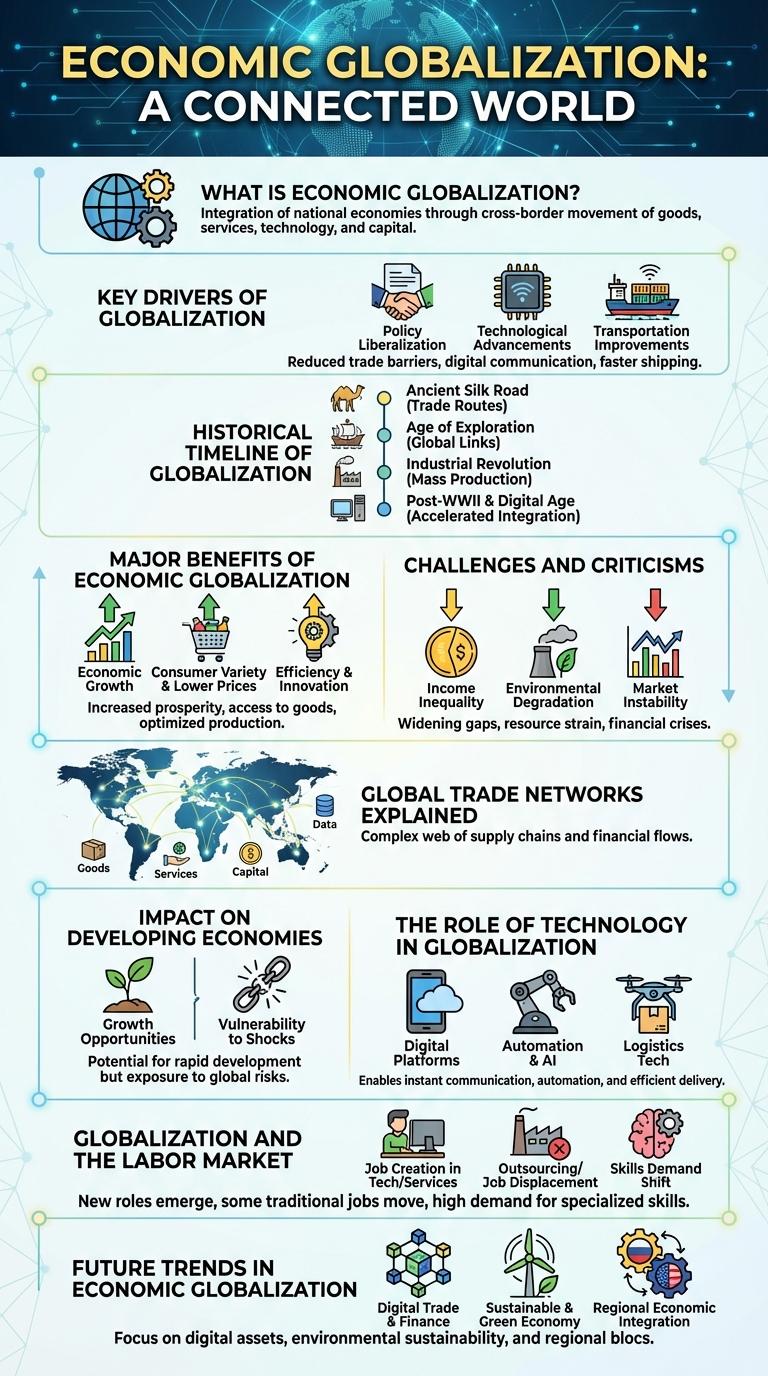
Economic globalization drives interconnected markets, enabling the rapid exchange of goods, services, and capital across borders. This infographic highlights key trends such as increasing international trade volumes, cross-border investments, and the rise of multinational corporations. Understanding these elements reveals the complex impact of globalization on economic growth and development worldwide.
What Is Economic Globalization?
Economic globalization refers to the increasing interdependence and integration of national economies through trade, investment, and technology. It involves the expansion of international markets and the flow of goods, services, capital, and labor across borders.
This process is driven by advancements in transportation, communication, and liberalization of trade policies. Economic globalization impacts global economic growth, employment, and cultural exchange, shaping the modern world economy.
Key Drivers of Globalization
Economic globalization is driven by interconnected markets and the rapid flow of goods, services, and information across borders. The integration of economies enhances trade, investment, and technological exchange worldwide.
- Technological Innovation - Advances in technology facilitate faster communication, efficient supply chains, and digital transactions across global markets.
- Trade Liberalization - Reduction of tariffs and trade barriers promotes international commerce and economic interdependence.
- Foreign Direct Investment (FDI) - Cross-border investment by multinational corporations stimulates economic integration and job creation.
These key drivers collectively accelerate the pace and scope of economic globalization, shaping the global economic landscape.
Historical Timeline of Globalization
Economic globalization refers to the increasing interdependence of world economies through trade, investment, technology, and capital flows. It has evolved through distinct historical phases marked by significant events and technological advancements.
The timeline of globalization begins in the Age of Exploration (15th-17th centuries), when European powers established trade routes and colonial empires. The Industrial Revolution (18th-19th centuries) accelerated global connections by improving transportation and production capabilities.
Major Benefits of Economic Globalization
Economic globalization refers to the increasing integration of economies worldwide through trade, investment, and technology. It promotes the flow of goods, services, capital, and labor across national borders.
Major benefits of economic globalization include enhanced market access, which allows businesses to reach a larger consumer base. It drives economic growth by encouraging competition and innovation. Additionally, globalization facilitates the transfer of technology and skills, improving productivity in developing countries.
Challenges and Criticisms
| Challenges | Criticisms |
|---|---|
| Income inequality between developed and developing countries | Exploitation of labor in low-wage regions |
| Job displacement in manufacturing sectors | Environmental degradation due to lax regulations |
| Loss of cultural identity and local traditions | Corporate influence undermining national sovereignty |
| Financial market volatility and economic crises | Unequal distribution of globalization benefits favoring multinational corporations |
| Barriers in addressing global public goods like climate change | Increased economic dependence leading to vulnerability |
Global Trade Networks Explained
Economic globalization connects countries through complex global trade networks, enabling the flow of goods, services, and capital across borders. These networks involve multinational corporations, trade agreements, and transportation infrastructure that facilitate international commerce. Understanding global trade networks reveals how economies depend on each other for resources, markets, and economic growth.
Impact on Developing Economies
Economic globalization drives increased trade, investment, and technology exchange across borders. Developing economies experience significant transformations as they integrate into the global market.
- Market Access Expansion - Developing countries gain access to larger international markets, boosting export opportunities and economic growth.
- Foreign Investment Inflows - Increased foreign direct investment fosters industrial development, infrastructure improvement, and job creation.
- Income Inequality Challenges - Economic gains from globalization often lead to wage disparities and unequal wealth distribution within developing societies.
The Role of Technology in Globalization
Economic globalization is significantly driven by technological advancements that enable faster communication and efficient international trade. Technology reduces barriers, expanding markets and integrating economies worldwide.
Information technology, digital platforms, and transportation innovations play a crucial role in shaping global economic networks.
- Digital Communication - High-speed internet and mobile technology facilitate instant global communication and coordination among businesses.
- Supply Chain Optimization - Advanced logistics and tracking systems improve efficiency and transparency in global supply chains.
- E-commerce Expansion - Online marketplaces allow firms of all sizes to access international customers, boosting cross-border trade.
Globalization and the Labor Market
Economic globalization significantly impacts the labor market by enabling the flow of jobs across borders, increasing employment opportunities in emerging economies while challenging job security in developed nations. Multinational corporations leverage global supply chains to optimize costs, which can lead to both job creation and displacement depending on regional economic conditions. Wage disparities and labor standards remain critical issues as workers compete in an interconnected market influenced by international trade and investment policies.