
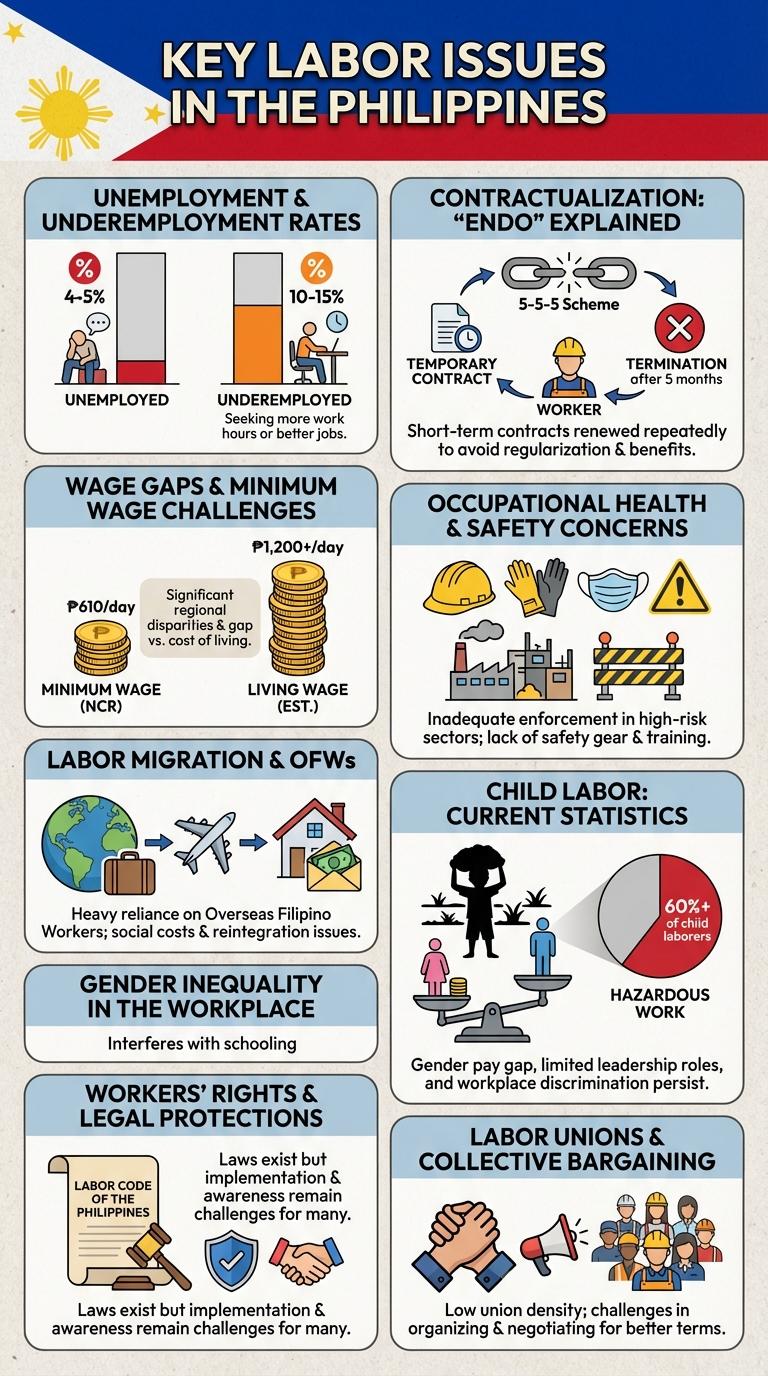
Labor issues remain a critical challenge affecting workers' rights and productivity across various industries. Understanding key concerns such as wage disparities, unsafe working conditions, and job security is essential for fostering fair labor practices. This infographic highlights the most pressing labor issues, aiming to raise awareness and inspire actionable solutions.
Key Labor Issues in the Philippines
Key labor issues in the Philippines include job insecurity, low wages, and poor working conditions. These challenges affect millions of Filipino workers across various sectors.
Contractualization, or "endo," is a major concern causing unstable employment. Many workers lack benefits and social protection due to temporary or informal work arrangements.
Unemployment and Underemployment Rates
Unemployment and underemployment are critical labor issues affecting economic stability. These conditions reflect the mismatch between labor market demands and workforce capabilities.
- Unemployment Rate - The percentage of the labor force without jobs actively seeking employment, often influenced by economic downturns.
- Underemployment Rate - The proportion of employed individuals working fewer hours than desired or in jobs below their skill levels.
- Impact on Economy - High unemployment and underemployment rates can lead to reduced consumer spending and lower overall productivity.
Contractualization: "Endo" Explained
| Term | Definition |
|---|---|
| Contractualization ("Endo") | Employment practice where workers are hired on short-term contracts, typically less than six months, preventing them from gaining regular employee status and benefits. |
| Legal Basis | Labor Code of the Philippines, which requires workers to be regularized after six months of continuous work. |
| Purpose | Employers use it to reduce costs associated with regular employee benefits like social security, health insurance, and paid leaves. |
| Impact on Workers | Job insecurity, lack of benefits, limited career growth, and vulnerability to exploitation. |
| Government Efforts | Policies and proposals aimed at ending contractualization, including stricter enforcement of labor laws and promoting regular employment. |
Wage Gaps and Minimum Wage Challenges
Wage gaps remain a significant issue in the labor sector, with disparities notably affecting women and marginalized groups. These gaps contribute to economic inequality and decreased workforce morale.
Minimum wage challenges include inadequate pay that often fails to meet the living cost, especially in urban areas. Many workers continue to struggle despite legal wage protections due to enforcement difficulties and regional variations.
Occupational Health and Safety Concerns
Occupational health and safety concerns remain a critical issue in the workforce, with millions of workers facing hazardous conditions daily. Common risks include exposure to toxic substances, inadequate safety training, and lack of proper protective equipment. Strengthening workplace safety regulations and promoting health awareness are essential to reducing work-related injuries and illnesses.
Labor Migration and OFWs
What are the main challenges faced by Overseas Filipino Workers (OFWs) in labor migration?
OFWs often encounter issues such as contract violations, delayed wages, and poor working conditions abroad. Labor migration also affects families left behind, impacting social and emotional well-being.
How does labor migration impact the Philippine economy?
Remittances from OFWs contribute significantly to the country's GDP, supporting millions of households. These funds help improve education, healthcare, and local businesses in the Philippines.
What government measures exist to protect OFWs during labor migration?
The Philippine Overseas Employment Administration (POEA) regulates deployment and ensures legal contracts. The Overseas Workers Welfare Administration (OWWA) offers support services, including legal assistance and welfare programs.
Why do many Filipinos choose to work abroad despite these challenges?
Limited job opportunities and low wages in the Philippines drive many to seek higher-paying jobs overseas. Labor migration provides access to better income and career growth for Filipino workers.
What sectors employ the majority of Filipino migrant workers?
| Sector | Percentage of OFWs |
|---|---|
| Domestic Work | 38% |
| Healthcare | 25% |
| Construction | 15% |
| Information Technology | 12% |
| Others | 10% |
Child Labor: Current Statistics
Child labor remains a critical issue worldwide, affecting millions of children under the age of 18. Despite global efforts to reduce this practice, many children continue to be involved in hazardous and exploitative work.
- Global Prevalence - Approximately 160 million children are engaged in child labor globally, according to the International Labour Organization.
- Hazardous Work - Nearly half of all child laborers work in conditions that jeopardize their health, safety, and development.
- Regional Impact - Sub-Saharan Africa has the highest prevalence, with 19% of children between 5 and 17 involved in child labor activities.
Gender Inequality in the Workplace
Gender inequality in the workplace remains a significant issue globally. Women often face challenges such as lower wages and limited career advancement opportunities compared to their male counterparts.
Female workers frequently encounter wage gaps, earning approximately 20% less than men in similar roles. Leadership positions show a notable underrepresentation of women, with only about 25% holding managerial roles worldwide. Workplace discrimination and gender biases contribute to these persistent disparities, affecting job security and professional growth for women.
Workers' Rights and Legal Protections
Workers' rights are fundamental protections that ensure fair treatment, safe working conditions, and reasonable wages. Legal frameworks such as labor laws and employment contracts uphold these rights and prevent exploitation. Enforcement agencies monitor compliance to safeguard workers from unfair practices and promote workplace justice.