
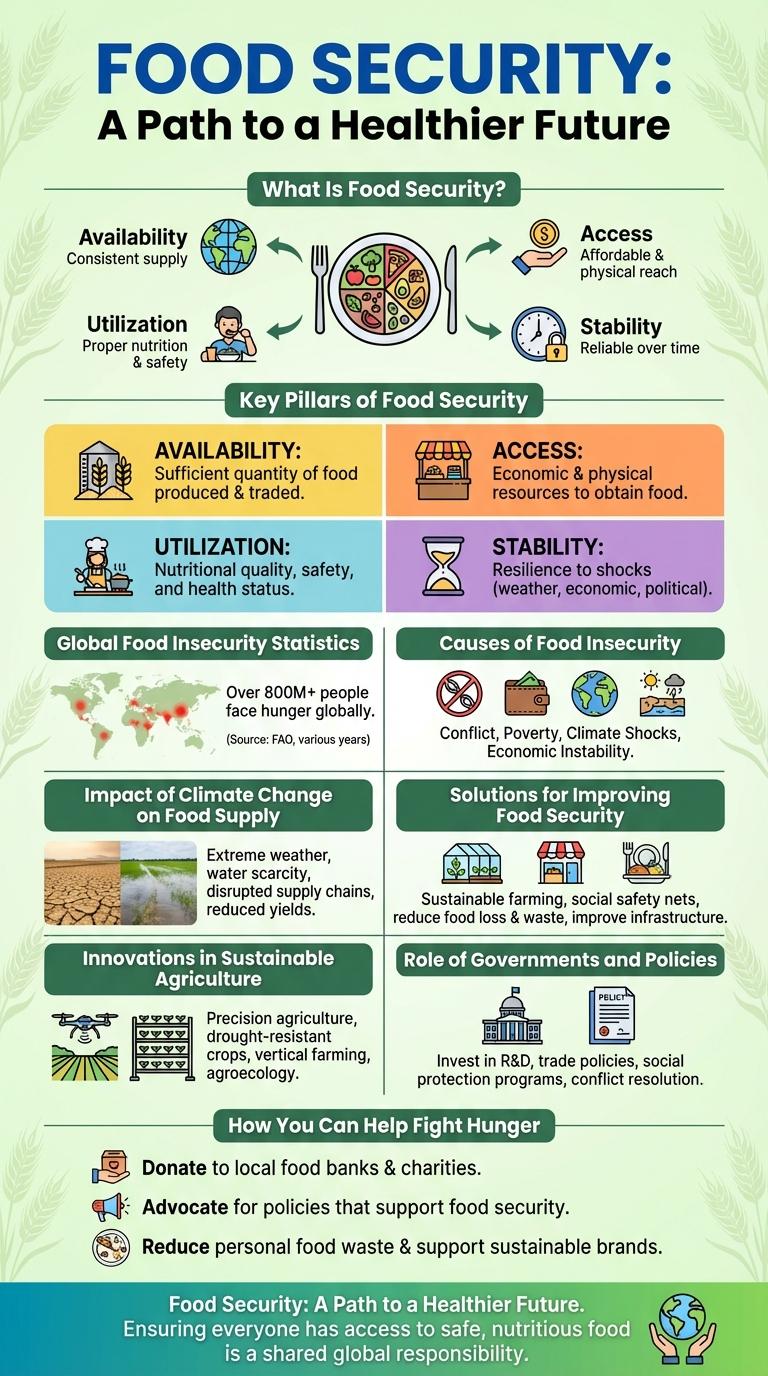
Food security ensures that every individual has reliable access to sufficient, safe, and nutritious food to maintain a healthy life. Infographics visually present key data and trends related to food production, distribution, and consumption, highlighting challenges such as hunger, malnutrition, and food waste. These visual tools enhance understanding and promote awareness about sustainable solutions to achieve global food security.
What Is Food Security?
Food security means all people have reliable access to enough nutritious food for a healthy life. It involves availability, access, utilization, and stability of food resources.
Food security depends on consistent food production and distribution systems. Economic and physical access to food is crucial for individuals and communities. Nutritional quality ensures food meets dietary needs for growth and health.
Key Pillars of Food Security
| Key Pillars | Description |
|---|---|
| Availability | Consistent supply of sufficient quantities of food through production, distribution, and exchange. |
| Access | Physical and economic ability of individuals to obtain appropriate foods for a nutritious diet. |
| Utilization | Proper biological use of food, requiring a diet providing sufficient energy and essential nutrients, clean water, sanitation, and healthcare. |
| Stability | Reliable access to adequate food at all times, without risk of loss due to sudden shocks or cyclical events. |
| Sustainability | Long-term maintenance of food production and access without compromising natural resources or ecological balance. |
Global Food Insecurity Statistics
Global food insecurity remains a critical challenge affecting millions worldwide. Understanding key statistics is essential for addressing hunger and malnutrition effectively.
- Population Affected - Over 820 million people globally suffer from chronic undernourishment as of recent reports.
- Child Malnutrition - Approximately 45 million children under five experience wasting due to food insecurity.
- Regional Impact - Sub-Saharan Africa and South Asia face the highest levels of food insecurity and hunger.
Enhancing food security requires coordinated global efforts to ensure access to adequate nutrition for all.
Causes of Food Insecurity
Food insecurity arises from multiple interconnected causes including poverty, conflict, and climate change. Limited access to nutritious food is often driven by economic instability and disrupted supply chains. Environmental factors such as droughts and floods further exacerbate food shortages, affecting millions worldwide.
Impact of Climate Change on Food Supply
Climate change significantly threatens global food security by disrupting agricultural productivity and supply chains. Rising temperatures and changing precipitation patterns increase the risk of crop failures and food shortages worldwide.
- Increased Temperature Stress - Higher average temperatures reduce crop yields by accelerating plant growth cycles and increasing evapotranspiration.
- Altered Rainfall Patterns - Unpredictable and extreme rainfall events cause droughts and floods, damaging crops and soil fertility.
- Decline in Crop Nutritional Quality - Elevated carbon dioxide levels lead to lower concentrations of essential nutrients like protein and minerals in staple crops.
Solutions for Improving Food Security
Food security remains a critical global challenge, driven by factors such as climate change, population growth, and resource scarcity. Effective solutions focus on boosting food production, enhancing distribution systems, and reducing waste to ensure everyone has access to nutritious food.
Implementing sustainable agricultural practices like crop diversification, agroforestry, and precision farming increases resilience and yields. Strengthening infrastructure, investing in technology, and supporting smallholder farmers improve supply chains and market access, fostering long-term food security worldwide.
Innovations in Sustainable Agriculture
How do innovations in sustainable agriculture enhance food security? Sustainable farming techniques improve crop yields while preserving natural resources. These advancements reduce environmental impact and ensure long-term food availability.
What role do precision farming technologies play in sustainable agriculture? Precision farming uses data and sensors to optimize water, fertilizer, and pesticide use. This increases efficiency and minimizes waste, promoting healthier crops and ecosystems.
How does agroforestry contribute to sustainable food systems? Integrating trees with crops improves soil quality and biodiversity. Agroforestry reduces erosion and increases resilience to climate change.
Why is developing drought-resistant crop varieties important? Climate change causes frequent water shortages affecting crop production. Drought-resistant crops maintain yields under harsh conditions, securing food supply.
What impact does vertical farming have on sustainable agriculture? Vertical farms use controlled environments to grow food year-round with less land and water. This method supports urban food production and reduces transportation emissions.
Role of Governments and Policies
Governments play a crucial role in ensuring food security by creating policies that support sustainable agriculture and equitable food distribution. Strategic policy-making helps mitigate risks related to food shortages and price volatility.
Investment in infrastructure, subsidies for farmers, and trade regulations are key government actions that enhance food availability and access. Effective food security policies promote resilience against climate change and economic disruptions.
How You Can Help Fight Hunger
Food security remains a critical global challenge, affecting millions of people daily. Taking actionable steps can significantly reduce hunger in communities near and far.
- Donate to Local Food Banks - Contributing non-perishable items or funds supports immediate food relief for vulnerable populations.
- Volunteer Your Time - Assisting food distribution centers increases their capacity to serve more individuals in need.
- Advocate for Policy Change - Engaging with policymakers helps implement sustainable solutions to end food insecurity nationwide.