
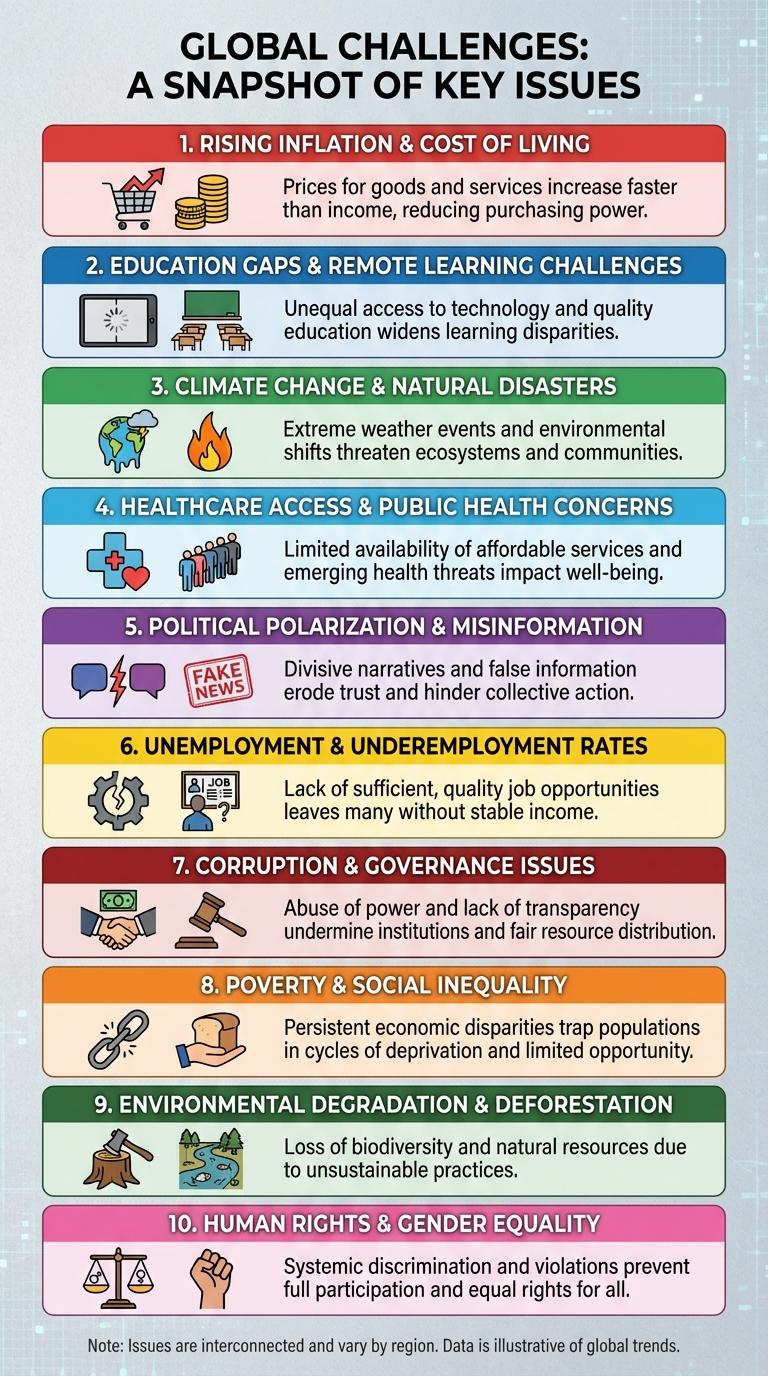
The infographic highlights pressing challenges in the Philippines, including socio-economic disparities, environmental degradation, and political instability. It visually presents data on poverty rates, climate change impacts, and governance concerns affecting the nation's development. Key issues such as urban congestion, natural disasters, and public health crises are also emphasized to provide a comprehensive overview.
Rising Inflation and Cost of Living
The Philippines is experiencing significant challenges due to rising inflation and increasing cost of living. These economic pressures impact households, especially low and middle-income families.
- Inflation Rate Surge - The inflation rate in the Philippines reached over 6% in recent months, driven by higher food and fuel prices.
- Food Price Increases - Staple food items such as rice, vegetables, and meat have seen substantial price hikes, straining family budgets.
- Housing and Transportation Costs - Rental prices and public transportation fares continue to rise, further elevating daily expenses for many Filipinos.
Education Gaps and Remote Learning Challenges
The Philippines faces significant education gaps, highlighted by disparities in access to quality learning resources. Remote learning challenges have exacerbated these gaps, especially in rural and underserved communities.
Many students lack reliable internet and devices, hindering their ability to participate in online classes. Teachers also struggle with limited training and support for effective remote instruction.
Climate Change and Natural Disasters
The Philippines faces significant challenges due to climate change and frequent natural disasters. These issues threaten lives, infrastructure, and the economy, demanding urgent action and resilience strategies.
- Rising Sea Levels - Coastal communities are at risk as sea levels increase, causing flooding and displacement.
- Increased Typhoon Intensity - More powerful typhoons result in greater destruction and loss of life each year.
- Deforestation and Landslides - Loss of forest cover worsens soil erosion, leading to more frequent and severe landslides during heavy rains.
Addressing these challenges requires coordinated efforts in climate adaptation, disaster preparedness, and environmental conservation.
Healthcare Access and Public Health Concerns
The Philippines faces significant challenges in healthcare access and public health. These issues impact millions, influencing overall national well-being and economic development.
Limited healthcare facilities in rural areas restrict access to essential medical services. Public health concerns such as dengue fever and tuberculosis remain prevalent despite ongoing campaigns.
- Healthcare inequality - Urban centers have more hospitals and doctors compared to rural communities.
- High out-of-pocket expenses - Many Filipinos pay a large portion of healthcare costs themselves, causing financial strain.
- Chronic disease burden - Non-communicable diseases like diabetes and hypertension are rising rapidly.
- Infectious disease outbreaks - Frequent dengue and tuberculosis cases challenge public health infrastructure.
- Limited health insurance coverage - A significant portion of the population lacks comprehensive PhilHealth benefits.
Political Polarization and Misinformation
The Philippines faces severe political polarization, causing divisions among citizens and hindering national unity. Misinformation spreads rapidly through social media, exacerbating conflicts and influencing public opinion negatively. Addressing these challenges requires enhanced digital literacy and transparent communication from authorities.
Unemployment and Underemployment Rates
| Issue | Current Statistics |
|---|---|
| Unemployment Rate (2024) | 5.7% |
| Underemployment Rate (2024) | 15.3% |
| Labor Force Participation Rate | 62.9% |
| Youth Unemployment Rate | 13.2% |
| Informal Employment | 36.4% |
Corruption and Governance Issues
What are the main corruption and governance challenges facing the Philippines today? Corruption remains a pervasive problem, affecting various levels of government and public services. Weak governance structures contribute to inefficiency and undermine public trust in institutions.
How does corruption impact economic development in the Philippines? Corruption diverts public funds from essential projects, slowing infrastructure growth and social services improvement. This results in limited opportunities and increased poverty for many Filipinos.
What efforts are being made to improve governance and reduce corruption? The government has implemented transparency initiatives and anti-corruption laws to promote accountability. Civil society organizations actively monitor government actions and push for reforms.
Why is strengthening institutions crucial for addressing governance issues? Efficient institutions enforce laws and ensure fair distribution of resources, reducing opportunities for corrupt practices. Institutional reforms lead to better public service delivery and enhanced citizen confidence.
How does public participation influence governance quality in the Philippines? Citizen engagement encourages transparency and holds officials accountable for their actions. Empowered communities contribute to more responsive and inclusive governance systems.
Poverty and Social Inequality
Poverty remains a critical issue in the Philippines, with around 18.1% of the population living below the national poverty line as of 2023. High unemployment and underemployment contribute significantly to the economic struggles faced by many Filipino families.
Social inequality is evident in access to education, healthcare, and basic services, disproportionately affecting rural and marginalized communities. The wealth gap continues to widen, with the richest 10% holding over 40% of the national income, exacerbating social tensions and limiting upward mobility.
Environmental Degradation and Deforestation
The Philippines faces severe environmental degradation, with deforestation as a leading cause. Over 50% of the country's forest cover has been lost in the past century, impacting biodiversity and local communities. Illegal logging and land conversion for agriculture accelerate this trend, threatening ecological balance and climate resilience.