
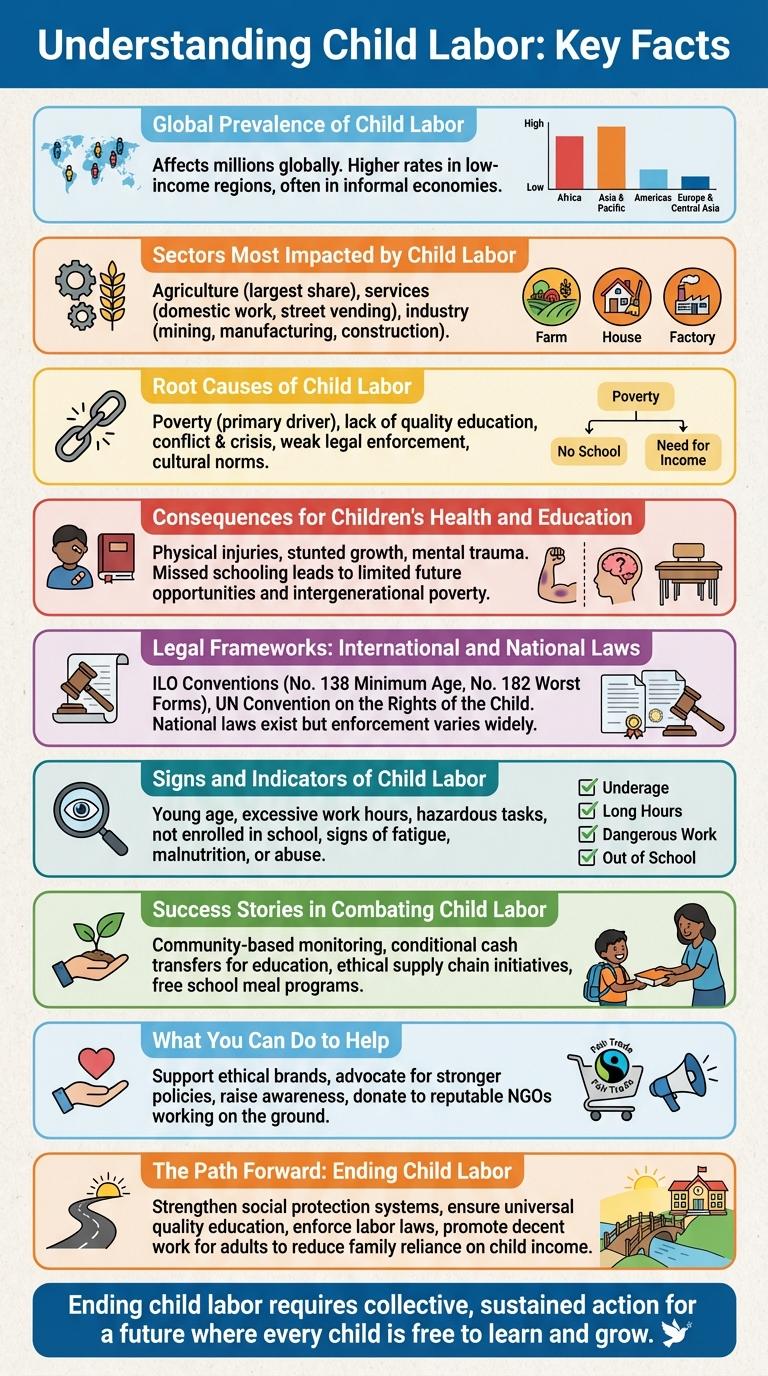
Child labor remains a critical issue affecting millions of children worldwide, depriving them of education and a safe childhood. This infographic highlights key statistics, the most affected regions, and the industries where child labor is most prevalent. Understanding these factors is essential for raising awareness and promoting efforts to eradicate child labor globally.
Understanding Child Labor: Key Facts
Child labor involves the exploitation of children through work that deprives them of their childhood, education, and potential. It affects millions globally, with the highest rates in agriculture, manufacturing, and mining sectors. Key factors include poverty, lack of access to education, and weak enforcement of labor laws.
Global Prevalence of Child Labor
Child labor remains a critical global issue, affecting millions of children worldwide. Many children are engaged in hazardous work that compromises their health and education.
- Worldwide Scale - Over 160 million children are involved in child labor as reported by the International Labour Organization (ILO).
- Regional Variations - Sub-Saharan Africa has the highest prevalence, with 1 in 5 children engaged in labor.
- Economic Impact - Poverty and limited access to education are primary drivers of child labor globally.
Sectors Most Impacted by Child Labor
| Sector | Estimated Percentage of Child Labor |
|---|---|
| Agriculture | 70% |
| Manufacturing | 16% |
| Mining and Quarrying | 7% |
| Services | 6% |
| Construction | 1% |
Root Causes of Child Labor
Child labor is primarily fueled by poverty, which forces families to rely on their children's income for basic survival. Limited access to quality education also contributes, as children without schooling opportunities are more likely to enter the workforce early.
Other root causes include weak enforcement of labor laws and social norms that accept child work as part of family tradition. Economic instability and lack of social protection systems further exacerbate the problem, making children vulnerable to exploitation.
Consequences for Children's Health and Education
Child labor severely impacts children's health, causing physical injuries, chronic illnesses, and mental stress due to hazardous working conditions. It disrupts educational opportunities, leading to high dropout rates and limited future prospects. These combined effects perpetuate the cycle of poverty and hinder overall child development.
Legal Frameworks: International and National Laws
What are the key international laws addressing child labor? The International Labour Organization (ILO) has established conventions such as Convention No. 138 on minimum age and Convention No. 182 on the worst forms of child labor. These conventions set global standards to protect children from exploitation and hazardous work.
How do national laws reinforce child labor regulations? Countries implement legislation that aligns with ILO standards to regulate the minimum working age and conditions under which children can work. Enforcement mechanisms vary, but many nations have dedicated agencies to monitor and prevent illegal child labor.
Which international bodies oversee child labor law compliance? The United Nations and ILO monitor adherence to treaties and provide technical assistance to governments. Their reports highlight progress and challenges, guiding policy improvements to eliminate child labor.
How do legal frameworks impact child labor reduction? Strong laws deter employers from exploiting children by imposing penalties and promoting education and social support. Legal protections contribute to decreasing child labor rates and improving children's rights globally.
What challenges exist in enforcing child labor laws? Limited resources, weak judicial systems, and informal economies hinder effective enforcement. Corruption and lack of awareness also contribute to ongoing violations despite comprehensive legal frameworks.
Signs and Indicators of Child Labor
Child labor remains a critical issue affecting millions of children worldwide. Recognizing the signs and indicators is essential for early intervention and protection.
Common signs include children working long hours, performing hazardous tasks, or missing school regularly. Physical indicators such as unexplained injuries, fatigue, and poor hygiene often signal labor exploitation. Behavioral changes like withdrawal, anxiety, or fearfulness may also indicate a child is subjected to labor abuses.
Success Stories in Combating Child Labor
Efforts to combat child labor have led to significant global improvements, showcasing powerful success stories. These cases highlight the impact of policies, community involvement, and education initiatives.
- Elimination of Child Labor in Brazil - Brazil's national programs reduced child labor by 80% between 1996 and 2019 through education and social protection policies.
- Bangladesh Garment Sector Reform - Strategic partnerships in Bangladesh improved labor conditions and drastically decreased underage labor in textile factories.
- Global Cocoa Industry Collaboration - Initiatives like the Harkin-Engel Protocol have significantly lowered child labor practices in the cocoa supply chain.
What You Can Do to Help
Child labor affects millions of children worldwide, limiting their potential and violating their rights. Taking action can help protect children and promote education and safety.
- Support Ethical Brands - Choose products from companies that enforce fair labor practices free from child exploitation.
- Raise Awareness - Educate your community about the impacts of child labor and how to combat it effectively.
- Donate to NGOs - Contribute to organizations working to eradicate child labor through education and legal advocacy.
Every effort counts in creating a safer environment where children can thrive and learn without exploitation.