
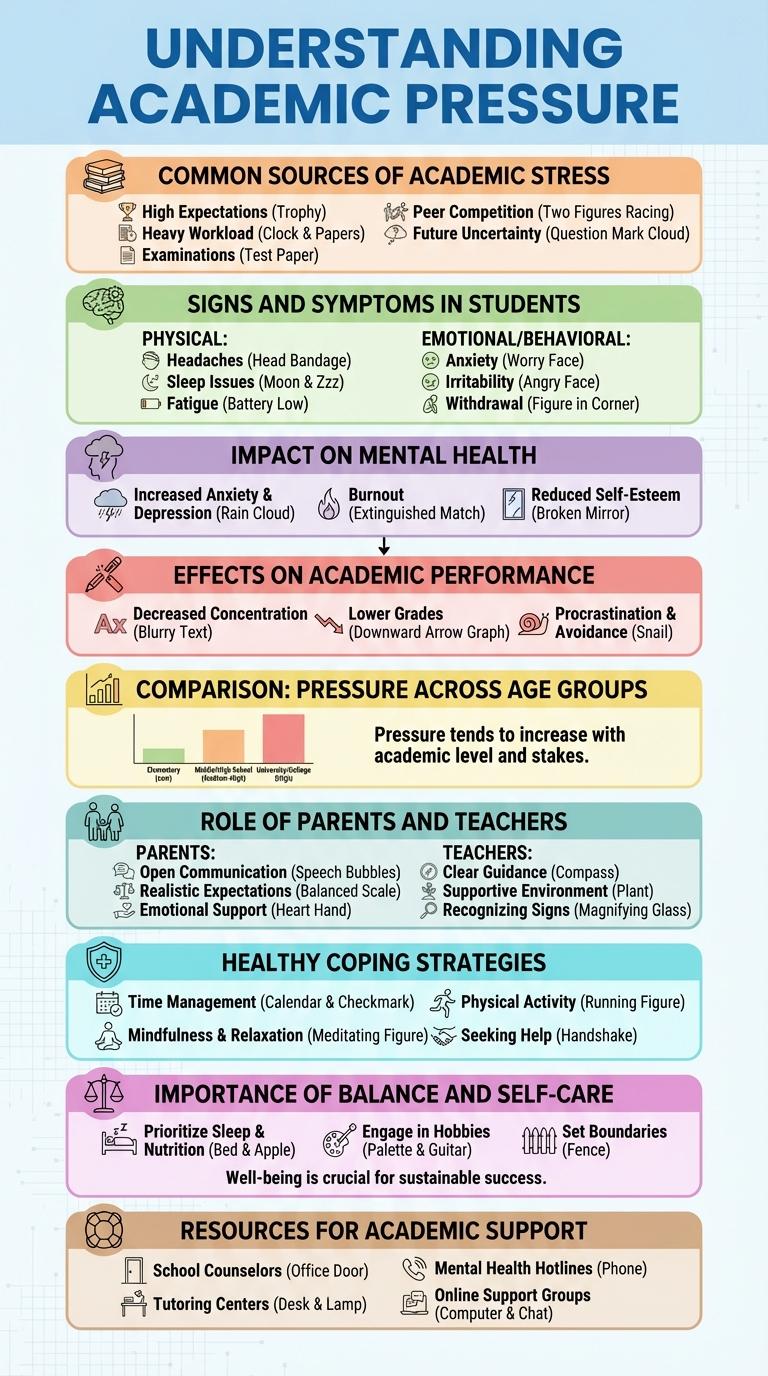
Academic pressure significantly impacts students' mental health and overall well-being. High expectations from parents, teachers, and peers create a stressful environment that can hinder learning and personal development. Understanding the sources and effects of academic pressure is crucial for fostering healthier educational experiences.
Understanding Academic Pressure
What is academic pressure and why does it affect students so deeply?
Academic pressure refers to the stress and expectations placed on students to perform well in their studies. This pressure can come from parents, teachers, peers, or self-imposed goals, often leading to anxiety and burnout.
Common Sources of Academic Stress
Academic pressure significantly impacts students' mental health and overall well-being. Understanding the common sources of this stress can help in developing effective coping strategies.
- Excessive Workload - Heavy assignments and numerous exams create overwhelming demands on students' time and energy.
- High Expectations - Pressure from parents, teachers, and self to achieve top grades increases anxiety levels.
- Time Management Challenges - Balancing studies, extracurricular activities, and personal life leads to stress and burnout.
Signs and Symptoms in Students
Academic pressure affects students' mental and physical well-being, often manifesting through various signs and symptoms. Recognizing these indicators early is crucial for timely intervention and support.
Common signs include persistent anxiety, irritability, and difficulty concentrating on tasks. Physical symptoms such as headaches, fatigue, and changes in sleep patterns also frequently occur among stressed students.
Impact on Mental Health
Academic pressure significantly affects students' mental health, leading to increased stress and anxiety. Understanding these impacts helps in creating supportive learning environments.
- Increased Stress Levels - High expectations from academics elevate stress hormones, impairing cognitive function and emotional well-being.
- Anxiety and Depression - Persistent academic pressure can trigger symptoms of anxiety and depression in students across all education levels.
- Decreased Sleep Quality - Overwhelming academic demands often result in poor sleep patterns, worsening overall mental health.
Addressing academic pressure is essential to promote mental wellness and improve students' academic performance.
Effects on Academic Performance
Academic pressure significantly impacts students' academic performance, often causing anxiety and stress that hinder concentration and memory retention. High levels of stress can lead to decreased motivation, resulting in lower grades and diminished learning outcomes.
Chronic academic pressure may contribute to burnout, reducing students' ability to complete assignments and participate actively in class. Supportive environments and effective stress management techniques help mitigate these negative effects, promoting better academic success.
Comparison: Pressure Across Age Groups
| Age Group | Reported Academic Pressure (%) |
|---|---|
| Children (6-12 years) | 45% |
| Teens (13-18 years) | 70% |
| Young Adults (19-24 years) | 65% |
| Adults (25+ years) | 40% |
Role of Parents and Teachers
Academic pressure significantly impacts students' mental health and performance. Parents play a crucial role by providing emotional support and setting realistic expectations to help manage stress. Teachers contribute by creating a positive classroom environment and recognizing individual student needs to foster balanced academic growth.
Healthy Coping Strategies
Academic pressure affects students' mental health and overall well-being worldwide. Healthy coping strategies include time management, mindfulness practices, and seeking social support. Implementing these methods helps reduce stress and improve academic performance.
Importance of Balance and Self-Care
Academic pressure affects millions of students worldwide, impacting their mental health and overall well-being. Maintaining balance and prioritizing self-care are essential strategies to manage this stress effectively.
Students who incorporate regular breaks, healthy sleep patterns, and mindfulness practices improve focus and reduce anxiety. Establishing a support system, including peers and mentors, fosters emotional resilience. Self-care enhances academic performance by promoting a healthier, more sustainable approach to learning.