
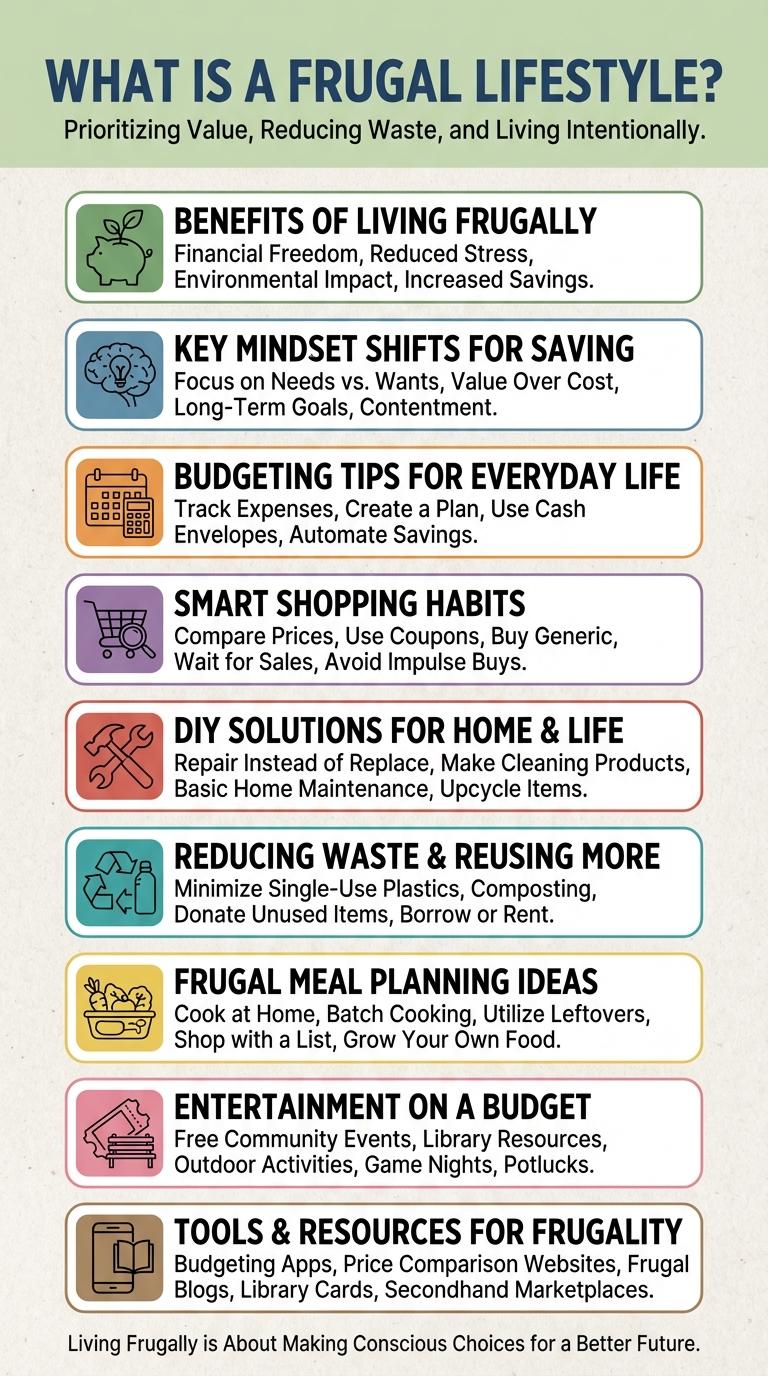
Living a frugal lifestyle means making intentional choices to reduce expenses and maximize savings without sacrificing quality or comfort. Embracing simple habits like budgeting, mindful spending, and resourceful living can lead to financial freedom and less stress. This infographic highlights practical tips and benefits of adopting a frugal mindset for long-term financial wellness.
What is a Frugal Lifestyle?
A frugal lifestyle emphasizes mindful spending and saving to maximize financial security. It involves prioritizing needs over wants, reducing waste, and making intentional choices to stretch resources effectively. This approach fosters long-term wealth building and minimizes financial stress through disciplined money management.
Benefits of Living Frugally
Living frugally enhances financial stability by reducing expenses and increasing savings. It empowers individuals to achieve long-term financial goals with greater ease.
Frugality encourages mindful consumption, leading to less environmental impact and waste. This lifestyle promotes a simpler, more intentional way of living that prioritizes necessities over excess.
Key Mindset Shifts for Saving
Adopting a frugal lifestyle requires changing how you view money and spending. Shifting your mindset helps prioritize saving and mindful consumption over impulsive purchases.
- Value Needs Over Wants - Focus on fulfilling essential needs to avoid unnecessary expenses and increase savings.
- Embrace Delayed Gratification - Wait before making purchases to assess true value and prevent impulsive buying.
- Prioritize Long-Term Goals - Align spending habits with financial goals such as saving for emergencies or investments.
Budgeting Tips for Everyday Life
How can budgeting transform your everyday life? Creating a structured budget helps you track expenses and save money effectively. It encourages mindful spending and builds financial security over time.
What are essential budgeting tips for daily living? Prioritize needs over wants and allocate funds to important categories like housing, groceries, and transportation. Review your budget regularly to adjust for changes in income or expenses.
How does tracking expenses improve your budget? Recording daily purchases reveals spending patterns and highlights unnecessary costs. This awareness fosters better financial decisions and prevents overspending.
Why is setting financial goals important? Clear goals provide motivation and direction for savings and expenditures. They help prioritize spending and measure progress towards financial stability.
Which budgeting tools can enhance money management? Apps and spreadsheets simplify tracking income and outflow, offering real-time updates. Automated alerts help avoid missed payments and encourage disciplined budgeting.
Smart Shopping Habits
| Smart Shopping Habit | Benefit |
|---|---|
| Plan Purchases in Advance | Reduces impulse buying and saves money |
| Use Price Comparison Tools | Identifies best deals and discounts online and offline |
| Buy Quality Over Quantity | Ensures longer-lasting products, lowering replacement costs |
| Take Advantage of Coupons and Cashback | Maximizes savings during shopping trips |
| Shop Seasonal and Clearance Sales | Accesses significant discounts on high-demand items |
DIY Solutions for Home & Life
Embracing a frugal lifestyle centers on DIY solutions to reduce expenses and enhance self-sufficiency. Home projects like homemade cleaning products, furniture upcycling, and simple repairs cut costs and minimize waste. Life hacks such as meal prepping, sewing clothes, and creating personalized gifts foster savings and creativity.
Reducing Waste & Reusing More
Adopting a frugal lifestyle helps minimize waste and promotes sustainable living. Focusing on reducing waste and reusing items conserves resources and saves money.
- Prioritize Reusable Products - Choose items like cloth bags and glass containers to lower single-use waste.
- Repurpose Household Items - Transform old jars, clothes, and furniture into useful tools or decor to extend their life cycle.
- Compost Organic Waste - Convert food scraps and garden waste into nutrient-rich soil to reduce landfill contributions.
Frugal Meal Planning Ideas
Frugal meal planning helps reduce grocery bills and minimize food waste. Simple strategies include shopping sales, using leftovers, and cooking in bulk.
Plan meals around seasonal produce and store specials to maximize savings. Utilize pantry staples like beans, rice, and frozen vegetables for budget-friendly recipes. Preparing meals at home prevents costly takeout expenses and promotes healthier eating habits.
Entertainment on a Budget
Embracing a frugal lifestyle means finding affordable ways to enjoy entertainment without breaking the bank. Free or low-cost activities like community events, library programs, and outdoor adventures offer ample fun.
Streaming services provide budget-friendly access to movies and music, cutting costs compared to traditional cable. DIY hobbies and game nights at home create memorable experiences while keeping expenses minimal.