
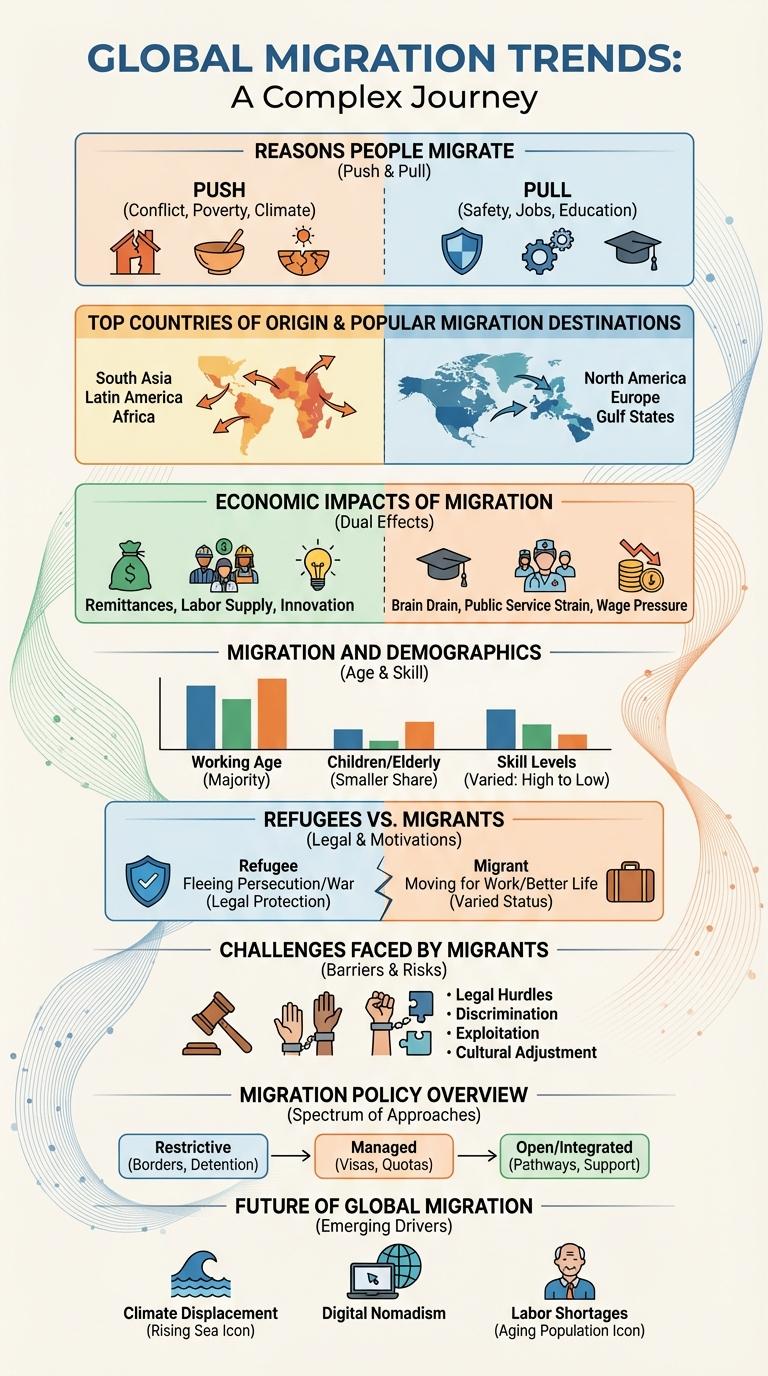
Migration patterns reveal complex social and economic dynamics that shape societies worldwide. Infographics simplify these trends by visually presenting data on population movement, reasons for migration, and demographic impacts. Understanding these visuals enhances awareness of global migration flows and their implications.
Global Migration Trends
Global migration patterns are evolving rapidly due to economic, environmental, and political factors. This infographic highlights key trends shaping international population movements worldwide.
- Rising Urban Migration - Increasing numbers of people move from rural to urban areas seeking better job opportunities and living conditions.
- Refugee Displacement - Conflicts and crises have led to a surge in refugees, with millions forced to relocate across borders.
- Economic Migration Growth - Workers migrate globally to meet labor demands in developed and emerging economies.
Reasons People Migrate
Why do people choose to migrate to different countries? Migration occurs due to economic opportunities, seeking better jobs and improved living standards. Social factors, such as family reunification and escaping conflict, also drive people to relocate.
Top Countries of Origin
Migration is a complex global phenomenon influenced by economic, social, and political factors. Understanding the top countries of origin helps policymakers address root causes and support migrants effectively.
The leading countries of origin for migrants include India, Mexico, China, the Philippines, and Syria. India tops the list with millions seeking better opportunities abroad, followed closely by Mexico with significant migration to the United States. Conflict and instability drive many from Syria, while economic prospects motivate migrants from China and the Philippines.
Popular Migration Destinations
Migration trends reveal key countries attracting the highest number of migrants globally. Popular migration destinations often align with economic opportunities, political stability, and quality of life.
- United States - The US remains the top destination for migrants seeking employment and education opportunities.
- Germany - Germany attracts migrants due to its strong economy and demand for skilled workers.
- Canada - Canada is favored for its inclusive immigration policies and multicultural society.
Understanding these popular migration destinations helps in analyzing global population movements and economic impacts.
Economic Impacts of Migration
Migration significantly influences economic growth in both origin and destination countries by altering labor markets and consumer demand. Understanding these impacts helps policymakers create strategies that maximize benefits for all stakeholders.
Employment dynamics play a crucial role as migrants fill labor shortages and contribute to productivity improvements. Remittances sent by migrants support families and stimulate economic development in home countries.
- Labor Market Integration - Migrants often fill critical skill gaps, supporting industries facing workforce shortages.
- Contribution to GDP - Migrant workers increase economic output through participation in various sectors.
- Remittances Impact - Money sent by migrants to home countries boosts household incomes and local economies.
Migration and Demographics
Migration significantly influences demographic patterns worldwide by altering population size, age distribution, and cultural diversity. Regions with high migration rates often experience changes in workforce composition and social dynamics.
Urban areas typically attract larger migrant populations, contributing to economic growth and increased demand for housing and services. Understanding migration trends helps policymakers plan for infrastructure, education, and healthcare needs efficiently.
Refugees vs. Migrants
| Aspect | Refugees vs. Migrants |
|---|---|
| Definition | Refugees: Individuals forced to flee their country due to persecution, war, or violence. Migrants: People who move voluntarily for reasons such as work, education, or family. |
| Legal Status | Refugees receive protection under international law, specifically the 1951 Refugee Convention. Migrants do not have guaranteed legal protections under international refugee law and are subject to immigration laws of host countries. |
| Motivation to Move | Refugees flee immediate threats to life and safety. Migrants move mainly for economic opportunity, lifestyle improvement, or personal reasons. |
| Numbers Worldwide (2023) | Estimated 35 million refugees globally. Over 281 million international migrants worldwide. |
| Challenges Faced | Refugees face risk of statelessness, trauma, and need for asylum. Migrants often encounter visa restrictions, labor exploitation, and social integration issues. |
Challenges Faced by Migrants
Migration presents numerous challenges for individuals and families, including legal barriers, limited access to healthcare, and language difficulties. Many migrants experience social isolation, discrimination, and economic instability in their host countries. Effective support systems and inclusive policies are essential to address these issues and promote integration.
Migration Policy Overview
Migration policies shape the movement of people across borders, balancing economic needs with social integration. Governments design these policies to regulate legal entry, residency, and labor market access for migrants.
Effective migration policy addresses humanitarian concerns, economic demands, and national security. Policies vary widely, influenced by demographic trends, international agreements, and geopolitical factors.