
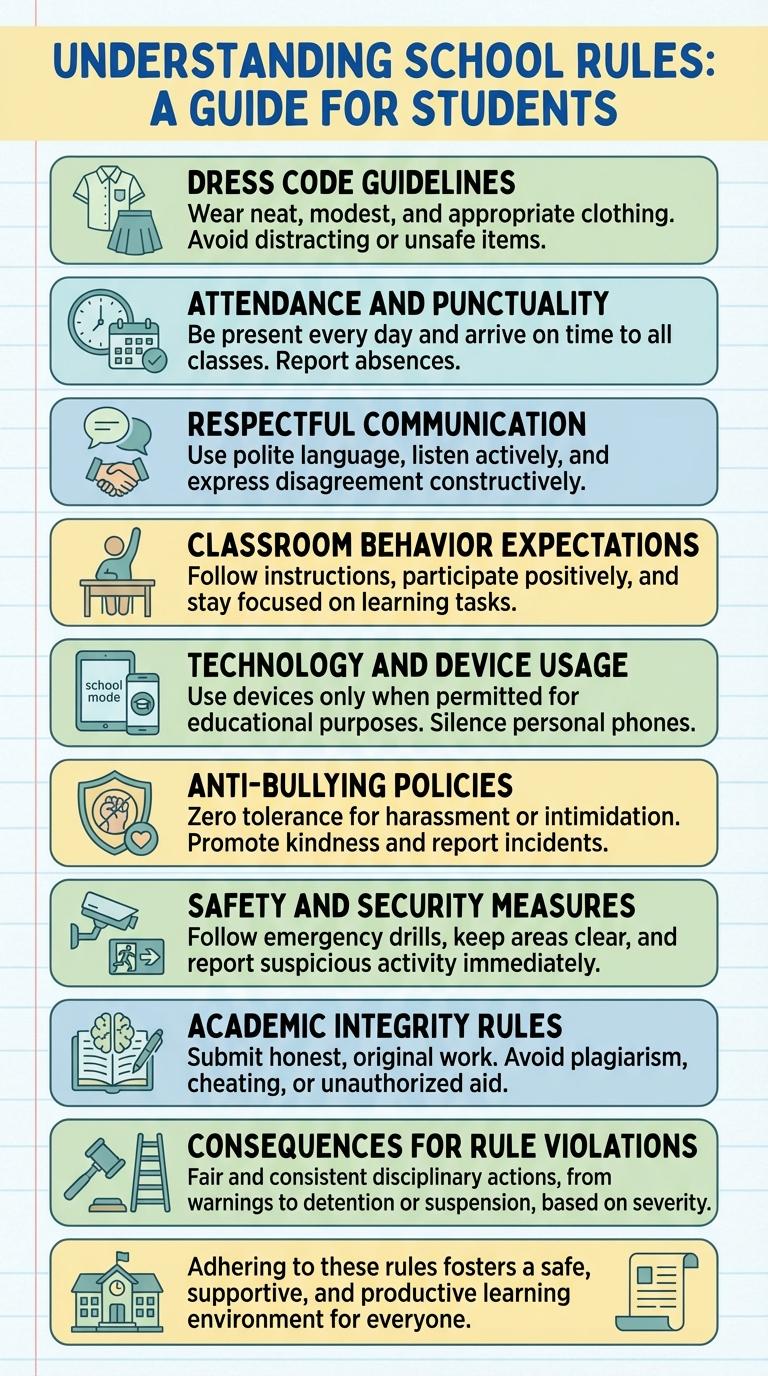
School rules play a crucial role in creating a safe and productive learning environment by setting clear expectations for behavior and responsibility. This infographic highlights essential guidelines that help maintain discipline, promote respect among students, and encourage positive social interaction. Understanding and following these rules supports academic success and fosters a community where everyone can thrive.
Understanding School Rules
School rules create a safe and respectful learning environment for all students. Understanding these rules helps maintain order and promote positive behavior.
Students should familiarize themselves with key school policies, such as attendance, dress code, and classroom conduct. Following rules ensures fairness and prevents disruptions during learning activities. Clear knowledge of expectations supports academic success and personal responsibility.
Dress Code Guidelines
School dress code guidelines are designed to create a respectful and focused learning environment. Students are expected to wear attire that promotes safety, comfort, and unity throughout the school day.
Following these guidelines helps maintain discipline and reduces distractions in the classroom.
- Uniform Requirements - Students must wear approved school uniforms, including specific colors and styles for shirts, pants, and skirts.
- Footwear Rules - Closed-toe shoes are mandatory to ensure student safety during all activities.
- Prohibited Clothing - Clothing with offensive language, graphics, or inappropriate imagery is not allowed on campus.
Attendance and Punctuality
Consistent attendance is essential for academic success and helps students keep up with classroom activities. Punctuality shows respect for teachers and peers while maximizing learning time. Schools enforce attendance and punctuality rules to foster a disciplined and productive learning environment.
Respectful Communication
Respectful communication in schools fosters a positive learning environment where all students and staff feel valued. It involves listening actively, speaking kindly, and using polite language at all times. Encouraging respectful dialogue helps prevent conflicts and promotes mutual understanding among peers.
Classroom Behavior Expectations
Classroom behavior expectations create a positive learning environment for all students. These rules help maintain focus and respect during lessons.
- Be Respectful - Treat teachers and classmates with kindness and listen when others are speaking.
- Stay On Task - Complete assignments and participate actively without distractions.
- Raise Your Hand - Wait for permission before speaking to keep the classroom orderly.
Following these rules supports a productive and respectful classroom atmosphere.
Technology and Device Usage
Proper technology and device usage in school promotes a focused and respectful learning environment. Students must follow guidelines to prevent distractions and maintain academic integrity.
Devices should be used only for educational purposes unless teachers grant permission otherwise. Unauthorized use of phones, tablets, or laptops can lead to disciplinary actions.
Anti-Bullying Policies
| Rule | Description |
|---|---|
| Zero Tolerance | Strict prohibition of all forms of bullying, including physical, verbal, and cyberbullying. |
| Reporting Mechanisms | Anonymous and confidential systems for students to report bullying incidents safely. |
| Support Services | Access to counselors and peer support groups for victims and perpetrators of bullying. |
| Education Programs | Regular workshops and classes teaching empathy, respect, and conflict resolution skills. |
| Disciplinary Actions | Clear consequences, including warnings, detention, and suspension, depending on the severity of bullying. |
Safety and Security Measures
What are the key safety and security measures in schools? Schools implement strict visitor policies and regular emergency drills to ensure student safety. Surveillance cameras and secure entry points help maintain a controlled environment.
How do schools protect students during emergencies? Schools conduct fire drills and lockdown exercises to prepare students and staff for different scenarios. Clear communication plans are established for quick response and coordination.
What role do staff play in maintaining security? Teachers and staff are trained to recognize and address potential threats. They monitor hallways and playgrounds to prevent bullying and ensure a safe atmosphere.
How are digital security measures applied in schools? Many schools use secure Wi-Fi networks and content filtering to protect students online. Cybersecurity education helps students understand safe internet practices.
Why are health protocols important for school safety? Enforcing hygiene practices and health screenings reduces the spread of illnesses. Schools promote regular handwashing and manage sick students promptly.
Academic Integrity Rules
Academic integrity is essential for maintaining a fair and honest learning environment. Schools enforce strict rules to prevent cheating, plagiarism, and any form of dishonesty in coursework.
Students must submit original work and properly cite sources to uphold these standards. Violations of academic integrity policies can lead to serious consequences such as grade penalties or suspension.