
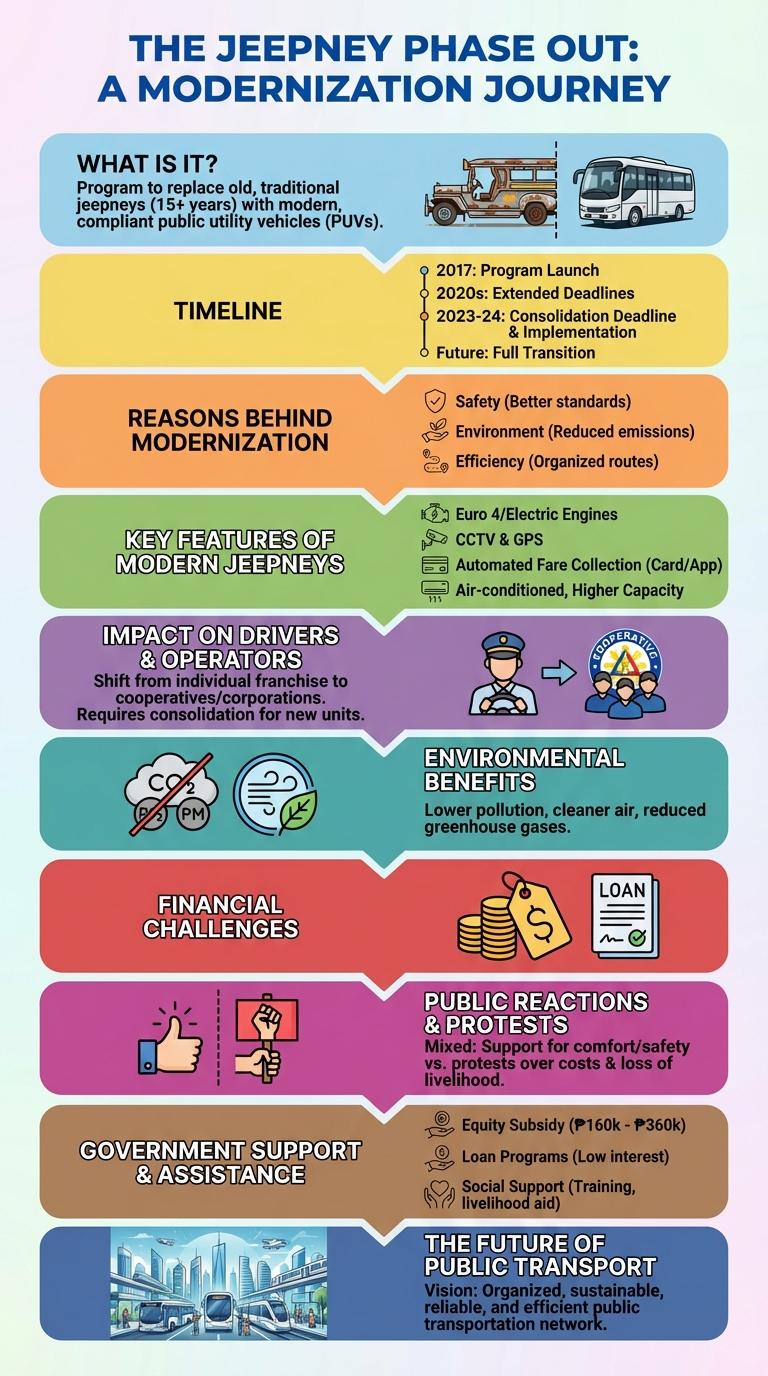
The jeepney phase out aims to modernize public transportation by replacing old, inefficient vehicles with environmentally friendly alternatives. This transition addresses pollution concerns and improves commuter safety and comfort. Government initiatives focus on providing financial support and promoting sustainable transport solutions.
What is the Jeepney Phase Out?
The Jeepney Phase Out refers to the gradual replacement of traditional jeepneys with modern, environmentally friendly public utility vehicles in the Philippines. This initiative aims to reduce pollution, improve road safety, and enhance commuter comfort.
The government mandates the retirement of old jeepneys that do not comply with updated emission and safety standards. Modern jeepneys feature cleaner engines, better fuel efficiency, and improved passenger capacity.
Timeline of the Jeepney Phase Out
The Jeepney Phase Out marks a significant shift in public transportation modernization in the Philippines. This timeline highlights key milestones in the government's plan to replace traditional jeepneys with safer, eco-friendly vehicles.
- 2017 Implementation Announced - The government set a deadline for jeepneys to comply with modern emission standards and safety features.
- 2018 Pilot Programs Released - Tests of modern jeepney models began in selected urban areas to gauge feasibility and public response.
- 2020 Compliance Deadline Enforced - Jeepney operators were required to upgrade or replace units failing to meet set standards.
- 2022 Phase Out Acceleration - Stricter policies were implemented to hasten the replacement of old jeepneys nationwide.
- 2024 Full Transition Targeted - The government aims for a 100% fleet modernization with environment-friendly jeepneys on the roads.
Reasons Behind the Jeepney Modernization Program
The Jeepney Modernization Program aims to replace old, inefficient jeepneys with modern, environmentally friendly models. This initiative addresses growing concerns over pollution and outdated public transportation systems.
Many jeepneys emit high levels of harmful emissions, contributing significantly to air pollution in urban areas. The program promotes the use of cleaner technologies like electric and Euro 4-compliant engines to improve air quality.
Key Features of Modern Jeepneys
The jeepney phase-out aims to replace old vehicles with modern, environmentally friendly models. These updated jeepneys offer improved safety, efficiency, and passenger comfort.
- Eco-friendly engines - Modern jeepneys use Euro 4-compliant engines that reduce harmful emissions significantly.
- Enhanced safety features - New designs include seat belts, better lighting, and reinforced frames for passenger protection.
- Increased passenger capacity - Spacious interiors accommodate more commuters without sacrificing comfort.
Modern jeepneys contribute to a cleaner environment and a safer public transportation system in the Philippines.
Impact on Jeepney Drivers and Operators
The jeepney phase-out aims to modernize public transportation by replacing old jeepneys with environmentally friendly vehicles. This transition presents significant challenges for jeepney drivers and operators who depend on daily earnings from these vehicles.
Many drivers face income loss due to the high cost of new vehicles and limited financing options. Operators struggle with the financial burden of upgrading fleets to meet government standards. The shift may result in job displacement and reduced livelihood security for thousands in the jeepney sector.
Environmental Benefits of the Phase Out
The jeepney phase out in the Philippines aims to replace old, pollution-heavy vehicles with modern, eco-friendly alternatives. This transition significantly reduces air pollution and promotes a cleaner environment.
- Reduced Carbon Emissions - Modern jeepneys emit fewer greenhouse gases compared to traditional models.
- Improved Air Quality - Replacing old jeepneys decreases particulate matter and harmful pollutants in urban areas.
- Lower Fuel Consumption - Newer vehicles use fuel-efficient technologies that reduce overall fuel usage.
Financial Challenges for Drivers
| Financial Challenge | Impact on Jeepney Drivers |
|---|---|
| High Vehicle Replacement Cost | Modern electric jeepneys cost around PHP 1.4 million, far above the PHP 250,000 average income of most drivers. |
| Limited Access to Financing | Strict loan requirements and high interest rates prevent many drivers from securing funds to upgrade their vehicles. |
| Loss of Daily Income | Transition period reduces earnings due to fewer routes and operational disruptions. |
| Maintenance and Operational Costs | New jeepneys require different maintenance skills and spare parts, increasing operational expenses initially. |
| Debt Burden | Many drivers risk falling into debt due to installment payments for new vehicles combined with fluctuating income. |
Public Reactions and Protests
How are the public reacting to the jeepney phase out? Many commuters express concern over increased transportation costs. Drivers and operators organize protests demanding government support and alternative livelihood programs.
What are the main reasons behind the protests? Protesters highlight worries about job losses and the affordability of modernized vehicles. They call for more inclusive policies that consider the socio-economic impact on traditional jeepney communities.
Government Support and Assistance Programs
The Philippine government has initiated several support programs to aid jeepney drivers during the phase-out process. Financial assistance includes low-interest loans and subsidies to help drivers purchase modern, environmentally friendly vehicles. Training and capacity-building programs are also provided to ensure a smooth transition and improved livelihood for affected drivers.