
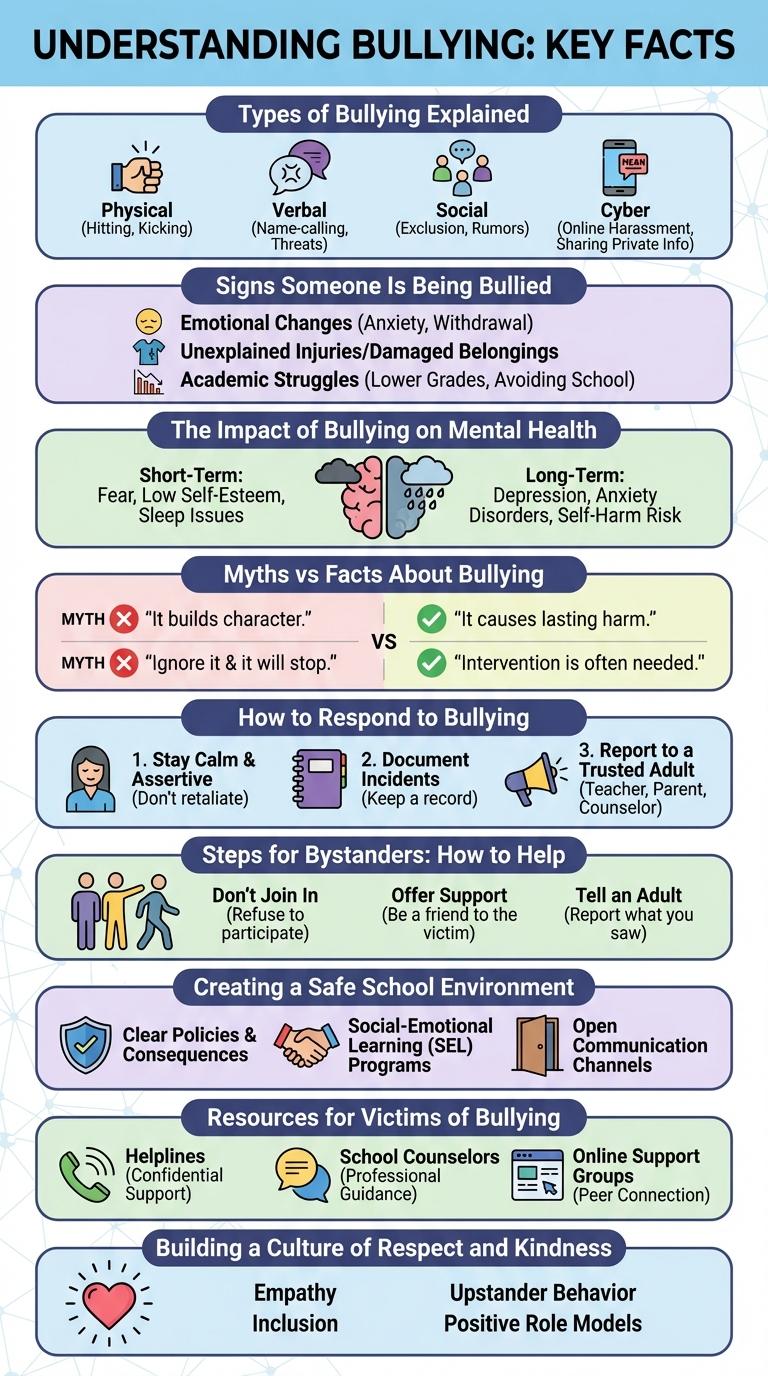
Bullying affects millions of individuals worldwide, causing lasting emotional and psychological harm. Infographics provide a powerful visual tool to raise awareness and educate people on recognizing, preventing, and addressing bullying effectively. Clear statistics and actionable tips make it easier to foster safer, more supportive environments for everyone.
Understanding Bullying: Key Facts
Bullying is a widespread issue affecting children and adults worldwide. Recognizing key facts about bullying helps in developing effective prevention strategies.
- Definition of Bullying - Bullying involves repeated aggressive behavior intended to hurt or intimidate a vulnerable individual.
- Types of Bullying - Physical, verbal, social, and cyberbullying are common forms with distinct impacts.
- Prevalence Rates - Approximately 1 in 3 students experience bullying during their school years.
Types of Bullying Explained
Bullying affects individuals in various harmful ways, disrupting their emotional and social well-being. Understanding the different types of bullying helps in identifying and addressing these behaviors effectively.
- Physical Bullying - Involves hitting, pushing, or other forms of physical aggression.
- Verbal Bullying - Includes name-calling, insults, and threats that cause emotional pain.
- Social Bullying - Entails exclusion, spreading rumors, and damaging someone's reputation.
- Cyberbullying - Uses digital platforms to harass, intimidate, or shame individuals online.
- Sexual Bullying - Involves unwanted sexual comments, gestures, or actions that demean others.
Everyone has a role in preventing bullying by promoting respect and kindness in their communities.
Signs Someone Is Being Bullied
Recognizing the signs someone is being bullied is crucial for early intervention and support. Common indicators include unexplained injuries, sudden changes in mood or behavior, and reluctance to attend school or social activities. Awareness of these signs can help friends, family, and educators provide timely assistance to those affected.
The Impact of Bullying on Mental Health
Bullying significantly affects mental health, leading to increased risks of anxiety, depression, and low self-esteem among victims. Persistent exposure to bullying can result in long-term psychological trauma and social withdrawal.
Studies show that nearly 70% of individuals who experience bullying report symptoms of mental distress. Effective anti-bullying programs help reduce these mental health risks by promoting safe and supportive environments.
Myths vs Facts About Bullying
Is bullying only physical? Bullying includes verbal, social, and cyber forms that can be just as harmful. Many believe only hitting counts as bullying, but exclusion and online harassment also cause serious damage.
Are bullies always obvious? Bullies can be quiet or hidden, making it hard to detect their behavior. Misconceptions suggest bullies are loud and noticeable, yet some use subtle tactics to control others.
Does bullying only affect kids at school? Bullying happens in workplaces, online, and within families too. It is not limited to schoolyards and can impact adults and children alike.
Can victims stop bullying by ignoring it? Ignoring bullying rarely stops it and can sometimes worsen the situation. Seeking help and reporting is essential to effectively address bullying.
Is bullying a normal part of growing up? Bullying is a serious issue, not a harmless phase. It has long-term emotional and psychological effects that require attention and intervention.
How to Respond to Bullying
Responding to bullying requires calm confidence and clear communication. Stand tall, make eye contact, and use a firm voice to express that the behavior is unacceptable.
Seek support from trusted adults or friends to ensure safety and guidance. Document incidents and report them promptly to school authorities or relevant organizations.
Steps for Bystanders: How to Help
Bystanders play a crucial role in stopping bullying by recognizing harmful behavior and choosing to act. Intervening safely can involve directly addressing the bully, supporting the victim, or seeking help from authorities. Taking these steps increases safety and promotes a positive environment for everyone.
Creating a Safe School Environment
Creating a safe school environment is essential for preventing bullying and promoting student well-being. A supportive atmosphere encourages respect, inclusion, and positive behavior among all students.
- Clear Anti-Bullying Policies - Establishing and enforcing rules helps define unacceptable behaviors and consequences.
- Staff Training and Awareness - Educators equipped with knowledge can identify and address bullying effectively.
- Student Engagement Programs - Activities that foster empathy and teamwork reduce bullying incidents and build community.
Resources for Victims of Bullying
| Resource | Description |
|---|---|
| StopBullying.gov | Offers comprehensive guides, advice, and support for children, parents, and educators to identify and prevent bullying. |
| National Bullying Prevention Center | Provides educational materials, toolkits, and a platform for sharing stories to empower victims and promote awareness. |
| Childline | A confidential helpline providing counseling and support for children experiencing bullying in the UK. |
| Crisis Text Line | Free, 24/7 text support for individuals facing bullying-related distress, connecting them with trained crisis counselors. |
| Local School Counselors | Professional support within schools offering personalized help, mediation, and intervention strategies for bullying cases. |