
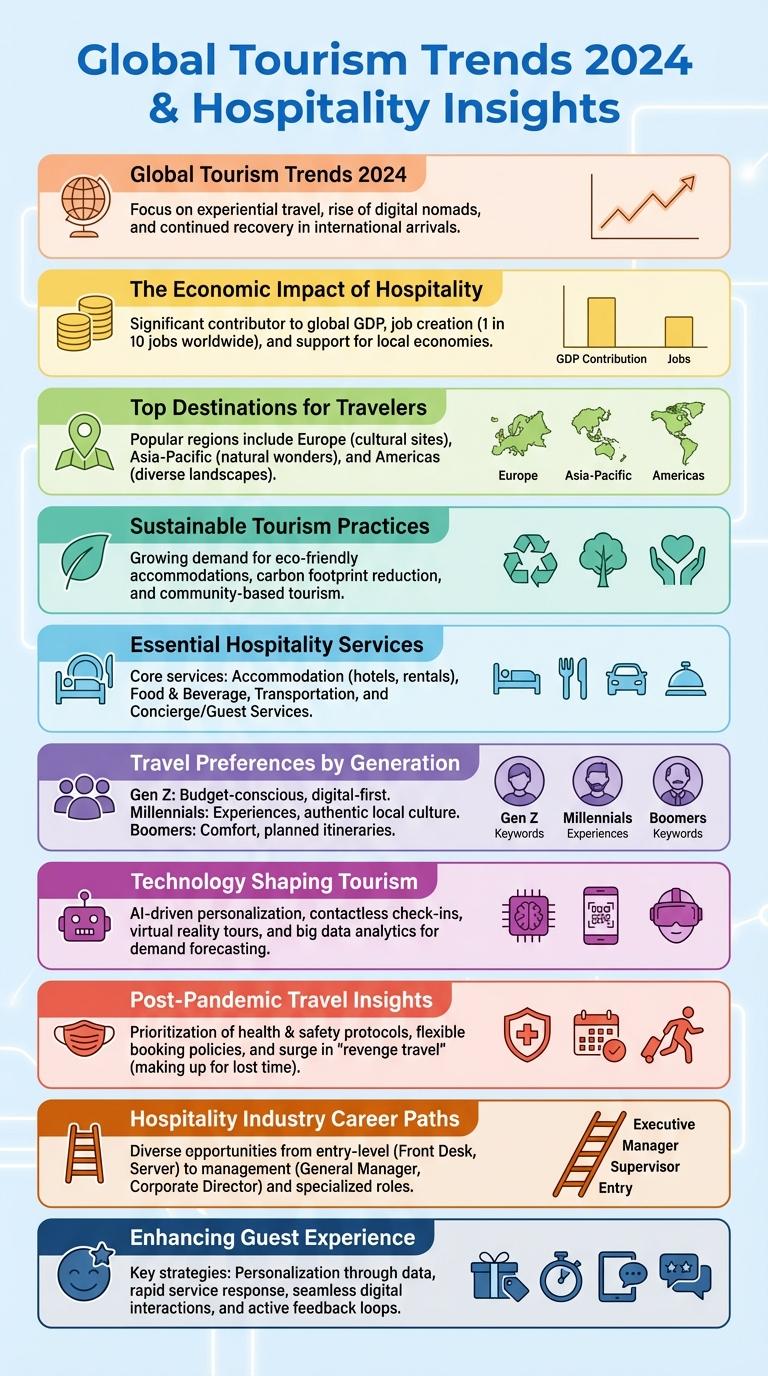
Tourism and hospitality shape the global economy by driving travel experiences and service excellence. Infographics visually present key data on tourist trends, destinations, and industry growth, making complex information accessible at a glance. Understanding these insights supports informed decisions for businesses and travelers alike.
Global Tourism Trends 2024
Global Tourism Trends 2024 reveal dynamic shifts in traveler behavior and industry innovations. Sustainability, technology integration, and personalized experiences are driving the future of tourism and hospitality.
- Sustainable Travel Growth - Eco-friendly tourism options and green accommodations are increasingly preferred by travelers worldwide.
- Digital Transformation - AI, virtual reality, and contactless services enhance customer experience and operational efficiency.
- Experiential Tourism - Tourists prioritize unique local experiences, cultural immersion, and personalized activities over traditional sightseeing.
These trends reflect the evolving demands of modern travelers and the sector's adaptation to global challenges.
The Economic Impact of Hospitality
The hospitality industry significantly contributes to global economic growth through job creation and revenue generation. Tourism drives high demand for accommodations, dining, and entertainment, bolstering local economies worldwide.
- Job Creation - Hospitality supports millions of jobs globally, including hotel staff, restaurant workers, and tour operators.
- Revenue Generation - Tourism-related hospitality services generate billions of dollars annually in income for businesses and governments.
- Local Economic Growth - Spending by tourists in hospitality sectors stimulates economic activity in communities and supports small businesses.
Top Destinations for Travelers
The tourism and hospitality industry thrives on the appeal of top travel destinations worldwide. These locations attract millions of visitors annually, boosting local economies and cultural exchange.
Popular destinations include cities rich in history, vibrant cultures, and natural beauty. Travelers often seek experiences that combine sightseeing, cuisine, and unique accommodations.
Sustainable Tourism Practices
| Practice | Impact |
|---|---|
| Eco-friendly Accommodations | Reduces carbon footprint and conserves energy through green building designs and renewable energy sources. |
| Community Engagement | Supports local economies and preserves cultural heritage by involving residents in tourism planning and activities. |
| Waste Management | Minimizes pollution by promoting recycling, composting, and reducing single-use plastics in hospitality services. |
| Conservation Programs | Protects biodiversity and natural habitats by funding and participating in environmental preservation efforts. |
| Responsible Travel Education | Raises awareness among tourists about minimizing environmental impact and respecting local cultures. |
Essential Hospitality Services
Essential hospitality services include accommodation, food and beverage, and customer support, ensuring a comfortable and enjoyable experience for travelers. These services are vital for attracting tourists and maintaining high satisfaction levels in the tourism industry. Efficient hospitality services boost local economies by encouraging repeat visits and positive reviews.
Travel Preferences by Generation
Travel preferences vary significantly across generations, influencing the tourism and hospitality industry. Understanding these trends helps tailor experiences that meet diverse needs and expectations.
- Baby Boomers prioritize comfort - They often seek luxurious accommodations and leisurely travel experiences focused on relaxation and cultural enrichment.
- Generation X values family-oriented trips - This group prefers destinations and activities that cater to both adults and children, emphasizing convenience and quality time.
- Millennials and Gen Z favor authentic experiences - These travelers look for adventure, local culture, and sustainable tourism options, often using digital platforms to plan their journeys.
Technology Shaping Tourism
Technology is revolutionizing the tourism and hospitality industry by enhancing customer experiences and streamlining operations. Advanced tools like artificial intelligence, virtual reality, and big data analytics are transforming how travelers plan and enjoy their trips.
Mobile apps enable real-time booking, personalized recommendations, and seamless communication with service providers. Smart hotels use IoT devices to optimize energy use, improve security, and deliver customized guest experiences.
Post-Pandemic Travel Insights
The tourism and hospitality sector is experiencing a significant rebound as global travel restrictions ease post-pandemic. Travelers now prioritize health safety measures and contactless services, reflecting heightened awareness of hygiene. Domestic and sustainable tourism have surged, with tourists favoring local destinations and eco-friendly options.
Hospitality Industry Career Paths
What career opportunities are available in the hospitality industry? The hospitality sector offers a wide range of roles from hotel management to event planning. Many positions cater to different skills and experience levels, providing diverse paths for career growth.
Which key career paths dominate the hospitality field? Popular roles include hotel general manager, food and beverage director, event coordinator, travel consultant, and customer service manager. Each role contributes to delivering exceptional guest experiences in various hospitality settings.
| Career Path | Primary Responsibilities |
|---|---|
| Hotel General Manager | Oversees daily hotel operations and staff management. |
| Food & Beverage Director | Manages dining services and menu planning. |
| Event Coordinator | Organizes and executes events and conferences. |
| Travel Consultant | Plans travel itineraries and customer bookings. |
| Customer Service Manager | Ensures high-quality service and guest satisfaction. |
How does the hospitality industry support career development? Many employers offer training programs, certifications, and on-the-job experience. Networking within the industry often leads to advancement opportunities and specialized roles.
What skills are essential for success in hospitality careers? Communication, problem-solving, leadership, and cultural awareness are vital. Technical skills related to reservation systems and event software also enhance career prospects.