
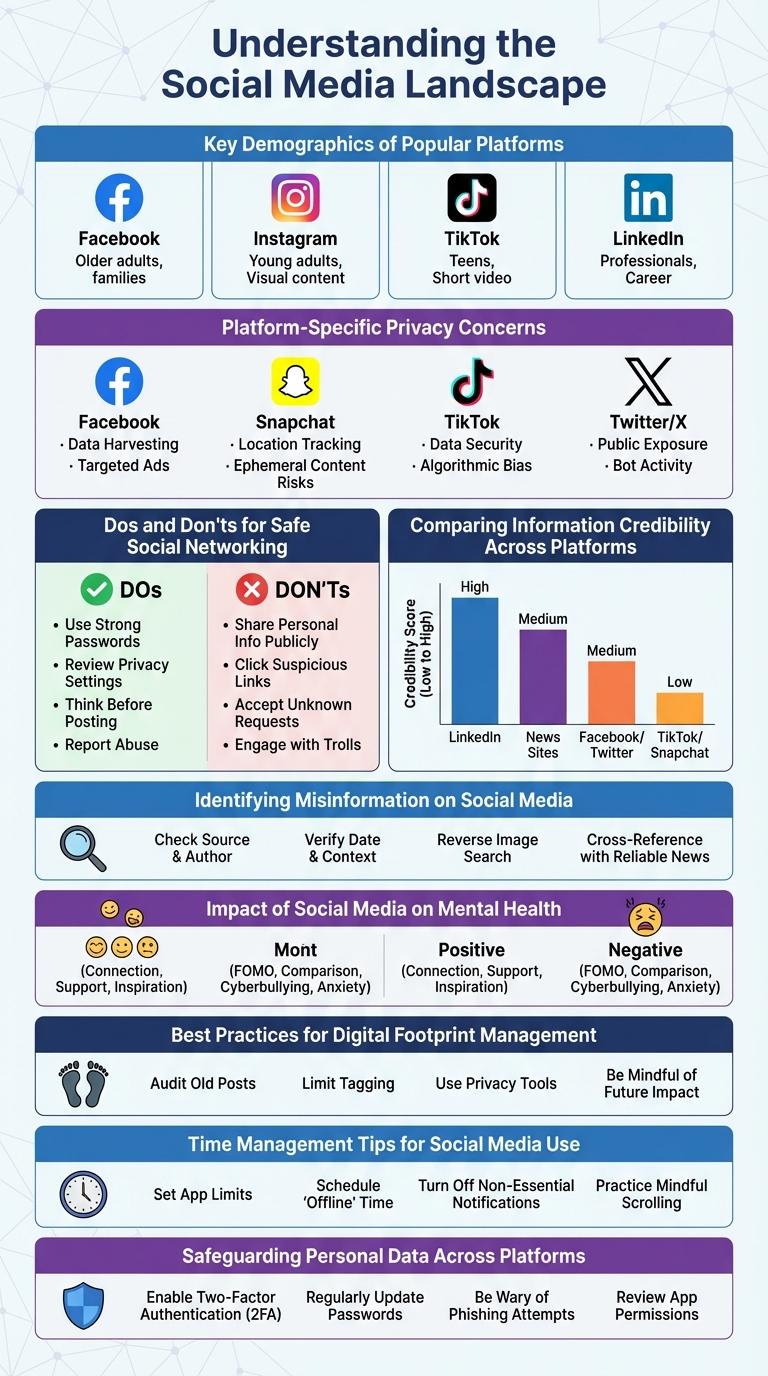
Understanding user awareness of various social media platforms reveals patterns in engagement, privacy concerns, and content preferences. This infographic highlights key statistics on how different age groups and demographics interact with platforms like Facebook, Instagram, Twitter, and TikTok. Insights drawn emphasize the importance of informed usage and digital literacy across social networks.
Understanding the Social Media Landscape
Understanding the social media landscape is essential for maximizing engagement and brand awareness across platforms like Facebook, Instagram, Twitter, TikTok, and LinkedIn. User demographics, content preferences, and platform algorithms vary widely, influencing how audiences interact with content. Awareness of these factors helps tailor strategies to target-specific users effectively and optimize reach.
Key Demographics of Popular Platforms
| Social Media Platform | Key Demographics |
|---|---|
| Age 25-54, 58% female, urban and suburban users, broad global reach | |
| Age 18-34, 52% female, favors visual content, strong presence in younger urban audiences | |
| Age 18-49, 60% male, news and real-time updates focus, users include professionals and influencers | |
| TikTok | Age 16-24, nearly equal gender distribution, popular among Gen Z, short-form video emphasis |
| Age 25-54, 57% male, professionals and B2B users, higher income and education levels |
Platform-Specific Privacy Concerns
Users of different social media platforms face unique privacy challenges that influence their online behavior. Awareness of these platform-specific concerns helps individuals protect their personal information more effectively.
For example, Facebook users often worry about data sharing with third parties, while Instagram users focus on controlling who views their content. Twitter users are more concerned about public exposure and data misuse in open conversations.
Dos and Don'ts for Safe Social Networking
Safe social networking is essential to protect personal information and maintain a positive online presence. Understanding the dos and don'ts helps users avoid common risks associated with different social media platforms.
- Do use strong, unique passwords - Protect accounts from unauthorized access by creating complex passwords for each platform.
- Do adjust privacy settings - Control who can see your posts and personal details by configuring privacy options carefully.
- Don't share sensitive information - Avoid posting data like home addresses, phone numbers, or financial details publicly.
- Don't accept friend requests from strangers - Limit your network to people you know to reduce the risk of scams or data theft.
- Do report suspicious activity - Notify platform moderators about harassment, fake profiles, or phishing attempts promptly.
Following these guidelines ensures safer experiences across all social media platforms.
Comparing Information Credibility Across Platforms
Understanding the credibility of information across social media platforms is essential for informed decision-making. Platforms like Twitter and LinkedIn are often used for professional and real-time updates, yet they vary in verification processes. Facebook and Instagram, while popular for personal connections, face challenges with misinformation control, affecting the trustworthiness of shared content.
Identifying Misinformation on Social Media
How aware are users of misinformation on social media platforms?
Many users struggle to identify false information due to the rapid spread and persuasive content. Recognizing misinformation requires critical evaluation of sources and content verification.
Impact of Social Media on Mental Health
The impact of social media on mental health is a growing concern worldwide. Awareness of how different platforms affect psychological well-being is essential for users and policymakers.
- Increased Anxiety and Depression - Studies show frequent use of social media can contribute to higher levels of anxiety and depression, especially among teenagers.
- Positive Social Connection - Some platforms foster meaningful interactions that enhance social support and reduce feelings of loneliness.
- Screen Time and Sleep Disruption - Excessive time on social media correlates with poor sleep quality, negatively impacting mental health overall.
Best Practices for Digital Footprint Management
Understanding how your digital footprint grows on various social media platforms is essential for maintaining a positive online presence. Each platform collects and shares different types of user data, influencing your overall digital identity.
Best practices for managing your digital footprint include regularly reviewing privacy settings and being mindful of the content you share. Limiting personal information and using platform-specific security features can help protect your online reputation.
Time Management Tips for Social Media Use
Managing time effectively on social media platforms improves productivity and reduces digital fatigue. Awareness of usage patterns can help users optimize their social media experience.
Set specific time limits for each platform like Facebook, Instagram, and Twitter to avoid excessive scrolling. Use built-in tools such as Screen Time or Digital Wellbeing to monitor daily usage. Prioritize content by following relevant accounts and mute notifications that distract from work or personal goals.