
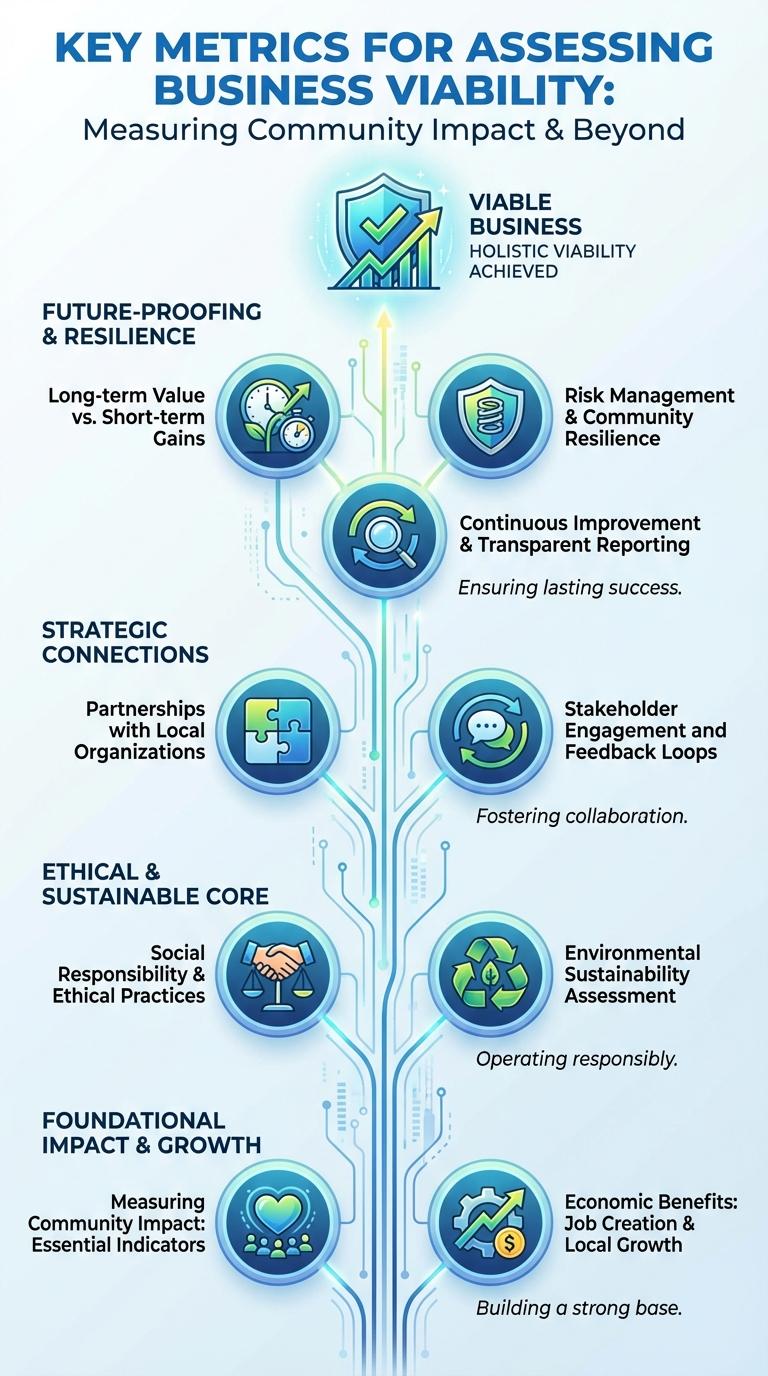
Evaluating the viability and impact of a business on the community involves analyzing its economic contributions, social benefits, and environmental footprint. Key performance indicators such as job creation, local investment, and sustainability initiatives provide insight into how the business supports community well-being. Understanding these factors helps stakeholders make informed decisions about growth and partnerships.
Key Metrics for Assessing Business Viability
Evaluating the viability and impact of a business on the community requires focusing on specific key metrics. These metrics provide insights into financial stability, social influence, and long-term sustainability.
- Profitability Ratio - Measures the company's ability to generate earnings relative to its revenue, assets, or equity.
- Community Engagement Index - Assesses the level of interaction and positive influence a business has within its local community.
- Environmental Impact Score - Quantifies a business's ecological footprint and commitment to sustainable practices.
- Customer Retention Rate - Indicates customer loyalty and satisfaction through repeat business frequency.
- Employment Growth Rate - Tracks job creation and workforce expansion as a sign of economic contribution.
Analyzing these indicators helps businesses balance profitability with meaningful social and environmental contributions.
Measuring Community Impact: Essential Indicators
Evaluating the viability and impact of a business on the community requires analyzing key indicators that reflect economic, social, and environmental outcomes. Essential metrics include job creation rates, local procurement percentages, and community satisfaction levels. Tracking these indicators provides valuable insights into the business's contribution to sustainable community development.
Stakeholder Engagement and Feedback Loops
Evaluating the viability and impact of a business on the community requires continuous stakeholder engagement and effective feedback loops. These practices ensure that the business aligns with community needs and adapts to changing expectations.
- Stakeholder Identification - Recognize all relevant parties including customers, employees, suppliers, and local residents to gather diverse perspectives.
- Ongoing Communication - Maintain regular, transparent dialogue with stakeholders to build trust and foster collaboration.
- Feedback Integration - Systematically incorporate stakeholder input into strategic decisions to enhance community impact and business viability.
Economic Benefits: Job Creation & Local Growth
Evaluating the viability and impact of a business on the community involves analyzing its economic benefits, particularly job creation and local growth. Understanding these factors helps stakeholders make informed decisions about supporting and investing in such businesses.
Job creation directly boosts local employment rates, reducing unemployment and increasing household incomes. Local growth occurs as businesses stimulate demand for goods and services, benefiting other community enterprises. Measuring these impacts requires data on employment numbers, wage levels, and economic output within the community.
Social Responsibility & Ethical Practices
How does a business measure its social responsibility within the community? Social responsibility involves active efforts to improve community well-being through ethical labor, philanthropy, and environmentally sustainable practices. Measuring this includes assessing community engagement, employee welfare, and environmental impact metrics.
What ethical practices indicate a business's commitment to positive community impact? Transparent governance, fair labor conditions, and ethical sourcing are key indicators. These practices build trust, enhance brand reputation, and foster long-term community support.
How can businesses evaluate the social impact of their operations? Businesses use social impact assessments that track changes in local employment rates, education, health, and environmental quality. Data from these assessments guide strategic improvements and stakeholder communications.
Which tools help quantify ethical and social responsibility efforts? Key tools include Corporate Social Responsibility (CSR) reports, third-party audits, and Environmental, Social, and Governance (ESG) ratings. These instruments provide measurable data to benchmark and communicate social performance.
Why is ongoing evaluation of social responsibility and ethics essential? Continuous evaluation ensures compliance with evolving standards and community expectations. It drives innovation in sustainable practices and strengthens community partnerships for lasting positive effects.
Environmental Sustainability Assessment
Environmental Sustainability Assessment evaluates how a business's operations affect natural resources and ecosystems. It focuses on minimizing negative impacts like pollution, waste, and resource depletion.
This assessment helps identify opportunities for energy efficiency, waste reduction, and sustainable sourcing. It supports long-term community health and resilience by promoting eco-friendly business practices.
Partnerships with Local Organizations
Partnerships with local organizations play a crucial role in assessing a business's community impact by fostering collaboration and resource sharing. These alliances enable businesses to better understand community needs, enhance social responsibility, and create sustainable development opportunities. Evaluating such partnerships helps measure positive outcomes like job creation, educational support, and improved local services.
Long-term Value vs. Short-term Gains
Evaluating the viability of a business requires balancing long-term value creation with short-term gains. Sustainable businesses prioritize community well-being and lasting economic benefits over immediate profits.
Short-term gains can boost initial revenue but may harm community trust and social capital. Long-term value fosters resilience, drives local development, and builds enduring stakeholder relationships.
Risk Management & Community Resilience
| Aspect | Key Points |
|---|---|
| Risk Identification | Analyze potential business risks affecting community health, safety, and economy. |
| Risk Mitigation Strategies | Develop plans to minimize adverse effects on community infrastructure and resources. |
| Community Resilience | Strengthen local capacity to adapt and recover from business-related disruptions. |
| Stakeholder Engagement | Foster collaboration between business, local authorities, and residents for shared risk management. |
| Impact Assessment | Measure economic, social, and environmental outcomes to guide sustainable business practices. |