
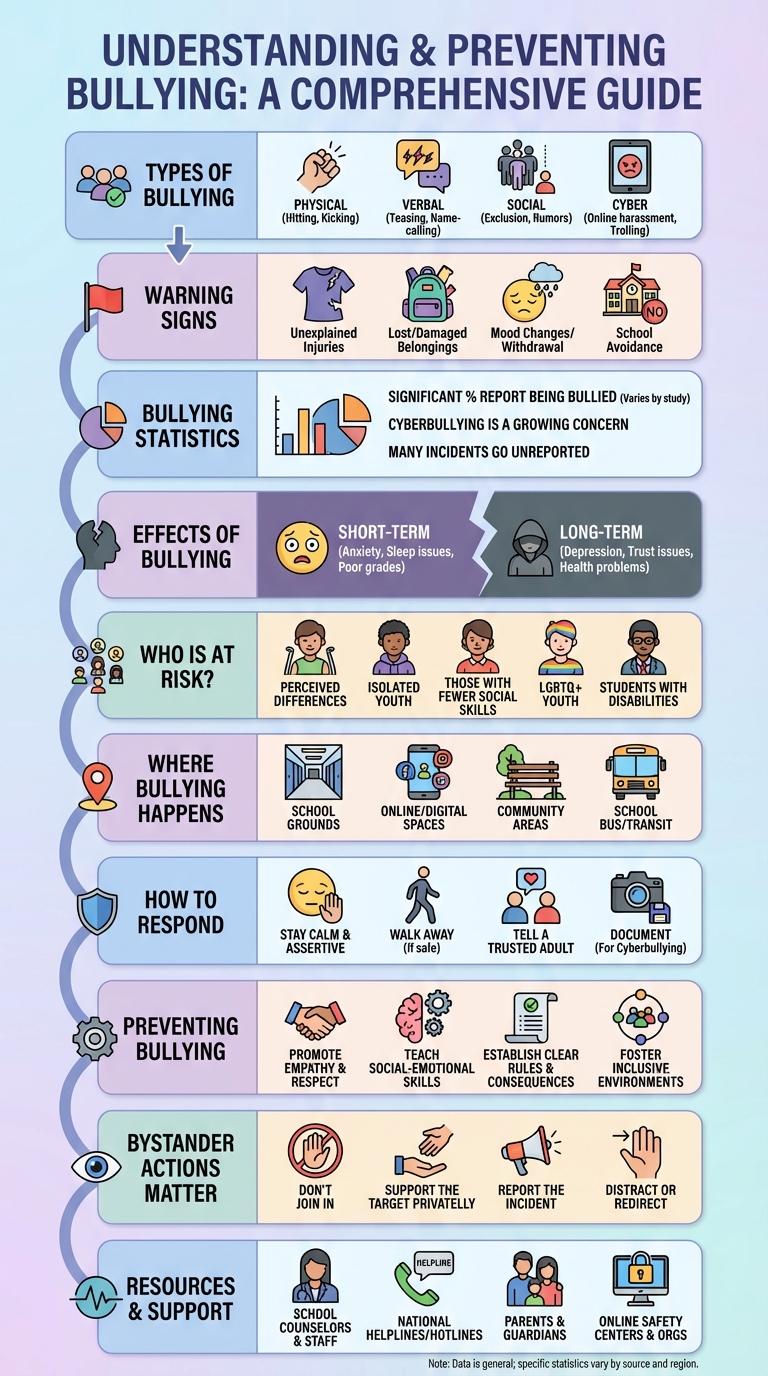
Bullying is a pervasive issue that affects individuals across all age groups and environments. Infographics provide a clear and impactful way to visualize the causes, effects, and prevention strategies associated with bullying. By presenting key statistics and actionable insights, they help raise awareness and promote positive change.
Types of Bullying
Bullying manifests in several distinct forms, each impacting victims differently. Understanding these types is essential for effective prevention and intervention.
- Physical Bullying - Involves hitting, pushing, or any form of physical aggression.
- Verbal Bullying - Includes name-calling, insults, and threats that harm emotional well-being.
- Social Bullying - Charactersied by exclusion, spreading rumors, and damaging relationships.
- Cyberbullying - Utilizes digital platforms to harass, intimidate, or embarrass individuals.
- Sexual Bullying - Involves unwanted sexual comments, gestures, or actions toward others.
Recognizing these types of bullying helps create safer environments for all individuals.
Warning Signs of Bullying
| Warning Sign | Description |
|---|---|
| Unexplained Injuries | Frequent bruises, cuts, or scratches may indicate physical bullying. |
| Emotional Distress | Mood swings, anxiety, and withdrawal from social activities can signal emotional bullying. |
| Declining Academic Performance | A sudden drop in grades or loss of interest in schoolwork often relates to bullying stress. |
| Lost or Destroyed Belongings | Missing books, torn clothes, or damaged personal items may be signs of bullying. |
| Changes in Eating Habits | Skipping meals or overeating can reflect coping responses to bullying. |
Bullying Statistics
Bullying affects millions of students worldwide, causing significant emotional and psychological harm. Understanding key statistics helps raise awareness and prompt effective prevention strategies.
- 1 in 5 students experience bullying - Approximately 20% of students report being bullied at school each year.
- Cyberbullying affects 15% of teens - Online harassment impacts a growing number of adolescents across social media platforms.
- Bullying increases risk of depression - Victims are twice as likely to suffer from mental health issues including anxiety and depression.
Effects of Bullying
Bullying causes significant emotional distress, leading to anxiety, depression, and lowered self-esteem in victims. These psychological effects can persist long after the bullying has stopped, impacting mental health throughout life.
Academic performance often declines due to bullying, as victims struggle with concentration and attendance. Social withdrawal and feelings of isolation further exacerbate these challenges, hindering personal development and peer relationships.
Who Is at Risk?
Children and teenagers aged 12 to 18 are most at risk of experiencing bullying in schools. Individuals who exhibit differences in appearance, cultural background, or social status often face higher rates of bullying. Students with disabilities or those who identify as LGBTQ+ are particularly vulnerable to bullying behavior.
Where Bullying Happens
Where does bullying most commonly occur? Bullying often takes place in schools, especially in hallways, classrooms, and playgrounds. It also frequently happens online through social media and messaging platforms.
How to Respond to Bullying
Bullying affects millions globally and requires an effective response to ensure safety and well-being. Knowing how to respond empowers victims and bystanders to take action and seek support.
- Stay Calm - Maintaining composure helps you think clearly and avoid escalating the situation.
- Tell a Trusted Adult - Reporting bullying to parents, teachers, or counselors ensures proper intervention and protection.
- Document Incidents - Keeping records of bullying events supports evidence-based action for resolving conflicts.
Preventing Bullying
Preventing bullying requires creating a safe and inclusive environment where respect is actively promoted. Schools and communities should implement clear policies and programs that encourage positive behavior and empower bystanders to intervene. Consistent education on empathy and communication skills helps reduce instances of bullying and fosters a culture of kindness.
Bystander Actions Matter
Bystanders play a crucial role in stopping bullying and creating a safer environment. Their actions can either escalate or defuse the situation.
Intervening safely, supporting the victim, or reporting the incident can help reduce bullying incidents. Empowering bystanders encourages a culture of respect and accountability.