
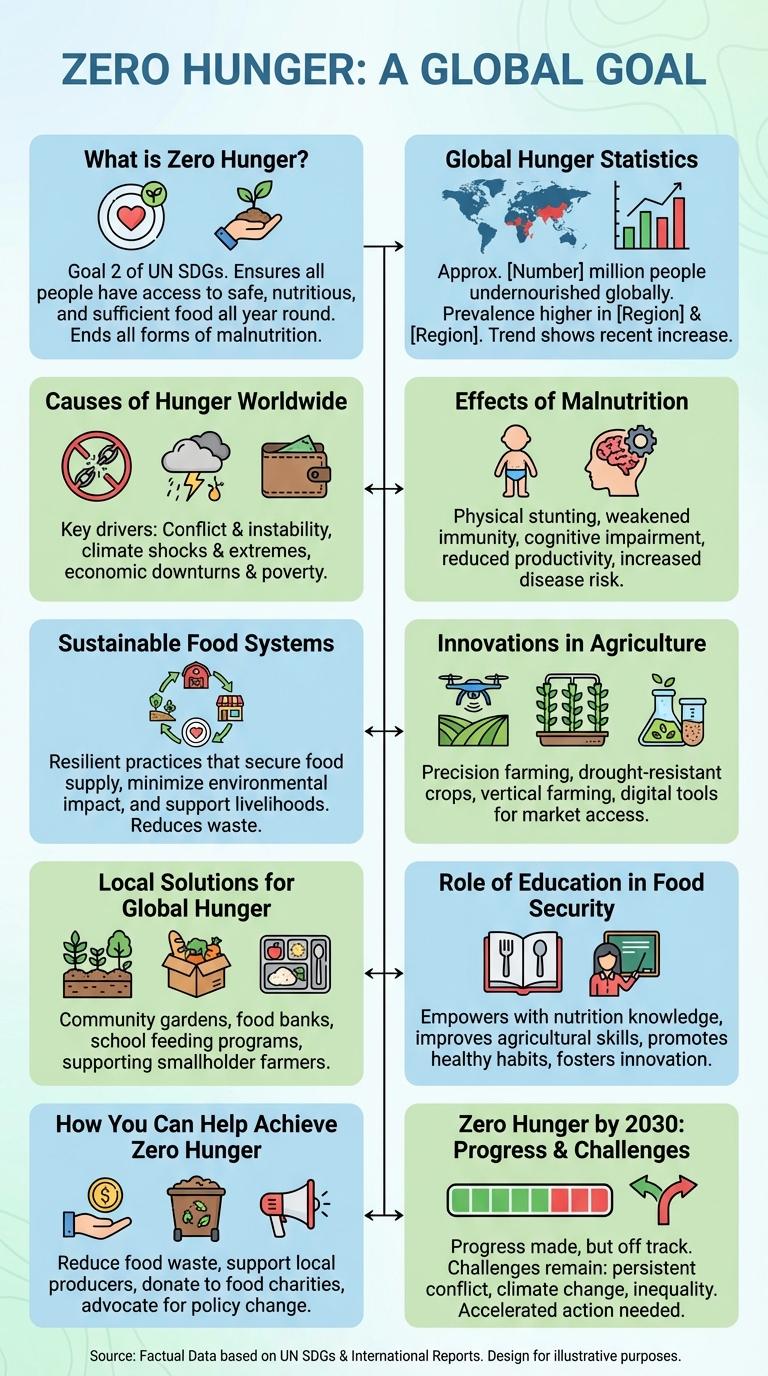
Zero hunger is a global priority focused on eradicating food insecurity and malnutrition by ensuring access to sufficient, safe, and nutritious food for all people. Sustainable agricultural practices, improved food distribution, and reducing food waste play crucial roles in achieving this goal. This infographic highlights key statistics, challenges, and solutions that drive progress toward ending hunger worldwide.
What is Zero Hunger?
Zero Hunger is a global initiative aimed at ending hunger, achieving food security, and promoting sustainable agriculture by 2030. It is part of the United Nations Sustainable Development Goals (SDG 2).
The objective is to ensure everyone has access to sufficient and nutritious food all year round. Zero Hunger also focuses on improving agricultural productivity and incomes of small-scale food producers.
Global Hunger Statistics
Hunger remains a critical global challenge, with millions facing food insecurity daily. Understanding key statistics helps target efforts to achieve zero hunger worldwide.
- Over 800 million people suffer from chronic undernourishment - This represents approximately 10% of the global population struggling with inadequate food intake.
- Close to 45 million children under five are affected by wasting - Wasting indicates acute malnutrition, increasing child mortality risks significantly.
- Nearly 2 billion people experience moderate or severe food insecurity - Food insecurity impacts physical health and economic stability worldwide.
Causes of Hunger Worldwide
Hunger worldwide stems from complex causes including poverty, conflict, and climate change. Limited access to nutritious food, economic instability, and ineffective agricultural practices further exacerbate food insecurity. Addressing these factors is essential to achieving zero hunger globally.
Effects of Malnutrition
Malnutrition significantly impairs physical and mental development, especially in children. It leads to weakened immune systems, increasing vulnerability to diseases worldwide.
- Stunted Growth - Chronic malnutrition causes irreversible physical and cognitive delays in children under five.
- Increased Mortality - Malnourished individuals face higher risks of death from common infections like pneumonia and diarrhea.
- Economic Impact - Poor nutrition reduces work capacity, contributing to lower productivity and economic growth.
Sustainable Food Systems
Sustainable food systems play a crucial role in achieving zero hunger by promoting environmentally friendly agricultural practices. These systems ensure food security while preserving natural resources for future generations.
Emphasizing biodiversity and soil health helps increase crop resilience and productivity. Efficient water use and reduced food waste contribute to sustainability and equitable food distribution. Support for small-scale farmers is essential to build inclusive and sustainable food supply chains.
Innovations in Agriculture
Innovations in agriculture drive progress toward zero hunger by increasing food production and enhancing sustainability. Cutting-edge technologies optimize resource use and improve crop yields worldwide.
- Precision Farming - Utilizes GPS and IoT sensors to maximize crop efficiency and minimize waste.
- Genetically Modified Crops - Develops resilient plant varieties resistant to pests, diseases, and climate stress.
- Vertical Farming - Grows crops in controlled indoor environments, reducing land use and water consumption.
These advancements empower farmers to produce more food sustainably, supporting global food security goals.
Local Solutions for Global Hunger
Zero Hunger aims to eradicate hunger and ensure food security worldwide. Local solutions play a crucial role in addressing food scarcity by utilizing community resources and knowledge.
Farmers' cooperatives, urban gardens, and local markets improve food accessibility. Empowering local communities strengthens resilience against global hunger challenges.
Role of Education in Food Security
| Role of Education | Impact on Food Security |
|---|---|
| Nutrition Awareness | Enhances knowledge of balanced diets, reducing malnutrition and improving overall health. |
| Agricultural Training | Improves farming techniques, increasing crop yields and sustainable food production. |
| Women Empowerment | Educated women contribute to better family nutrition and food resource management. |
| Food Safety Education | Promotes hygienic food handling, lowering risk of foodborne illnesses and wastage. |
| Economic Opportunities | Education creates jobs beyond farming, increasing income to access diverse, nutritious foods. |
How You Can Help Achieve Zero Hunger
How can you contribute to achieving zero hunger worldwide? Supporting local food banks and reducing food waste are effective ways to make a difference. Volunteering your time and donating resources help provide meals to those in need.
What role does sustainable agriculture play in ending hunger? Sustainable farming increases food production while protecting the environment. Encouraging sustainable practices ensures long-term food security for communities.
Why is education important in the fight against hunger? Educating people about nutrition and food management empowers them to make healthier choices. It also raises awareness about the impacts of hunger and how to prevent it.
How can policy support zero hunger initiatives? Governments can implement policies that improve food distribution and access. Investing in infrastructure and social protection programs reduces food insecurity.
What impact does community involvement have on reducing hunger? Community-driven projects address local food needs efficiently and sustainably. Collaboration fosters innovation and strengthens food systems at the grassroots level.