
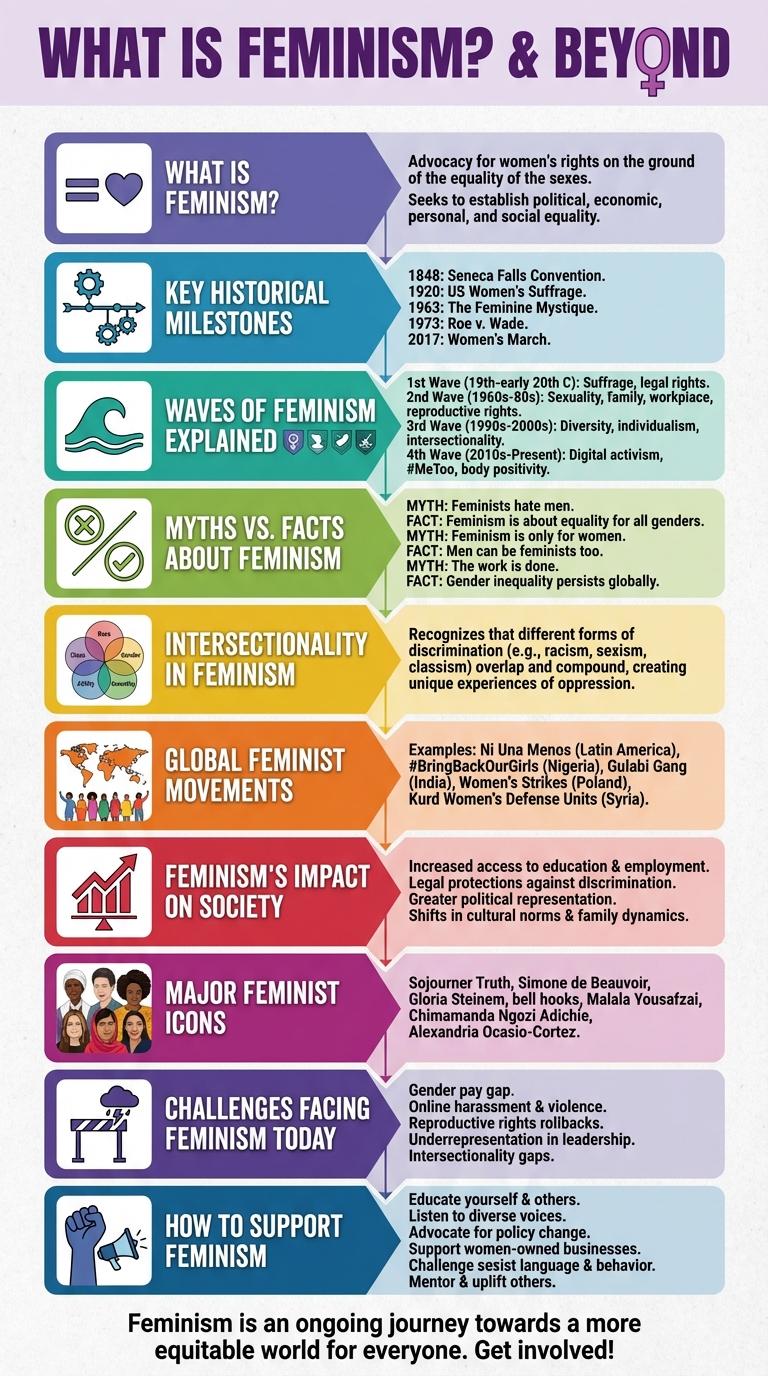
Feminism advocates for equality between all genders, challenging societal norms and promoting women's rights. This infographic highlights key milestones, influential figures, and core principles of the feminist movement. Understanding these elements fosters awareness and supports continued progress toward gender equity.
What Is Feminism?
Feminism is a social and political movement advocating for equal rights and opportunities for all genders. It challenges systemic inequalities faced specifically by women in areas such as work, education, and legal rights. The core goal of feminism is to achieve gender equity and dismantle patriarchal structures.
Key Historical Milestones
Feminism has evolved through key historical milestones that shaped the movement's trajectory. These milestones highlight the ongoing struggle for gender equality and women's rights worldwide.
The Seneca Falls Convention in 1848 marked the first women's rights gathering, advocating for suffrage and equality. The 19th Amendment to the U.S. Constitution in 1920 granted American women the right to vote, a significant victory for the movement.
Waves of Feminism Explained
| Waves of Feminism | Key Features & Timeline |
|---|---|
| First Wave | Mid-19th to early 20th century; Focused on legal issues, primarily women's suffrage; Major achievement: 19th Amendment (1920) granted voting rights in the USA. |
| Second Wave | 1960s to 1980s; Addressed equality in workplace, education, reproductive rights, and sexuality; Influential texts include "The Feminine Mystique" (1963) by Betty Friedan. |
| Third Wave | 1990s to early 2000s; Challenged definitions of femininity and embraced diversity including race, ethnicity, and sexual orientation; Emphasized individualism and intersectionality. |
| Fourth Wave | 2010s to present; Centers on online activism, combating sexual harassment, body shaming, and gender equality; Utilizes social media platforms for global outreach and awareness. |
Myths vs. Facts About Feminism
Feminism is often misunderstood due to popular myths that misrepresent its goals and values. Clarifying these misconceptions helps promote a more accurate understanding of feminism.
Myth: Feminism seeks to undermine men. Fact: Feminism advocates for gender equality, benefiting all genders. Myth: Feminists reject traditional roles. Fact: Feminism supports the freedom to choose any role. Myth: Feminism is no longer needed. Fact: Gender inequality persists globally, making feminism still relevant today.
Intersectionality in Feminism
Intersectionality in feminism explores how overlapping social identities like race, class, and gender create unique experiences of discrimination and privilege. This concept emphasizes the importance of recognizing diverse perspectives within the feminist movement.
By addressing multiple axes of identity, intersectional feminism challenges single-issue approaches and promotes inclusivity. It seeks to amplify marginalized voices and create more equitable solutions for all women.
Global Feminist Movements
What are the key global feminist movements shaping gender equality today?
Global feminist movements unite diverse voices to challenge gender discrimination and promote women's rights. These movements address issues like reproductive rights, equal pay, and gender-based violence worldwide.
| Movement | Focus Area |
|---|---|
| HeForShe | Engaging men in gender equality efforts |
| Ni Una Menos | Combating femicide and violence against women in Latin America |
| Women's March | Advocating for reproductive rights and social justice |
| Malala Fund | Promoting girls' education globally |
| SlutWalk | Fighting victim blaming and sexual violence |
Feminism's Impact on Society
Feminism has significantly reshaped societal norms and values, promoting gender equality and human rights. Its influence spans legal, cultural, and economic domains, fostering more inclusive communities.
- Advancement of Women's Rights - Feminism has led to important legal reforms granting women voting rights, workplace protections, and reproductive freedoms.
- Economic Empowerment - Increased female participation in the workforce has diversified economies and reduced gender wage gaps.
- Cultural Shift - Feminism challenges traditional gender roles, encouraging diverse representations in media, education, and leadership.
Feminism continues to inspire global movements toward social justice and equality across all genders.
Major Feminist Icons
Feminism has been shaped by influential figures advocating for gender equality and women's rights. These icons have made lasting impacts on social, political, and cultural landscapes worldwide.
- Simone de Beauvoir - Philosopher and writer famed for her work "The Second Sex," which challenged traditional gender roles.
- Bell Hooks - Author and social activist known for addressing intersectionality and inclusivity within feminism.
- Gloria Steinem - Key leader of the American feminist movement, co-founder of Ms. Magazine, and advocate for reproductive rights.
Challenges Facing Feminism Today
Feminism continues to face significant challenges as it evolves in today's complex social and political landscape. Addressing these obstacles is crucial for achieving gender equality worldwide.
- Persistent Gender Inequality - Unequal pay and limited leadership opportunities remain major issues despite decades of activism.
- Intersectionality Gaps - Feminism often struggles to fully include and address the diverse experiences of race, class, and sexuality.
- Backlash and Misrepresentation - Misunderstandings and negative stereotypes hinder feminist movements' progress and public support.