
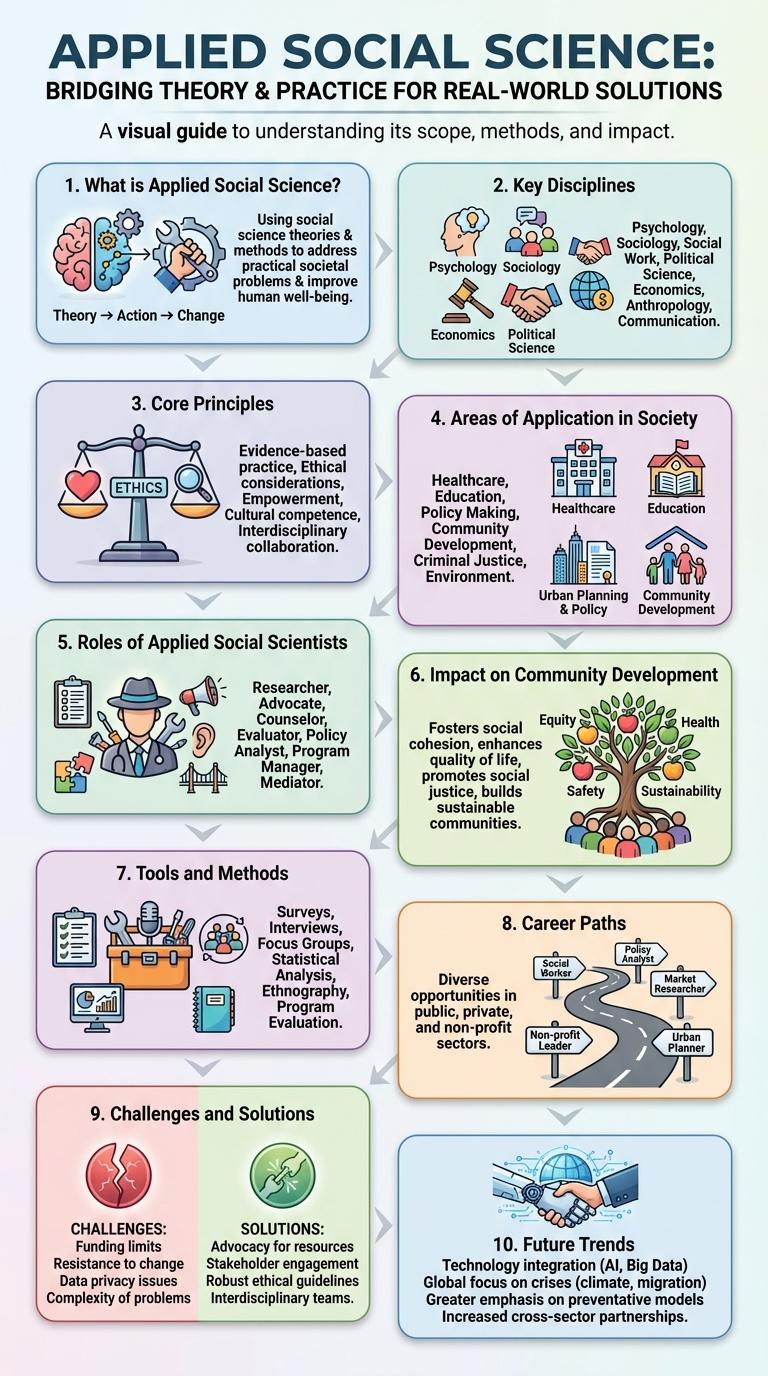
Applied social science uses research methods and theories to solve real-world problems in areas like education, healthcare, and community development. This field translates academic knowledge into practical strategies that improve social policies and individual well-being. Visualizing data through infographics helps communicate complex social science concepts clearly and effectively.
What is Applied Social Science?
What is Applied Social Science?
Applied Social Science uses knowledge from various social science disciplines to solve real-world problems. It bridges theory and practice by applying methods from sociology, psychology, economics, and anthropology.
Key Disciplines in Applied Social Science
Applied Social Science integrates practical approaches to understand and solve societal issues. It bridges theory and real-world applications across various disciplines.
- Social Work - Focuses on improving individual and community well-being through support and advocacy.
- Psychology - Examines human behavior and mental processes to address psychological challenges.
- Criminology - Studies crime patterns, causes, and prevention strategies within society.
- Public Health - Promotes health and disease prevention at the community level.
- Urban Planning - Designs sustainable and functional urban environments to enhance quality of life.
Core Principles of Applied Social Science
Applied social science integrates theories and methods from sociology, psychology, economics, and political science to address real-world problems. It emphasizes practical solutions through research, analysis, and community engagement.
Core principles include interdisciplinary collaboration, ethical practice, and evidence-based decision making. These principles guide professionals to create impactful social policies and interventions that improve individual and societal well-being.
Areas of Application in Society
| Area of Application | Description |
|---|---|
| Education | Research on learning methods, curriculum development, and educational policy to improve student outcomes and equity. |
| Healthcare | Studies on health behaviors, social determinants of health, and healthcare delivery to enhance public health systems. |
| Urban Development | Analysis of community planning, housing policies, and transportation systems for sustainable city growth. |
| Criminal Justice | Evaluation of laws, policing strategies, and rehabilitation programs to reduce crime and promote social justice. |
| Workplace Dynamics | Research on organizational behavior, labor relations, and workplace diversity to improve employee satisfaction and productivity. |
Roles of Applied Social Scientists
Applied social scientists analyze human behavior to develop practical solutions for social issues. They work in diverse fields such as public health, education, and community development to implement evidence-based interventions. Their roles include conducting research, shaping policy, and advising organizations to promote social well-being.
Impact on Community Development
Applied social science plays a crucial role in community development by providing evidence-based solutions to social issues. It involves the practical application of sociology, psychology, and economics to improve community well-being.
Through data analysis and field research, applied social science helps identify community needs and resource gaps. Programs designed with these insights promote sustainable development and social equity. These efforts foster stronger, healthier communities with enhanced quality of life.
Tools and Methods in Applied Social Science
Applied social science uses various tools and methods to analyze human behavior and social systems effectively. These approaches help professionals design solutions, policies, and interventions that address real-world social issues.
- Surveys and Questionnaires - Standardized instruments for collecting quantitative and qualitative data from populations.
- Interviews - In-depth conversations to gather detailed perspectives and personal experiences from individuals.
- Focus Groups - Facilitated discussions that explore collective views and social dynamics within target communities.
- Case Studies - Intensive examination of individual or group cases to uncover complex social phenomena.
- Statistical Analysis - Techniques such as regression and factor analysis to identify patterns and relationships in social data.
Career Paths in Applied Social Science
Applied social science explores practical solutions to societal challenges through disciplines like sociology, psychology, and economics. Career paths include social work, policy analysis, community development, and human resources, each leveraging data-driven insights to improve lives. Professionals in this field work in government, non-profits, healthcare, and corporate sectors to implement evidence-based strategies for social change.
Challenges and Solutions in the Field
Applied social science addresses real-world problems by integrating theories from sociology, psychology, and economics. This interdisciplinary approach aims to improve societal well-being through evidence-based practices.
Challenges in the field include data complexity, ethical considerations, and cultural diversity. Solutions involve advanced data analytics, strict ethical guidelines, and inclusive research methodologies.