
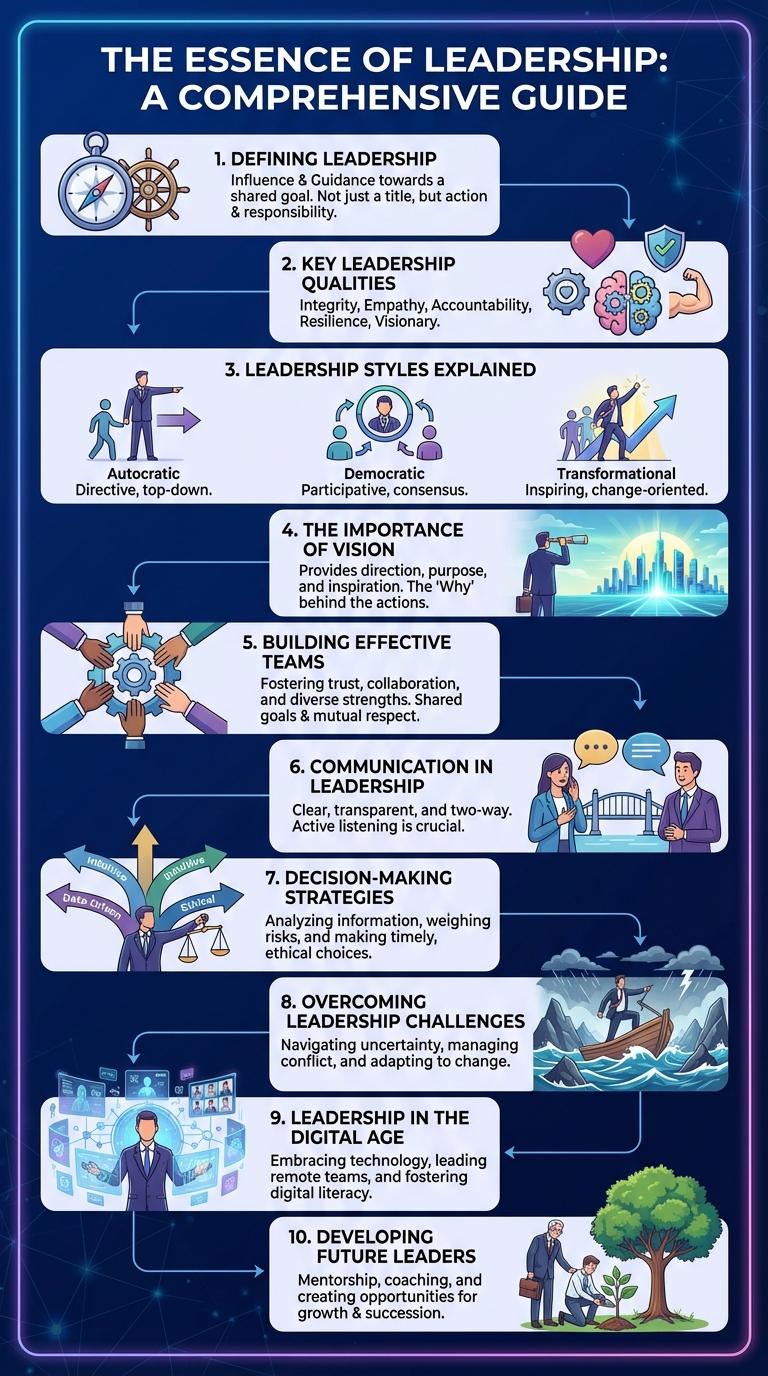
Effective leadership drives team success and inspires innovation. Visualizing key leadership qualities and strategies through an infographic makes complex concepts accessible and easy to remember. This approach highlights essential skills such as communication, decision-making, and emotional intelligence.
Defining Leadership
Leadership is the ability to guide and inspire individuals or groups toward achieving common goals. It involves influencing others through vision, communication, and example.
Effective leadership requires clear decision-making, empathy, and adaptability. Leaders motivate teams by setting direction and fostering collaboration. Strong leadership drives organizational success and innovation.
Key Leadership Qualities
What are the essential qualities that define effective leadership?
Effective leadership embodies a blend of vision, communication, and empathy. These qualities enable leaders to inspire teams and drive success.
Leadership Styles Explained
Leadership styles define how leaders guide, motivate, and manage teams to achieve goals. Key styles include transformational, transactional, democratic, autocratic, and laissez-faire, each with distinct approaches to decision-making and team engagement. Understanding these styles helps organizations tailor leadership to improve productivity and workplace culture.
| Leadership Style | Key Characteristics |
|---|---|
| Transformational | Inspires change through vision and motivation |
| Transactional | Focuses on rewards and punishments to manage performance |
| Democratic | Encourages team participation and collaboration |
| Autocratic | Centralized decision-making with strict control |
| Laissez-Faire | Provides autonomy, minimal interference |
The Importance of Vision
Vision is a crucial element in effective leadership, providing direction and inspiring teams. Leaders with a clear vision drive innovation and motivate others to achieve common goals.
- Guides Decision-Making - A strong vision helps leaders make consistent choices aligned with long-term objectives.
- Inspires Commitment - A compelling vision encourages team members to invest their energy and creativity.
- Drives Organizational Growth - Vision sets a foundation for adapting to change and pursuing new opportunities.
Building Effective Teams
Effective leadership centers on building teams that collaborate, innovate, and achieve shared goals. Strong teams drive organizational success through trust, communication, and clear roles.
- Clear Vision - Leaders provide direction by outlining goals that align team efforts.
- Open Communication - Encouraging transparent dialogue fosters trust and problem-solving.
- Diverse Skills - Combining varied expertise enhances creativity and decision-making.
- Defined Roles - Assigning specific responsibilities boosts accountability within the team.
- Continuous Feedback - Regular performance reviews promote growth and alignment.
Communication in Leadership
Effective communication is essential for successful leadership. It builds trust, aligns teams, and drives organizational goals.
- Clarity - Leaders convey their vision and expectations clearly to avoid misunderstandings.
- Active Listening - Good leaders listen attentively to feedback and concerns from their team.
- Nonverbal Cues - Body language and tone reinforce the message and demonstrate confidence.
Mastering communication strengthens leadership impact and fosters a positive work environment.
Decision-Making Strategies
Effective leadership hinges on strong decision-making strategies that balance analytical thinking with intuition. Leaders who master these strategies drive organizational success by making timely and informed choices.
Key decision-making approaches include data-driven analysis, collaborative input, and risk assessment. Adopting diverse strategies enables leaders to navigate complex challenges and seize emerging opportunities.
Overcoming Leadership Challenges
| Leadership Challenge | Strategies to Overcome |
|---|---|
| Communication Barriers | Promote active listening, use clear messaging, and leverage multiple communication channels. |
| Resistance to Change | Build trust, involve team members in decision-making, and provide transparent rationale for changes. |
| Maintaining Team Motivation | Set clear goals, recognize achievements, and foster a supportive work environment. |
| Managing Conflicts | Encourage open dialogue, mediate impartially, and establish conflict-resolution protocols. |
| Time Management | Prioritize tasks, delegate effectively, and use productivity tools for better workflow. |
Leadership in the Digital Age
Leadership in the digital age demands agility, technological savviness, and strong communication skills to navigate rapid changes and foster innovation. Digital leaders leverage data analytics, artificial intelligence, and remote collaboration tools to drive organizational success and employee engagement. Empowering teams through transparent, inclusive leadership styles accelerates adaptation to evolving digital landscapes.