
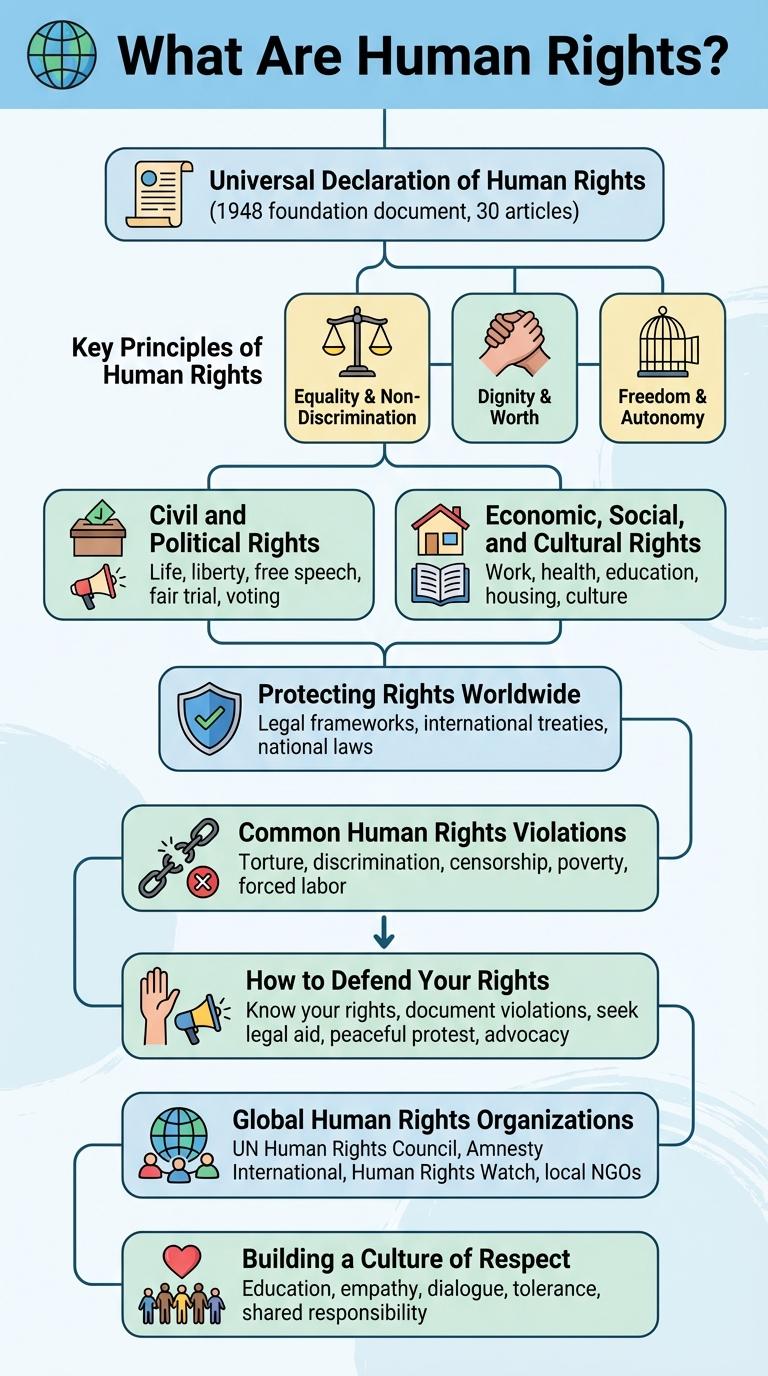
Human rights are fundamental freedoms and protections that belong to every individual, regardless of nationality, ethnicity, or background. This infographic highlights key human rights principles, historical milestones, and ongoing global challenges. Visualizing this information fosters greater awareness and advocacy for justice and equality worldwide.
What Are Human Rights?
Human rights are fundamental rights and freedoms that belong to every person in the world, from birth until death. These rights protect individuals' dignity, equality, and freedom, ensuring everyone is treated fairly and with respect. Examples of human rights include the right to life, freedom of speech, and the right to education.
Universal Declaration of Human Rights
The Universal Declaration of Human Rights (UDHR) was adopted by the United Nations General Assembly in 1948. It establishes fundamental rights and freedoms that apply to every person worldwide.
The UDHR consists of 30 articles outlining civil, political, economic, social, and cultural rights. It serves as the foundation for international human rights law and promotes dignity, equality, and justice for all.
Key Principles of Human Rights
Human rights are fundamental freedoms and protections inherent to all individuals, regardless of nationality, ethnicity, or status. These principles ensure dignity, equality, and respect for every person.
The key principles of human rights guide international laws and national policies to uphold justice and prevent discrimination.
- Universality and Inalienability - Human rights apply to every person everywhere and cannot be taken away.
- Indivisibility - All human rights are equally important and interdependent, including civil, political, economic, social, and cultural rights.
- Equality and Non-Discrimination - Every individual is entitled to the same rights without discrimination of any kind.
Civil and Political Rights
What are civil and political rights? Civil and political rights protect individuals' freedoms and ensure their participation in the political process. These rights include freedom of speech, the right to vote, and protection against discrimination and arbitrary detention.
Economic, Social, and Cultural Rights
Economic, Social, and Cultural Rights are essential to ensuring dignity and equality for all individuals. These rights support access to basic needs like work, education, and participation in cultural life.
- Right to Work - Everyone has the right to gainful employment and fair wages to support a decent standard of living.
- Right to Education - Education is fundamental for personal development and empowering individuals to contribute to society.
- Right to Social Security - Access to social protection ensures support during unemployment, sickness, or retirement.
- Right to Cultural Participation - Individuals have the right to freely participate in cultural, artistic, and scientific life.
- Right to an Adequate Standard of Living - Includes access to housing, food, and clean water essential for health and well-being.
Protecting Rights Worldwide
Human rights are fundamental freedoms and protections entitled to every individual regardless of nationality, race, or belief. Protecting these rights worldwide requires international cooperation, strict enforcement of laws, and active monitoring by organizations such as the United Nations and Amnesty International. Ensuring access to justice, equality, and safety fosters global peace and dignity for all people.
Common Human Rights Violations
| Common Human Rights Violations | Description |
|---|---|
| Discrimination | Unfair treatment based on race, gender, ethnicity, religion, or disability |
| Torture and Cruel Treatment | Infliction of severe pain or suffering for punishment or intimidation |
| Arbitrary Detention | Unlawful arrest or imprisonment without proper legal procedures |
| Violation of Freedom of Expression | Restrictions on speech, press, or peaceful assembly imposed by authorities |
| Human Trafficking | Illegal trade and exploitation of people for labor or sexual purposes |
How to Defend Your Rights
Understanding your human rights is the first step to protecting them effectively. Knowing the legal frameworks that support these rights empowers individuals to stand against violations.
Contact local human rights organizations for guidance and support during a rights violation. Document all evidence carefully, including photos, videos, and witness statements. Utilize legal aid services to seek protection and assert your rights through the judicial system.
Global Human Rights Organizations
Global human rights organizations play a crucial role in protecting and promoting fundamental freedoms worldwide. These entities work to hold governments and institutions accountable for human rights violations.
- Amnesty International - Promotes human rights through research, advocacy, and mobilization against abuses globally.
- Human Rights Watch - Investigates human rights violations and publishes detailed reports to influence policy change.
- United Nations Human Rights Council - Oversees international human rights standards and addresses violations through diplomacy and resolution.
Collaboration among global human rights organizations strengthens efforts to uphold justice and equality everywhere.