
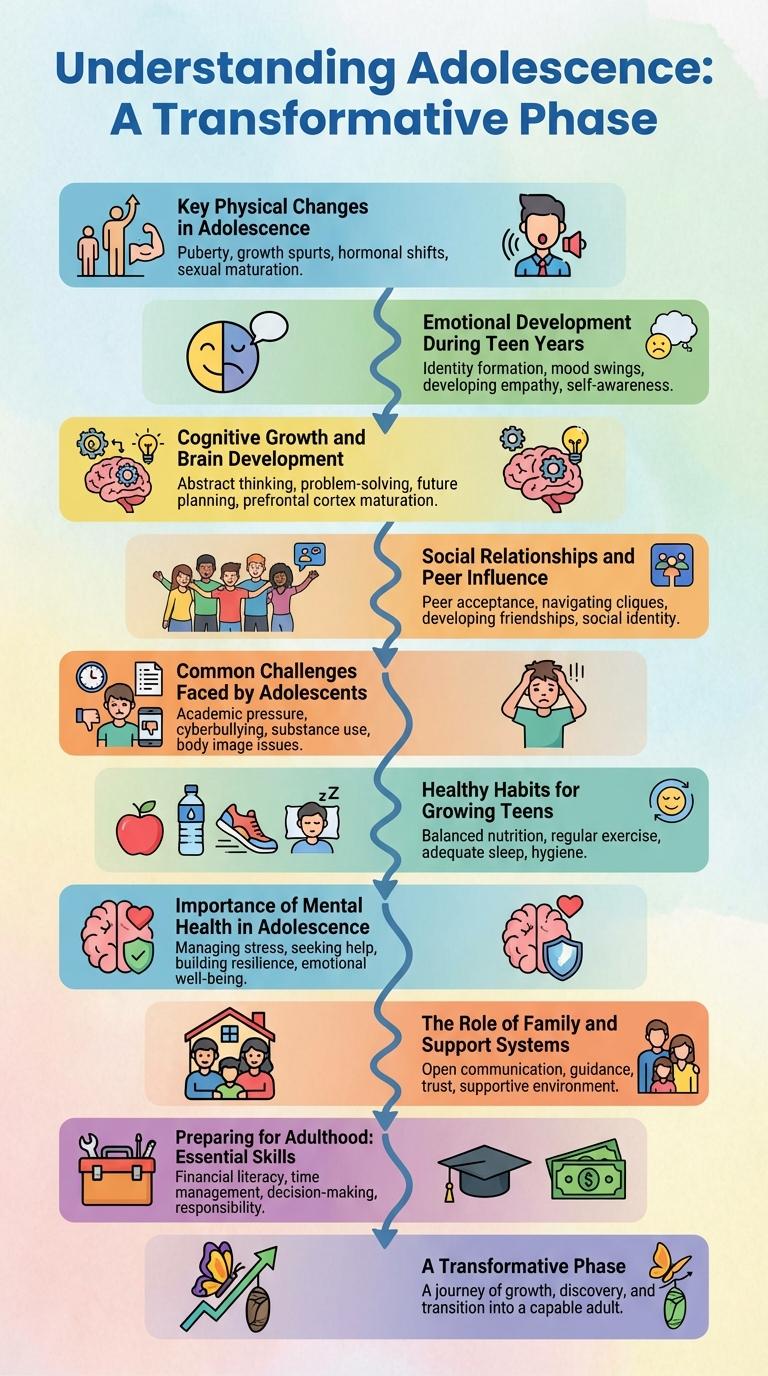
Adolescence marks a pivotal stage of human development characterized by rapid physical growth and significant emotional changes. This period fosters identity exploration, social skill enhancement, and increased cognitive abilities. Understanding these dynamics is essential for supporting healthy transitions into adulthood.
Understanding Adolescence: A Transformative Phase
Adolescence is a critical developmental stage characterized by rapid physical, emotional, and cognitive changes. This transformative phase bridges childhood and adulthood, shaping identity and social relationships. Understanding these dynamics helps support healthy growth and resilience during this pivotal time.
Key Physical Changes in Adolescence
What are the key physical changes during adolescence? Adolescence marks a significant period of growth and development, characterized by rapid physical changes that prepare the body for adulthood. These changes include the growth spurt, hormonal shifts, and the development of primary and secondary sexual characteristics.
| Physical Change | Description |
|---|---|
| Growth Spurt | A rapid increase in height and weight, typically beginning between ages 10-14. |
| Hormonal Changes | Increased production of hormones like testosterone and estrogen drives physical maturation. |
| Development of Primary Sexual Characteristics | Maturation of reproductive organs such as ovaries in girls and testes in boys. |
| Secondary Sexual Characteristics | Appearance of features such as breast development, facial hair, and voice deepening. |
| Skin Changes | Increased oil production often leads to acne and changes in skin texture. |
Emotional Development During Teen Years
Adolescence marks a critical period of emotional development where teenagers experience heightened sensitivity and rapidly changing emotions. This phase is characterized by increased self-awareness and the quest for identity.
During the teen years, emotional regulation skills begin to mature, though mood swings are common due to hormonal changes. Peer relationships significantly influence emotional growth, providing both support and challenges. Developing empathy and coping mechanisms is essential for healthy emotional well-being in adolescence.
Cognitive Growth and Brain Development
Adolescence is a critical period for cognitive growth and brain development. During this time, the brain undergoes significant structural and functional changes that enhance learning, decision-making, and emotional regulation.
- Prefrontal Cortex Maturation - This region responsible for reasoning and impulse control develops steadily, improving judgment and planning skills.
- Synaptic Pruning - The brain eliminates weaker neural connections, increasing efficiency and cognitive processing speed.
- Increased Myelination - Enhanced myelin sheath formation boosts communication between brain regions, supporting better attention and memory.
Social Relationships and Peer Influence
Adolescence is a critical period for developing social relationships, which significantly shape emotional and psychological growth. Peer groups become a primary source of support and identity during this stage.
Peer influence impacts behavior, decision-making, and self-esteem, playing a crucial role in risk-taking and social learning. Positive peer interactions promote healthy development, while negative influences can lead to challenges such as peer pressure and social anxiety.
Common Challenges Faced by Adolescents
Adolescence is a critical developmental stage marked by significant physical, emotional, and social changes. This period often presents various challenges that impact mental health and well-being.
- Identity Formation - Adolescents struggle with self-discovery and establishing their personal and social identity.
- Peer Pressure - The desire to fit in can lead teens to make risky decisions or adopt unhealthy behaviors.
- Mental Health Issues - Anxiety, depression, and mood swings commonly arise during adolescence due to hormonal and environmental factors.
- Academic Stress - Performance expectations and future uncertainty contribute to intense pressure and stress.
- Family Conflicts - Changes in independence often cause misunderstandings and conflicts within family dynamics.
Healthy Habits for Growing Teens
| Healthy Habit | Benefit for Growing Teens |
|---|---|
| Balanced Nutrition | Supports physical growth, brain development, and energy levels |
| Regular Physical Activity | Enhances muscle strength, cardiovascular health, and mental well-being |
| Adequate Sleep (8-10 hours) | Improves memory, mood regulation, and overall growth hormone production |
| Hydration | Maintains concentration, regulates body temperature, and supports metabolism |
| Stress Management | Promotes emotional resilience and reduces risk of anxiety and depression |
Importance of Mental Health in Adolescence
Adolescence is a critical period for mental health development that shapes lifelong well-being. Addressing mental health in this stage promotes positive growth and resilience.
- High Vulnerability - Adolescents face increased risk of anxiety, depression, and stress due to hormonal and social changes.
- Early Intervention - Timely mental health support reduces long-term psychological disorders and improves academic outcomes.
- Social Influence - Peer relationships significantly impact mental wellness, making social support essential during adolescence.
Prioritizing mental health care during adolescence fosters a foundation for healthy adulthood and reduces future societal burdens.
The Role of Family and Support Systems
Adolescence is a critical developmental stage where family and support systems play a pivotal role in shaping emotional and psychological well-being. Positive family interactions foster resilience and healthy identity formation during this period.
Support systems such as peers, mentors, and community resources complement family influence by providing guidance and social connection. Strong networks reduce risk behaviors and promote academic and social success in adolescents.