
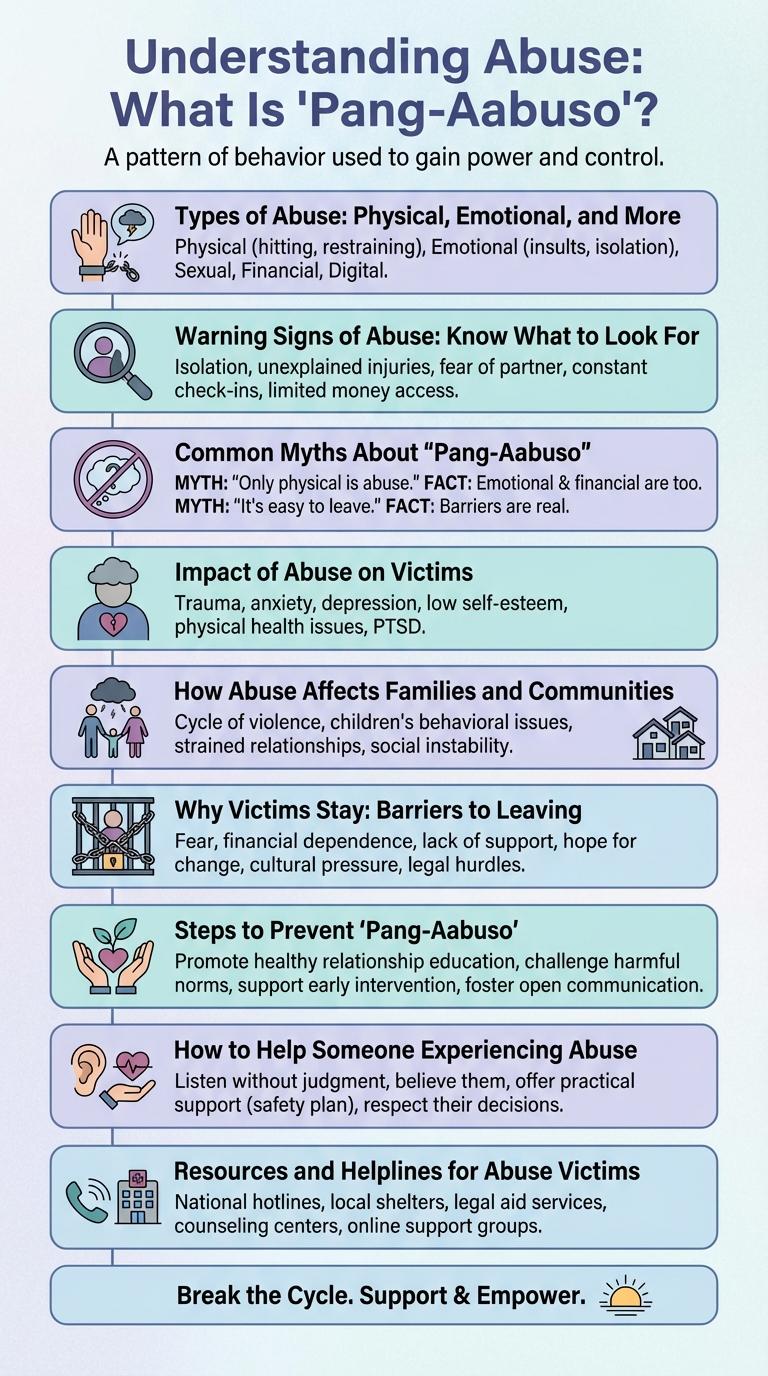
Pang aabuso affects individuals across various settings, from workplaces to homes, leading to significant emotional and physical harm. Recognizing the signs of abuse is crucial for timely intervention and support. This infographic highlights different forms of abuse, their impact, and ways to seek help effectively.
Understanding Abuse: What Is "Pang-Aabuso"?
"Pang-aabuso" refers to various forms of abuse that harm an individual's physical, emotional, or psychological well-being. Recognizing its signs is the first step toward prevention and support.
- Definition of Pang-aabuso - It includes actions like physical violence, verbal insults, and emotional manipulation.
- Types of Abuse - Abuse can be physical, emotional, sexual, or psychological, each impacting victims differently.
- Signs and Effects - Victims may show fear, anxiety, physical injuries, or withdrawal from social interactions.
Types of Abuse: Physical, Emotional, and More
Pang aabuso refers to various forms of mistreatment that harm individuals physically, emotionally, or psychologically. Recognizing the types of abuse is crucial for prevention and support.
Physical abuse involves intentional harm to the body, such as hitting or restraining. Emotional abuse includes insults, threats, and manipulation that damage self-esteem and mental health. Other types include sexual abuse and neglect, each causing significant long-term effects.
Warning Signs of Abuse: Know What to Look For
What are the warning signs of abuse you should be aware of? Recognizing early indicators can help prevent further harm. Physical injuries, such as unexplained bruises or fractures, often signal abuse.
How does emotional abuse manifest in behavior? Victims may appear withdrawn, anxious, or unusually fearful around certain individuals. Changes in mood and self-esteem can also be key warning signs.
What signs point to possible neglect in an abusive situation? Poor hygiene, malnutrition, and unattended medical needs are common indicators. Neglect often leads to severe physical and emotional consequences.
How can you identify financial abuse within a relationship? Sudden lack of access to money, unexplained financial transactions, or controlling behavior over finances often raise red flags. Victims may feel powerless and dependent.
Why is it important to take notice of controlling or isolating behaviors? Abusers often isolate victims from friends and family to maintain control. Recognizing these patterns early empowers intervention and support.
Common Myths About "Pang-Aabuso
Pang-aabuso, or abuse, is often surrounded by misconceptions that hinder awareness and intervention. Understanding the truth behind these myths is crucial for effective prevention and support.
- Myth: Abuse only happens in poor families - Abuse happens across all socio-economic levels, not just in impoverished households.
- Myth: Victims provoke the abuse - Abuse is the abuser's choice; victims never cause the abuse by their actions.
- Myth: Abuse is only physical - Abuse includes emotional, psychological, verbal, and financial harm beyond just physical violence.
Dispelling these myths fosters a better understanding that supports victims and promotes a safer community.
Impact of Abuse on Victims
Abuse profoundly affects victims, leaving lasting physical and emotional scars. Understanding these impacts is crucial for providing effective support and intervention.
- Physical Health Problems - Victims often experience chronic pain, injuries, and other long-term health issues due to abuse.
- Mental Health Disorders - Anxiety, depression, and post-traumatic stress disorder are common psychological effects faced by victims.
- Social Withdrawal - Many victims isolate themselves, leading to diminished social interactions and support networks.
How Abuse Affects Families and Communities
Abuse disrupts the emotional stability of families, leading to long-term psychological damage for victims and relatives. Children exposed to abuse often experience developmental challenges, impacting their future relationships and success.
Communities suffer from increased violence, reduced social trust, and economic strain due to abuse cases. Effective prevention and support programs are essential to heal families and strengthen community resilience.
Why Victims Stay: Barriers to Leaving
Victims of abuse often stay due to fear of retaliation, financial dependence, and emotional attachment to their abusers. Social stigma and lack of support systems create additional obstacles that discourage victims from leaving abusive situations. Understanding these barriers is essential for providing effective assistance and creating safe environments for victims to escape and recover.
Steps to Prevent "Pang-Aabuso
| Step | Action to Prevent Pang-Aabuso |
|---|---|
| 1. Awareness | Educate yourself and community about the signs and forms of pang-aabuso (abuse). |
| 2. Communication | Create open dialogue within families and organizations to discuss concerns and seek help. |
| 3. Reporting | Encourage victims and witnesses to report abuse incidents to authorities or support groups. |
| 4. Support Services | Provide access to counseling, legal assistance, and safe shelters for abuse victims. |
| 5. Enforcement | Strengthen laws and community monitoring to deter and penalize pang-aabuso cases. |
How to Help Someone Experiencing Abuse
Pang aabuso refers to any form of mistreatment or harm inflicted on a person, including physical, emotional, and verbal abuse. Recognizing the signs--such as unexplained injuries, withdrawal, or constant fear--is crucial in providing support. Offering a safe space, listening without judgment, and encouraging professional help are vital steps in assisting someone experiencing abuse.