
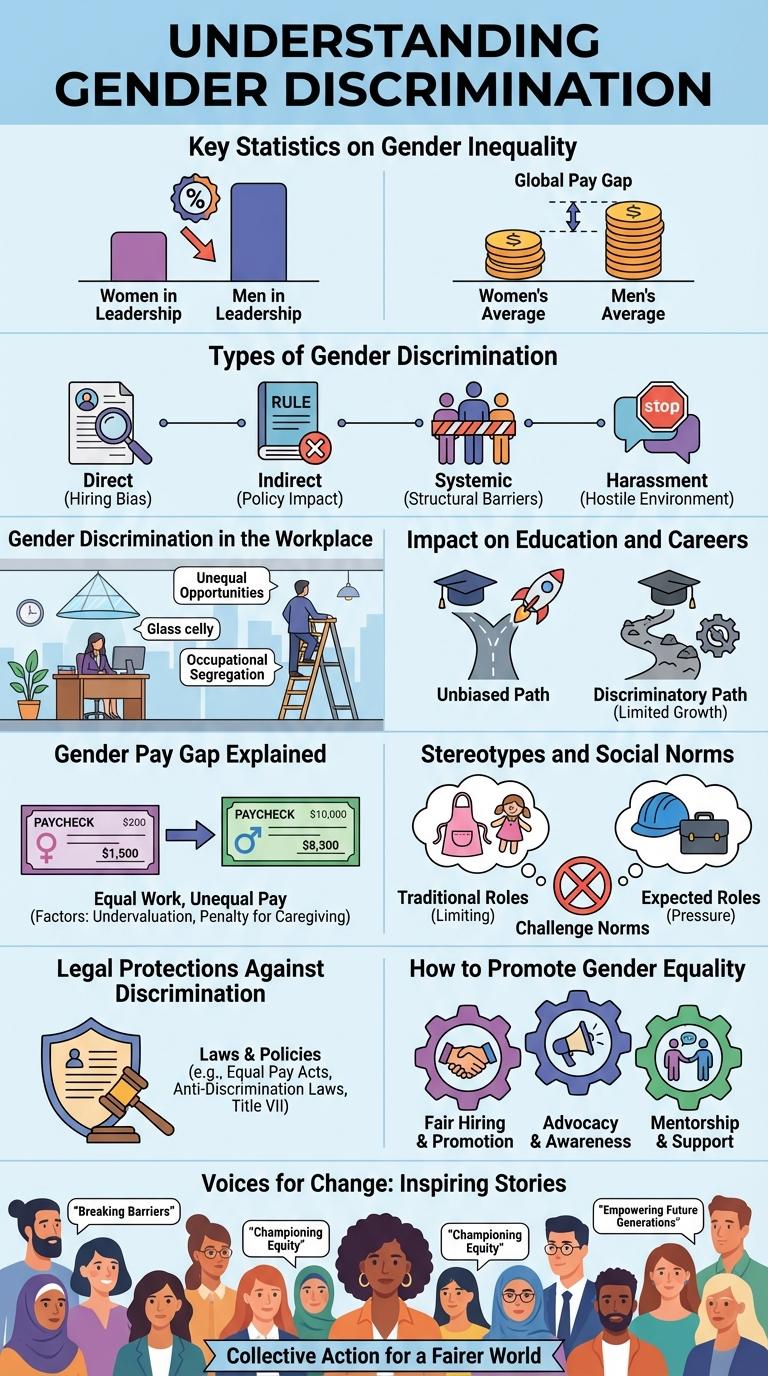
Gender discrimination persists as a significant barrier to equality, impacting opportunities in education, employment, and social settings. Visualizing data through infographics highlights disparities and raises awareness by making complex statistics accessible and understandable. This infographic presents key facts and figures to illuminate the extent and consequences of gender bias worldwide.
Understanding Gender Discrimination
Gender discrimination involves unfair treatment based on an individual's gender, impacting opportunities and rights. Understanding its forms and effects is crucial for fostering equality and inclusion.
- Definition - Gender discrimination refers to prejudicial actions or attitudes that disadvantage a person due to their gender identity or expression.
- Types - It includes discrimination in workplaces, education, healthcare, and social settings, often manifesting as bias against women, transgender, or non-binary individuals.
- Consequences - This discrimination leads to economic disparities, limited career growth, mental health challenges, and social exclusion for affected individuals.
Key Statistics on Gender Inequality
Gender discrimination remains a pervasive issue worldwide, with women earning approximately 82 cents for every dollar earned by men. Women hold only 28% of managerial positions globally, highlighting significant barriers in career advancement. Female labor force participation stands at 47%, compared to 74% for men, revealing persistent gender gaps in employment opportunities.
Types of Gender Discrimination
Gender discrimination manifests in various forms, impacting individuals in professional and social environments. Common types include wage disparity, where unequal pay is given for the same work; occupational segregation, limiting access to certain jobs based on gender; and harassment or bias, creating hostile conditions in workplaces or communities. Understanding these types is crucial for fostering equality and implementing effective policies.
Gender Discrimination in the Workplace
Gender discrimination in the workplace remains a critical issue affecting millions globally. Women and gender minorities often face unequal pay, limited career advancement, and biased hiring practices compared to their male counterparts.
Studies show that women earn approximately 82 cents for every dollar earned by men in similar roles. Employers who promote gender equality experience higher productivity, better employee satisfaction, and stronger company reputations.
Impact on Education and Careers
| Aspect | Impact of Gender Discrimination |
|---|---|
| Access to Education | Girls and women often face limited access to quality education due to gender biases, cultural norms, and economic barriers, reducing literacy rates and academic opportunities. |
| Academic Performance | Gender stereotypes discourage participation in STEM fields for females, leading to underrepresentation in science, technology, engineering, and mathematics education. |
| Career Opportunities | Women face wage gaps, glass ceilings, and fewer leadership roles due to employer biases and discriminatory workplace practices. |
| Workplace Environment | Gender discrimination fosters hostile or unsupportive workplaces, impacting mental health, job satisfaction, and career advancement for affected individuals. |
| Economic Impact | Limiting women's education and career progression results in decreased economic productivity and perpetuates global gender inequality. |
Gender Pay Gap Explained
Gender pay gap refers to the difference in average earnings between women and men. It highlights the persistent disparity in wages across various industries and roles worldwide.
Women typically earn around 80-85% of what men earn for similar work, depending on the country. Several factors contribute to this gap, including occupational segregation, unequal access to promotions, and biases in hiring and pay decisions. Closing the gender pay gap is essential for achieving economic equality and empowering women globally.
Stereotypes and Social Norms
Gender discrimination is often rooted in persistent stereotypes that define roles and abilities based on gender. These stereotypes reinforce unequal treatment and limit opportunities for individuals in various social and professional settings.
Social norms shape expectations about appropriate behavior for different genders, perpetuating biases and discrimination. Challenging these norms is essential to promote equality and dismantle systemic gender-based barriers.
Legal Protections Against Discrimination
What legal protections exist to combat gender discrimination? Laws worldwide aim to ensure equal treatment regardless of gender. These regulations provide frameworks to address and prevent discriminatory practices in workplaces and public spaces.
Which key legislation protects individuals from gender discrimination? The Equal Pay Act, Title VII of the Civil Rights Act, and the Gender Equality Act serve as primary legal shields. They prohibit discrimination in employment, education, and access to services.
How do these laws enforce gender equality? Governments establish agencies like the Equal Employment Opportunity Commission (EEOC) to investigate complaints. Legal recourse including fines and penalties holds violators accountable.
What challenges exist despite legal protections? Enforcement gaps and cultural biases sometimes undermine effectiveness. Continuous policy updates and awareness campaigns strive to strengthen protections and promote gender equity.
| Law | Focus |
|---|---|
| Equal Pay Act | Ensures equal wages for equal work |
| Title VII, Civil Rights Act | Prohibits employment discrimination |
| Gender Equality Act | Promotes equal rights in public life |
| Employment Non-Discrimination Act | Bans workplace gender bias |
| Pregnancy Discrimination Act | Protects against pregnancy-based discrimination |
How to Promote Gender Equality
Gender discrimination remains a pervasive issue impacting social and economic development globally. Promoting gender equality requires strategic actions across various sectors to ensure equal opportunities for all genders.
- Implement Inclusive Policies - Develop workplace and educational policies that actively prevent gender bias and support diversity and inclusion.
- Promote Education and Awareness - Increase awareness through campaigns and training that challenge stereotypes and encourage respect for all genders.
- Support Equal Representation - Encourage equal participation of women and other underrepresented genders in leadership roles and decision-making processes.