
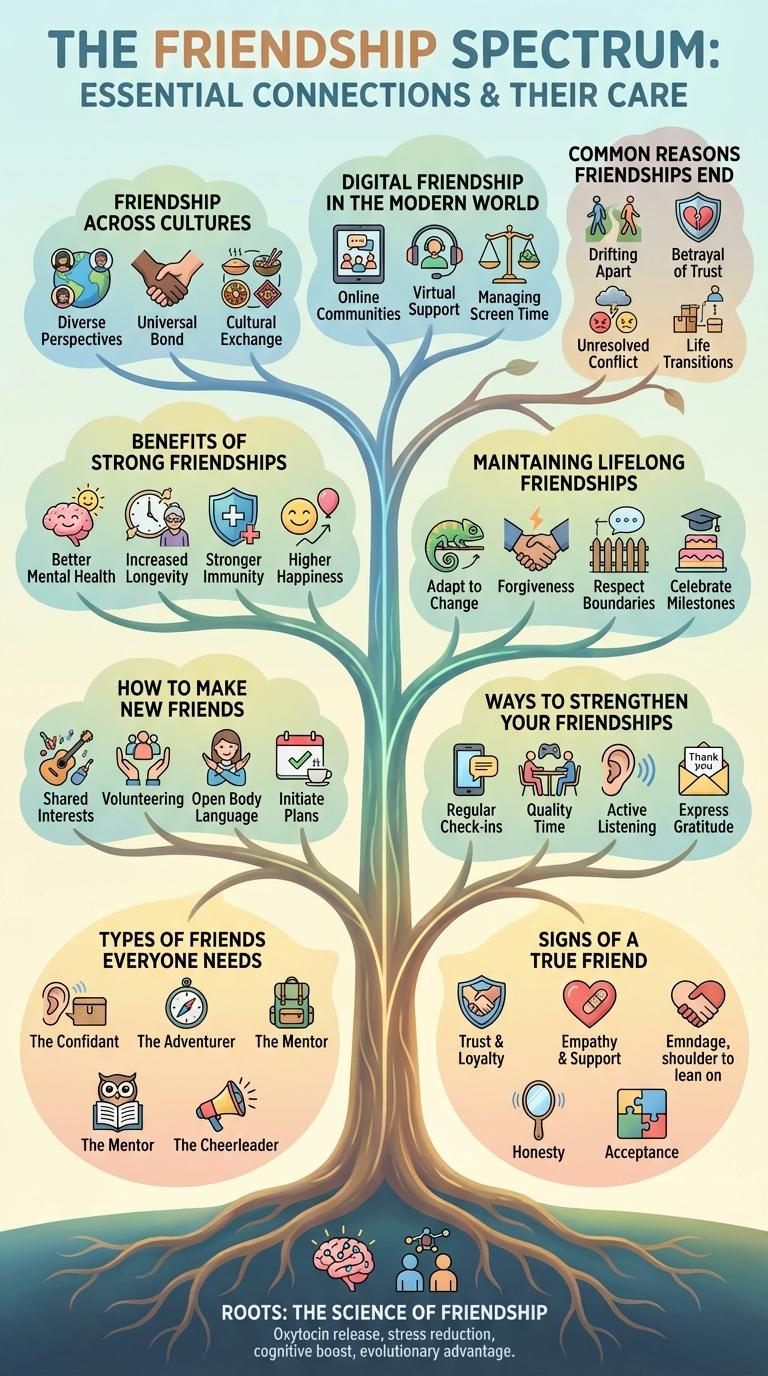
Friends play a vital role in shaping our emotional well-being and social experiences. Understanding the dynamics of friendships can enhance communication and deepen connections. This infographic highlights key insights and surprising statistics about the impact and nature of friendships.
Types of Friends Everyone Needs
Friends come in many forms, each offering unique support and joy. Understanding the types of friends everyone needs can enhance your social circle and emotional well-being.
There are five essential types of friends: the Loyal Friend, who stands by you through thick and thin; the Fun Friend, who brings laughter and excitement to your life; the Wise Friend, offering valuable advice and perspective; the Supportive Friend, providing comfort during tough times; and the Inspiring Friend, who motivates and encourages personal growth.
The Science of Friendship
Friendship plays a crucial role in mental and physical health, influencing happiness and longevity. Studies show that strong social connections can reduce stress and improve immune function.
Oxytocin, known as the "bonding hormone," strengthens trust and emotional bonds between friends. Neuroscience reveals that shared experiences activate reward centers in the brain, reinforcing friendship ties.
How to Make New Friends
Looking to expand your social circle with new friends? Start by joining clubs or groups that match your interests to meet like-minded individuals. Attend local events or workshops to create opportunities for genuine connections and conversations.
Signs of a True Friend
True friends provide unwavering support and genuinely celebrate your successes. They listen without judgment and offer honest advice when needed.
Signs of a true friend include loyalty during tough times and respect for your boundaries. They communicate openly and prioritize your well-being consistently.
Benefits of Strong Friendships
Strong friendships play a crucial role in mental and physical well-being. They provide emotional support and increase life satisfaction.
- Improved Mental Health - Close friends reduce stress and lower the risk of depression by offering emotional support.
- Enhanced Physical Health - Healthy friendships are linked to stronger immune systems and lower blood pressure.
- Increased Longevity - People with strong social bonds tend to live longer due to decreased risk of chronic diseases.
- Boosted Self-Esteem - Friends encourage personal growth and help build confidence through positive feedback.
- Better Coping Skills - Supportive friends provide advice and comfort that help manage life's challenges effectively.
Friendship Across Cultures
Friendship varies significantly across different cultures, shaping how people connect and support each other. Understanding these differences enriches global relationships and fosters mutual respect.
- Individualism vs. Collectivism - Western cultures often emphasize individual friendships, while Eastern cultures prioritize group harmony and community bonds.
- Communication Styles - Direct communication is common in many Western friendships, whereas indirect and context-sensitive dialogue prevails in many Asian cultures.
- Expressions of Loyalty - In Latin America, friendships often involve frequent social gatherings, while in Nordic countries, friendships may show loyalty through quiet presence and reliability.
Recognizing cultural differences in friendship enhances cross-cultural understanding and deepens interpersonal connections worldwide.
Digital Friendship in the Modern World
Digital friendship in the modern world thrives through social media platforms, messaging apps, and online communities, allowing people to connect instantly across the globe. Virtual interactions help maintain relationships, support mental health, and foster diverse cultural exchanges beyond physical boundaries. Technology enables new forms of communication, creating spaces where friendships evolve through shared interests and real-time collaboration.
Maintaining Lifelong Friendships
| Key Aspect | Description |
|---|---|
| Consistent Communication | Regular contact through calls, messages, or social media strengthens bonds and keeps friendships alive over time. |
| Mutual Support | Providing emotional and practical support during life's challenges fosters trust and deepens connections. |
| Shared Experiences | Participating in activities and creating memories together builds a strong foundation for lifelong friendships. |
| Respect and Understanding | Accepting differences and showing empathy helps maintain harmony and long-term relationship stability. |
| Adaptability | Adjusting to life changes such as moving, jobs, or family differences ensures the friendship evolves positively. |
Common Reasons Friendships End
Friendships often end due to a lack of communication, leading to misunderstandings and emotional distance. Differences in values or life goals can create incompatible paths between friends. Trust issues, such as betrayal or dishonesty, frequently result in the breakdown of friendships.