
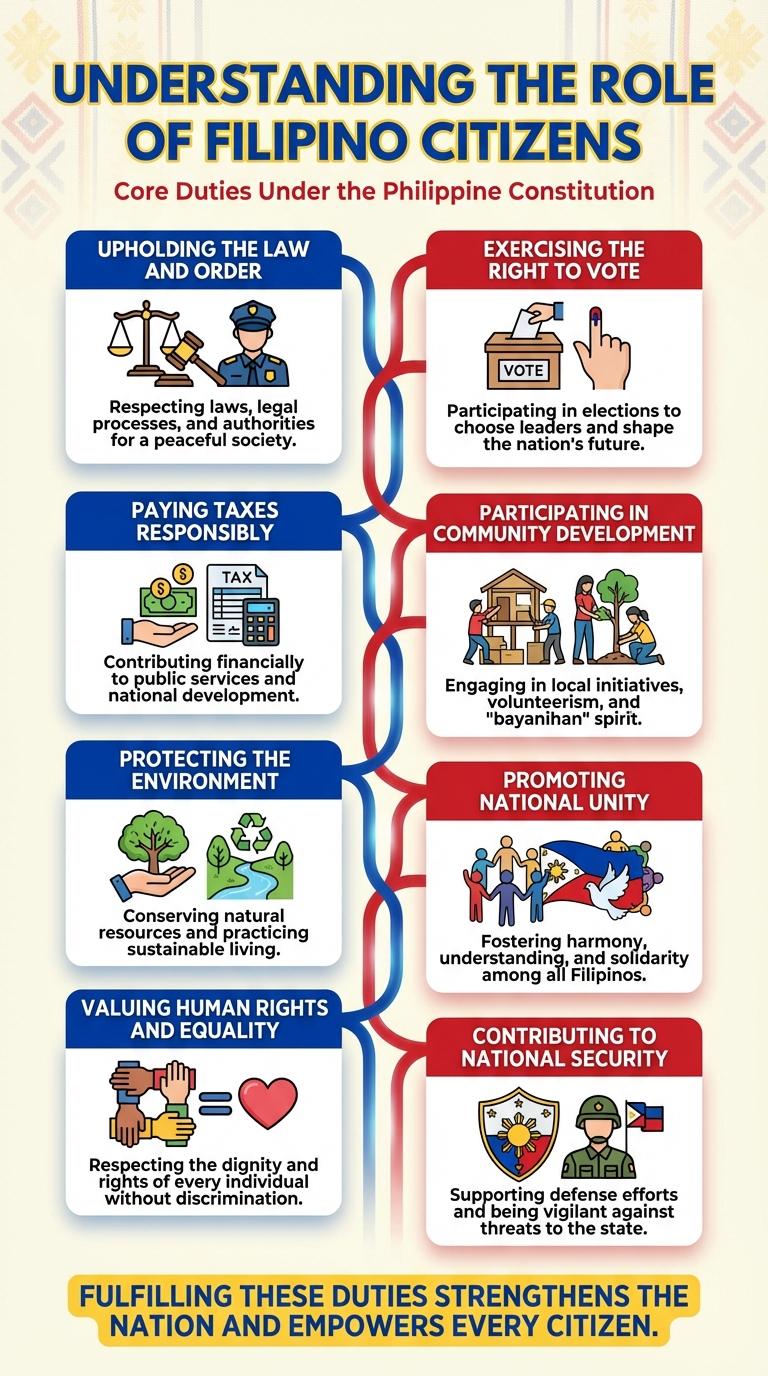
Filipino citizens hold vital duties and responsibilities that contribute to the nation's progress and unity. These obligations include abiding by laws, participating in democratic processes such as voting, and promoting social welfare within their communities. Understanding these roles helps foster a stronger, more responsible society grounded in respect and patriotism.
Understanding the Role of Filipino Citizens
Filipino citizens play a crucial role in nation-building by actively participating in the country's democratic processes and upholding the values of unity and patriotism. Understanding these responsibilities strengthens civic engagement and promotes social harmony across communities.
Every Filipino citizen has the duty to respect laws, pay taxes, and participate in elections to ensure good governance. Protecting the environment and preserving cultural heritage are essential responsibilities that contribute to sustainable development. Active involvement in community service and education fosters a more informed and empowered citizenry.
Core Duties Under the Philippine Constitution
The Philippine Constitution outlines the fundamental duties and responsibilities of every Filipino citizen. These core duties are essential for fostering national unity and promoting the common good.
- Uphold the Constitution - Every Filipino must respect and obey the Constitution as the supreme law of the land.
- Defend the Nation - Citizens are required to protect the country from external and internal threats through active participation or service.
- Participate in Governance - Engagement in democratic processes, such as voting and civic discussions, is a crucial responsibility.
- Promote the Common Good - Filipinos should contribute to social, economic, and cultural development aimed at benefiting society.
- Respect Rights and Freedoms - Citizens must uphold the rights and freedoms of others while exercising their own responsibly.
Adherence to these duties strengthens democracy and ensures the progress of the nation.
Upholding the Law and Order
What responsibilities do Filipino citizens have in upholding law and order? Filipino citizens must respect and obey the laws established by the government. They play an active role in maintaining peace and security within their communities.
| Duties | Responsibilities |
|---|---|
| Follow laws and regulations | Prevent crime by reporting suspicious activities |
| Respect authorities | Engage in community peace initiatives |
| Participate in lawful assemblies | Promote awareness of legal rights and duties |
| Support law enforcement agencies | Cooperate during investigations and emergencies |
| Protect public property | Encourage others to follow rules and civic responsibilities |
Exercising the Right to Vote
Exercising the right to vote is a fundamental duty of Filipino citizens that ensures the selection of leaders who represent the people's interests. Voting empowers citizens to influence government policies and promote democratic governance. Active participation in elections strengthens the nation's political stability and development.
Paying Taxes Responsibly
Paying taxes responsibly is a fundamental duty of Filipino citizens that supports national development. Proper tax payments ensure government programs and public services are adequately funded.
- Supports Public Services - Taxes finance essential services such as healthcare, education, and infrastructure development across the Philippines.
- Promotes National Growth - Responsible tax contributions provide resources for economic stability and growth initiatives.
- Fulfills Legal Obligations - Compliance with tax laws reflects commitment to civic duties and helps avoid penalties or legal issues.
Participating in Community Development
| Duty/Responsibility | Description |
|---|---|
| Volunteerism | Actively engaging in community projects and activities to improve local welfare and infrastructure. |
| Community Meetings | Attending and contributing ideas in barangay or local assembly meetings to address communal issues and development plans. |
| Environmental Stewardship | Participating in cleanup drives and conservation efforts to preserve and sustain the environment. |
| Civic Education | Spreading awareness about local laws, health protocols, and community programs to foster informed citizenship. |
| Supporting Local Initiatives | Backing small businesses, cultural events, and local governance projects that enhance communal growth and sustainability. |
Protecting the Environment
Filipino citizens hold a vital role in protecting the environment to ensure a sustainable future for the nation. Responsible environmental practices help preserve natural resources and promote public health.
Key duties include proper waste disposal, conserving water and energy, and supporting reforestation programs. Citizens are also encouraged to participate in community clean-up drives and adhere to environmental laws such as the Clean Air Act and the Ecological Solid Waste Management Act.
Promoting National Unity
Filipino citizens play a vital role in promoting national unity by respecting cultural diversity and embracing shared values. This fosters a harmonious society where differences are celebrated as strengths.
Engaging in active participation in community activities and supporting government efforts helps strengthen national solidarity. Unity empowers the nation to face challenges and achieve collective progress.
Valuing Human Rights and Equality
Filipino citizens have a fundamental duty to uphold and respect human rights and equality for all individuals. Valuing these principles promotes social justice, peace, and national unity within the Philippines.
Respecting human rights ensures dignity and freedom for every person, regardless of background. Equality fosters an inclusive society where everyone enjoys the same opportunities and protection under the law.
- Protect Human Rights - Citizens must actively safeguard the rights and freedoms enshrined in the Philippine Constitution and international agreements.
- Promote Equality - Every Filipino is responsible for rejecting discrimination and supporting equal treatment for all people in society.
- Exercise Civic Responsibility - Participation in democratic processes strengthens respect for human rights and reinforces equality within communities.