
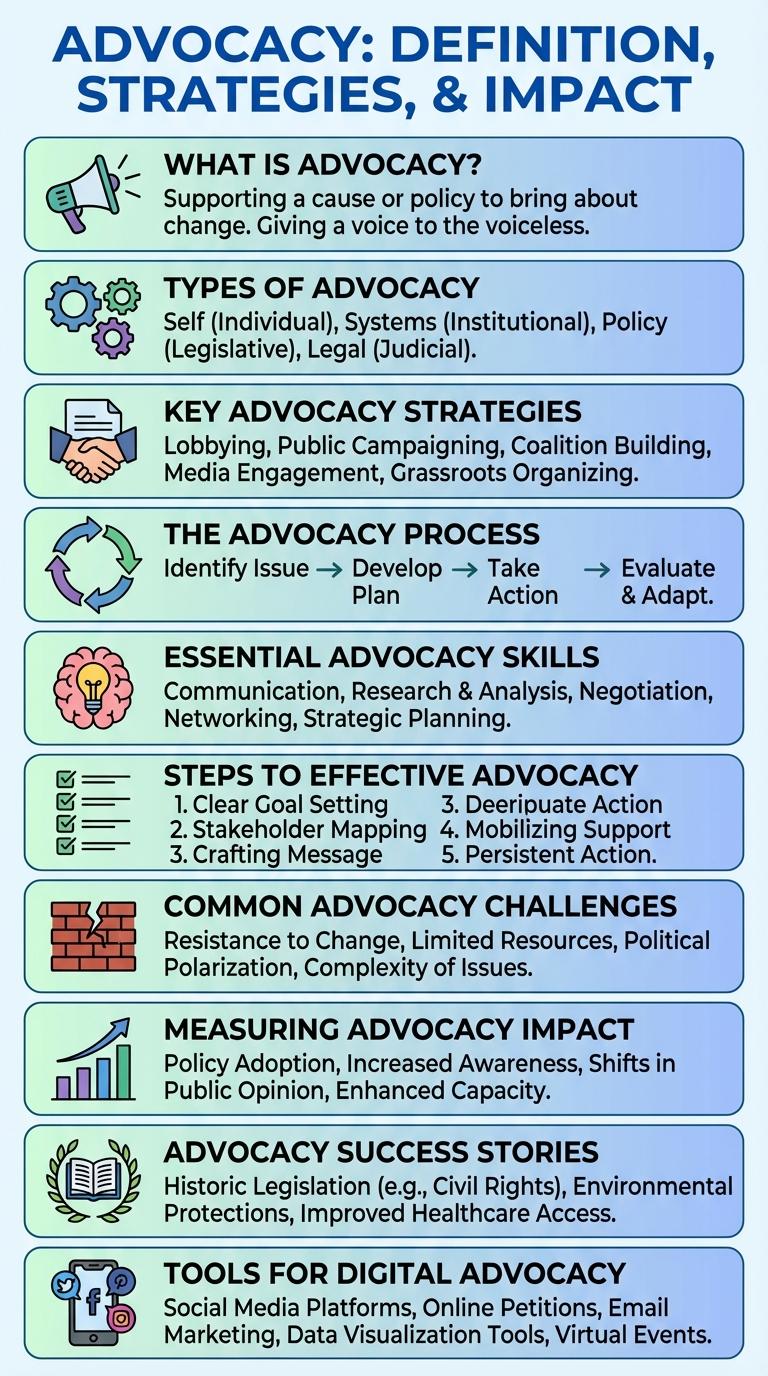
Advocacy empowers individuals and groups to influence public policy and drive social change through strategic communication and action. Visualizing complex data and key messages in an infographic enhances engagement and comprehension among diverse audiences. This infographic highlights essential advocacy tactics, impactful statistics, and practical steps to amplify your voice effectively.
What is Advocacy?
Advocacy is the act of supporting or arguing in favor of a cause, policy, or group. It aims to influence public opinion, policies, and decision-making processes to achieve positive social change.
Effective advocacy involves raising awareness, mobilizing communities, and engaging with stakeholders such as lawmakers and organizations. It empowers individuals and groups to have their voices heard and their needs addressed.
Types of Advocacy
Advocacy involves actively supporting a cause or policy to influence public opinion or decision-making. It can take multiple forms, each tailored to different objectives and audiences.
Types of advocacy include self-advocacy, where individuals speak for themselves, and grassroots advocacy, which mobilizes community members to create change. Legislative advocacy targets lawmakers to shape policies, while media advocacy uses media platforms to raise awareness and influence public opinion. Professional advocacy involves experts promoting issues within their fields to affect institutional decisions.
Key Advocacy Strategies
Advocacy involves systematic efforts to influence public opinion and decision-making processes. Effective advocacy requires well-planned strategies tailored to specific goals and audiences.
- Building Coalitions - Form alliances with diverse groups to increase influence and resource sharing.
- Engaging Policymakers - Establish direct communication with government officials to advocate for policy changes.
- Public Awareness Campaigns - Use media and outreach to educate and mobilize the public on key issues.
The Advocacy Process
Advocacy is a strategic process aimed at influencing public policy and resource allocation. It empowers individuals and groups to voice their concerns and drive social change.
- Identify the Issue - Recognize and clearly define the problem requiring advocacy.
- Research and Gather Evidence - Collect relevant data and case studies to support your position.
- Develop a Strategy - Plan specific actions to engage stakeholders and decision-makers.
- Engage and Communicate - Use effective messaging to raise awareness and build support.
- Monitor and Evaluate - Track progress and assess the impact of advocacy efforts.
Following these steps strengthens the impact of advocacy initiatives and advances meaningful policy changes.
Essential Advocacy Skills
| Essential Advocacy Skills | Description |
|---|---|
| Effective Communication | Clearly articulates ideas and persuades diverse audiences through verbal and written expression. |
| Research Proficiency | Gathers, analyzes, and interprets data to support arguments and inform decision-making. |
| Negotiation | Engages stakeholders to reach amicable agreements that advance advocacy goals. |
| Networking | Builds and maintains relationships with key influencers and organizations for collaborative efforts. |
| Critical Thinking | Evaluates situations objectively to develop strategic and effective advocacy plans. |
Steps to Effective Advocacy
Advocacy is the act of supporting a cause or proposal to influence public policy or resource allocation decisions. It involves strategic communication and organized efforts to create positive change.
Steps to effective advocacy include identifying clear goals, understanding the target audience, and developing a compelling message. Building coalitions, engaging stakeholders, and monitoring progress are essential for sustained impact.
Common Advocacy Challenges
Advocacy efforts often face challenges such as limited resources, lack of public awareness, and resistance from opposing groups. Effective communication and strategic planning are essential to overcome these barriers. Building strong coalitions and engaging stakeholders increases the impact and sustainability of advocacy campaigns.
Measuring Advocacy Impact
Measuring advocacy impact is essential to understand the effectiveness of campaigns and strategies in driving social or policy change. Quantifiable metrics provide insight into outreach success and stakeholder engagement.
- Reach and Engagement - Track the number of people exposed to advocacy messages through social media, events, or publications to evaluate influence scope.
- Policy Change Outcomes - Assess tangible changes in laws, regulations, or organizational policies as direct results of advocacy efforts.
- Stakeholder Feedback - Collect qualitative data from target audiences and decision-makers to gauge perception and support levels.
Advocacy Success Stories
Advocacy Success Stories highlight powerful examples of change driven by dedicated individuals and organizations. These stories demonstrate the impact of strategic efforts in influencing policies, raising awareness, and mobilizing communities. Showcasing real-world results inspires further advocacy and strengthens movements worldwide.