
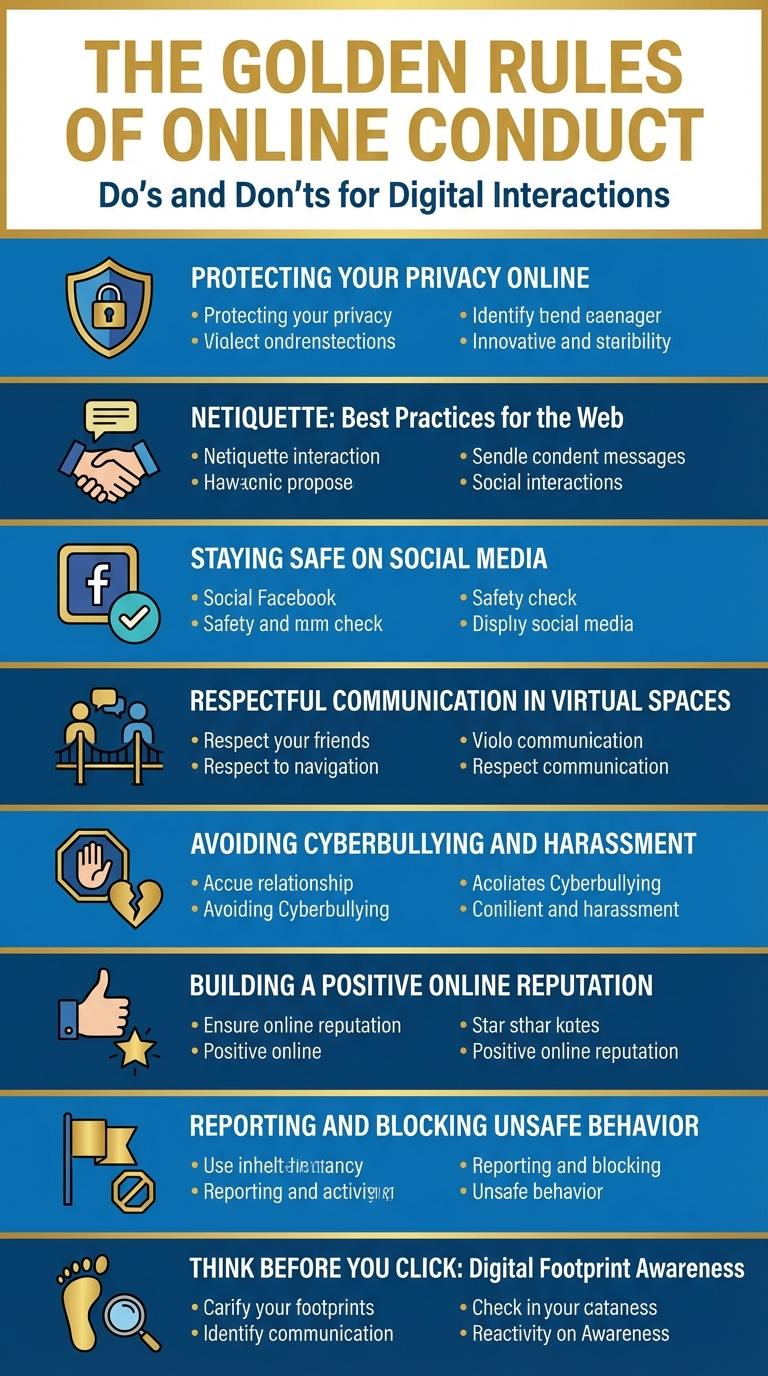
Online conduct shapes digital interactions and influences personal and professional reputations. Clear guidelines on respectful communication, privacy, and responsible sharing foster a positive online environment. Understanding these principles helps prevent conflicts and promotes trustworthy connections.
The Golden Rules of Online Conduct
What are the key guidelines for positive behavior online? The Golden Rules of Online Conduct emphasize respect, privacy, and responsibility. Following these rules creates a safer and more enjoyable digital environment for everyone.
| Golden Rule | Description |
|---|---|
| Respect Others | Communicate politely and avoid offensive language or behavior. |
| Protect Privacy | Share personal information carefully and respect others' confidentiality. |
| Think Before You Post | Consider the impact of your words and images before sharing online. |
| Avoid Cyberbullying | Refrain from harassment or harmful actions targeting individuals. |
| Report Inappropriate Content | Notify platforms or authorities about harmful or illegal online material. |
Do's and Don'ts for Digital Interactions
| Do's | Don'ts |
|---|---|
| Use respectful language in all communications | Avoid offensive or inflammatory remarks |
| Verify information before sharing | Do not spread rumors or unverified content |
| Maintain privacy by protecting personal information | Do not share sensitive or personal data without consent |
| Engage constructively in online discussions | Do not engage in cyberbullying or harassment |
| Use secure passwords and update them regularly | Avoid clicking on suspicious links or downloading unknown files |
Protecting Your Privacy Online
Protecting your privacy online involves using strong, unique passwords and enabling two-factor authentication to secure your accounts. Be cautious about sharing personal information on social media and adjust privacy settings to control who can see your data. Regularly update software and avoid clicking on suspicious links to prevent unauthorized access to your information.
Netiquette: Best Practices for the Web
Netiquette refers to the set of rules and best practices for respectful and effective communication on the internet. Key principles include being clear, polite, and considerate, avoiding offensive language, and respecting others' privacy. Following netiquette fosters positive online interactions and helps create a safe digital environment.
Staying Safe on Social Media
Social media platforms connect millions worldwide but pose risks to personal safety. Understanding how to protect yourself online is essential for a secure digital experience.
- Use Strong Privacy Settings - Adjust your account settings to limit visibility of your posts and personal information to trusted contacts only.
- Be Cautious with Personal Information - Avoid sharing sensitive details like your home address, phone number, or financial information publicly.
- Recognize and Report Suspicious Activity - Identify fake profiles, scams, or harassment and use platform tools to report them promptly.
Practicing safe online conduct preserves your privacy and promotes a positive social media environment.
Respectful Communication in Virtual Spaces
Respectful communication in virtual spaces fosters positive interactions and builds inclusive online communities. Practicing empathy and clear expression helps prevent misunderstandings and conflicts.
- Use polite language - Choose words that show consideration and avoid offense in digital conversations.
- Listen actively - Pay close attention to others' messages to understand their perspectives before responding.
- Maintain privacy - Respect personal information and avoid sharing sensitive content without permission.
Avoiding Cyberbullying and Harassment
Online conduct shapes the digital environment for all users. Respectful behavior helps prevent harm and fosters positive interactions.
Certain actions qualify as cyberbullying and harassment, including sending threatening messages, spreading false information, and sharing private content without consent. Recognizing these behaviors is essential to maintain a safe online space. Reporting abusive conduct to platform moderators reduces the impact and encourages accountability.
Building a Positive Online Reputation
Building a positive online reputation is essential for personal and professional success in the digital age. Online conduct shapes how others perceive your character and credibility across social media, forums, and professional networks.
Consistently sharing respectful, accurate, and valuable content enhances trust and engagement with your audience. Responding thoughtfully to feedback and maintaining privacy settings safeguard your digital presence and reputation.
Reporting and Blocking Unsafe Behavior
Reporting and blocking unsafe behavior online protects users from harassment, scams, and harmful content. Many platforms offer simple tools to report violations and block offenders instantly.
Timely reporting helps moderators enforce community guidelines and keep digital spaces safe. Blocking prevents further contact, maintaining user privacy and peace of mind.