
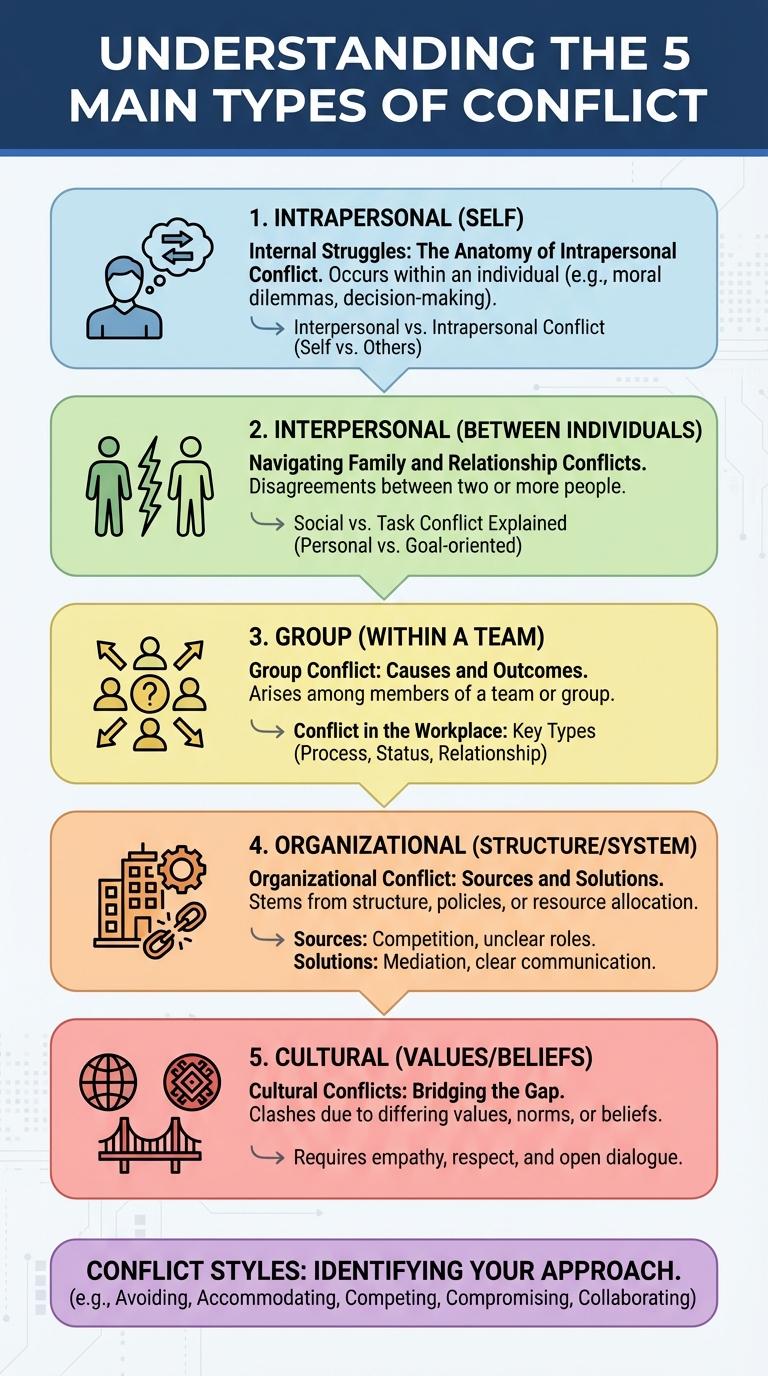
Conflicts arise in various forms, each impacting relationships and environments differently. Understanding the distinct types of conflict helps in identifying root causes and developing effective resolution strategies. Visualizing these categories through an infographic provides a clear and concise way to grasp their characteristics and implications.
Understanding the 5 Main Types of Conflict
Understanding the 5 main types of conflict is essential for effective communication and resolution. These conflicts appear in various settings, impacting relationships and productivity.
- Interpersonal Conflict - Occurs between individuals due to differences in opinions, values, or personalities.
- Intrapersonal Conflict - Happens within a person when facing opposing thoughts or feelings.
- Intergroup Conflict - Arises between different groups or teams competing for resources or recognition.
- Organizational Conflict - Involves disputes within a structured group related to policies, goals, or processes.
- International Conflict - Encompasses disagreements between countries or large political entities over territory, resources, or ideology.
Interpersonal vs. Intrapersonal Conflict
Conflict occurs in various forms, with interpersonal and intrapersonal conflict being two primary types. Interpersonal conflict arises between individuals due to differences in opinions, values, or goals, often impacting relationships and communication. Intrapersonal conflict happens within a person, involving internal struggles such as decision-making, self-doubt, or conflicting emotions.
| Aspect | Interpersonal vs. Intrapersonal Conflict |
|---|---|
| Definition | Interpersonal: Conflict between two or more people Intrapersonal: Conflict within oneself |
| Causes | Interpersonal: Miscommunication, value clashes Intrapersonal: Conflicting desires, emotional struggles |
| Impact | Interpersonal: Relationship strain, social tension Intrapersonal: Stress, indecision, emotional distress |
| Example | Interpersonal: Argument between coworkers Intrapersonal: Struggling to choose between job offers |
Organizational Conflict: Sources and Solutions
Organizational conflict arises from diverse sources and can impact productivity and employee morale. Identifying the root causes helps implement effective solutions to maintain a healthy work environment.
- Role Ambiguity - Confusion about job responsibilities often leads to misunderstandings and overlapping duties.
- Resource Scarcity - Limited availability of time, money, or equipment creates competition and tension among teams.
- Communication Breakdown - Poor communication channels contribute to misinformation and conflict escalation.
- Personality Clashes - Differences in individual values and working styles can result in interpersonal friction.
- Leadership Style - Autocratic or inconsistent management approaches often trigger employee dissatisfaction and disputes.
Addressing these sources through clear role definitions, resource sharing strategies, improved communication, conflict resolution training, and adaptive leadership fosters organizational harmony and effectiveness.
Cultural Conflicts: Bridging the Gap
Cultural conflicts arise when differing values, beliefs, and practices between groups create misunderstandings or tensions. Bridging the gap involves fostering communication, empathy, and mutual respect to resolve these disputes effectively.
- Value Differences - Conflicts emerge from contrasting cultural values, such as individualism versus collectivism.
- Communication Styles - Misinterpretations occur due to diverse verbal and nonverbal communication methods.
- Ethnocentrism - Judging other cultures by one's own standards intensifies cultural conflicts.
Conflict in the Workplace: Key Types
Conflict in the workplace arises from differences in opinions, values, or interests among employees. Key types of workplace conflict include interpersonal, intragroup, intergroup, role, and organizational conflicts. Understanding these types helps managers address issues effectively and maintain a productive work environment.
Social vs. Task Conflict Explained
| Conflict Type | Description |
|---|---|
| Social Conflict | Arises from interpersonal differences, emotional clashes, and personality conflicts within a group. It typically leads to tension and reduced cooperation among team members. |
| Task Conflict | Centers on disagreements about the content and goals of the work being performed. It often improves group performance by encouraging diverse viewpoints and critical evaluation of ideas. |
| Impact | Social conflicts decrease trust and communication, harming team morale. Task conflicts can stimulate innovation and problem-solving when managed constructively. |
| Examples | Personal disputes, value clashes, communication misunderstandings. Differences in project approach, task priorities, resource allocation. |
| Management Strategies | Conflict resolution techniques, emotional intelligence training, fostering respect. Clear communication guidelines, encouraging open debate, focusing on objective criteria. |
Internal Struggles: The Anatomy of Intrapersonal Conflict
Intrapersonal conflict refers to the internal struggle within an individual, often involving opposing desires, beliefs, or emotions. This type of conflict shapes decision-making processes and personal growth.
Common sources of intrapersonal conflict include moral dilemmas, emotional discord, and goal incompatibility. These conflicts create psychological tension that requires resolution for mental well-being. Understanding the anatomy of intrapersonal conflict helps individuals manage stress and achieve clarity.
Group Conflict: Causes and Outcomes
Group conflict arises when differences in opinions, values, or interests create tension among members. Common causes include miscommunication, competition for resources, and unclear roles within the group.
Outcomes of group conflict vary from negative effects like reduced productivity and morale to positive effects such as improved problem-solving and stronger group cohesion when managed effectively.
Navigating Family and Relationship Conflicts
What are the common types of conflicts in families and relationships?
Family and relationship conflicts often arise from communication breakdowns, differing values, and unmet expectations. These conflicts can impact emotional well-being and the stability of relationships.
How does communication conflict affect relationships?
Communication conflict occurs when family members or partners misunderstand each other or fail to express feelings clearly. This type often leads to frustration and unresolved issues that build over time.
What role do value conflicts play in family dynamics?
Value conflicts stem from differing beliefs and priorities within relationships. These differences can create tension when family members or partners have contrasting views on important life decisions.
How are role conflicts identified in families?
Role conflicts arise when there is confusion or disagreement about responsibilities and expectations within the family. This often happens during changes such as parenting shifts or care for elderly relatives.
What strategies help in navigating relationship conflicts effectively?
Effective navigation of conflicts involves active listening, empathy, and seeking common ground. Using constructive communication techniques helps families and couples resolve disputes and strengthen bonds.