
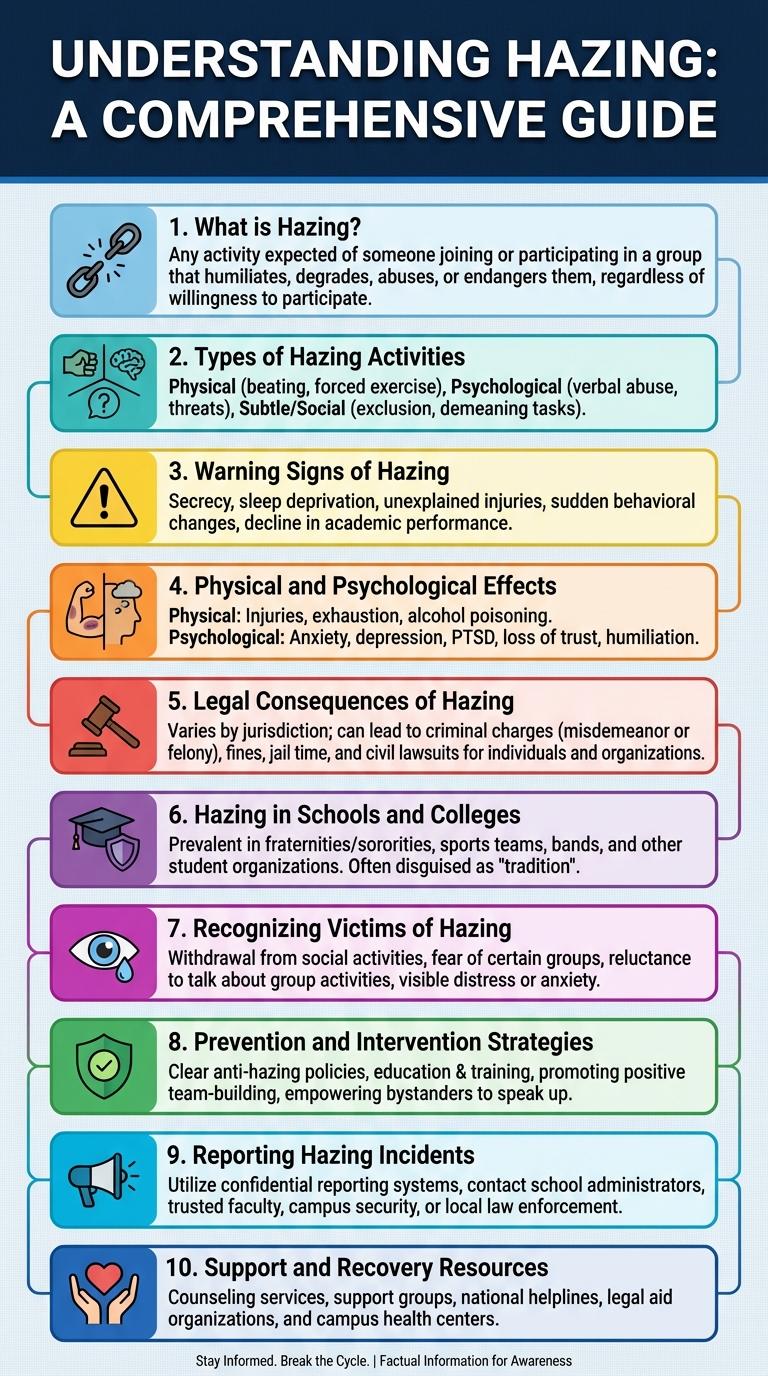
Hazing involves initiation rituals that often include harmful or humiliating actions imposed on newcomers. These practices can lead to physical injury, psychological trauma, and lasting emotional scars for participants. Understanding the risks and recognizing the signs of hazing are crucial steps toward prevention and creating safer environments.
What is Hazing?
Hazing involves activities expected of someone joining a group that humiliate, degrade, or endanger them. It is often disguised as a rite of passage or initiation ritual.
- Definition - Hazing is any action or situation created intentionally to cause embarrassment or harm as a condition for joining a group.
- Common Forms - Activities include physical abuse, psychological pressure, forced consumption of substances, and social exclusion.
- Legal Status - Many regions have laws prohibiting hazing with penalties ranging from fines to imprisonment.
Awareness and prevention efforts focus on education and clear anti-hazing policies within organizations.
Types of Hazing Activities
Hazing involves various activities that can be physical, psychological, or emotional in nature. Common types include forced consumption of alcohol or food, sleep deprivation, and humiliation rituals. These actions often cause harm, foster fear, and damage trust within groups.
Warning Signs of Hazing
Hazing involves intimidating or humiliating newcomers in a group, often leading to physical or emotional harm. Recognizing the warning signs is crucial to prevent severe consequences.
Common warning signs include secretive behavior, unexplained injuries, and increased anxiety or withdrawal. Victims may also show reluctance to attend events or communicate openly about group activities.
Physical and Psychological Effects
Hazing inflicts severe physical and psychological harm on individuals. Understanding its effects is crucial to preventing long-term damage.
- Physical Injuries - Victims often experience bruises, fractures, and in extreme cases, permanent disability.
- Psychological Trauma - Hazing leads to anxiety, depression, and post-traumatic stress disorder in many affected individuals.
- Impaired Academic Performance - Stress and fear from hazing reduce concentration and lower academic achievement.
Legal Consequences of Hazing
Hazing involves activities that cause harm, humiliation, or intimidation as a prerequisite for group membership. Many countries have enacted strict anti-hazing laws to protect individuals from such practices.
Legal consequences of hazing may include criminal charges such as fines, community service, probation, or imprisonment. Educational institutions often impose disciplinary actions like suspension or expulsion on offenders. Law enforcement agencies actively investigate hazing incidents to ensure accountability and safeguard student welfare.
Hazing in Schools and Colleges
Hazing in schools and colleges involves activities that pressure individuals to join or maintain membership in a group, often causing physical or psychological harm. These harmful practices can include bullying, forced consumption of substances, and dangerous rituals that compromise student safety. Awareness and strict anti-hazing policies are essential to create a safe educational environment and prevent long-term trauma among students.
Recognizing Victims of Hazing
Recognizing victims of hazing is crucial for ensuring their safety and providing timely support. Identifying the signs can help prevent long-term physical and psychological harm.
- Physical Injuries - Victims may exhibit unexplained bruises, cuts, or other injuries.
- Emotional Distress - Signs include anxiety, depression, withdrawal, or sudden changes in behavior.
- Fear of Specific Individuals or Groups - Victims often avoid certain people or places linked to the hazing incidents.
Prevention and Intervention Strategies
Hazing involves harmful or humiliating activities imposed on individuals seeking group acceptance. Prevention focuses on education, clear policies, and promoting a positive group culture.
Intervention strategies include reporting mechanisms, support systems for victims, and enforcing consequences for violators. Effective prevention and intervention reduce physical, emotional, and legal risks associated with hazing.
Reporting Hazing Incidents
How can you effectively report hazing incidents? Reporting hazing incidents promptly helps protect victims and prevent further abuse. Use trusted channels such as campus safety offices, designated hotlines, or anonymous online platforms to ensure your report is taken seriously and confidentially.