
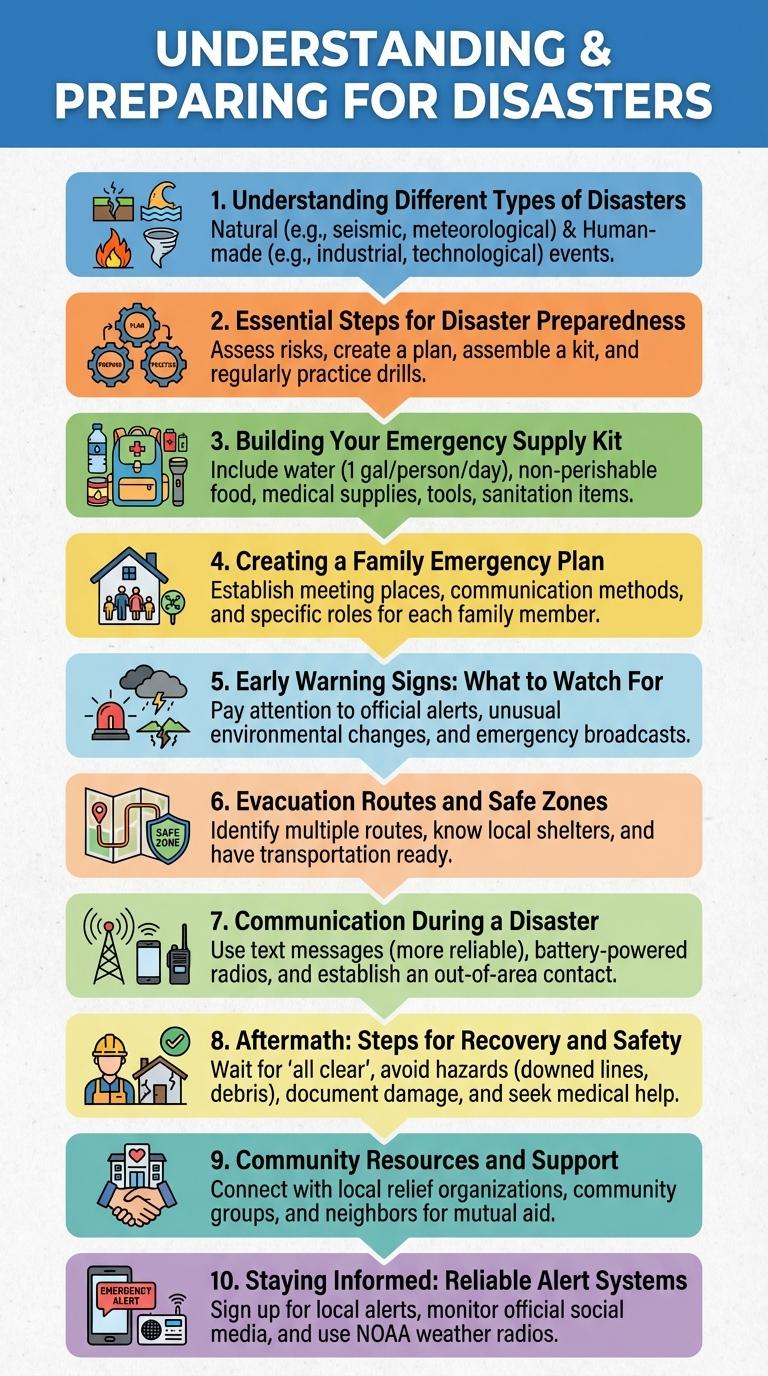
Disaster awareness infographics provide clear, concise information on how to prepare for emergencies, helping individuals understand risks and safety measures. Visual elements highlight essential steps for effective response and recovery during natural or man-made disasters. Such infographics promote proactive planning and community resilience by making critical data easy to grasp quickly.
Understanding Different Types of Disasters
Disasters can be natural or man-made, each posing unique threats to communities. Natural disasters include events like earthquakes, floods, hurricanes, and wildfires, while man-made disasters involve industrial accidents, terrorist attacks, and chemical spills.
Understanding these disaster types helps in preparing effective response and mitigation strategies. Awareness of specific risks enables individuals and organizations to protect lives and minimize damage.
Essential Steps for Disaster Preparedness
How can you stay safe during a disaster? Understanding essential steps for disaster preparedness saves lives and minimizes damage. Preparing in advance ensures you are ready for unexpected emergencies.
What should be included in an emergency kit? A well-stocked kit contains water, non-perishable food, first-aid supplies, and important documents. Having these items accessible can support survival for several days.
Why is having a communication plan important? Establishing clear communication helps families stay connected and informed. Knowing emergency contacts and meeting points reduces confusion during chaos.
How do you identify hazards in your area? Research local risks such as floods, earthquakes, or storms that are common where you live. Awareness of potential dangers guides proper preparation measures.
When should you practice disaster drills? Regular drills reinforce safety procedures and improve response times. Practicing at home and work builds confidence and readiness for real events.
Building Your Emergency Supply Kit
Preparing an emergency supply kit is crucial for staying safe during disasters. This kit ensures you have essential items to support you and your family for at least 72 hours.
- Water Supply - Store at least one gallon of water per person per day for drinking and sanitation.
- Non-Perishable Food - Include canned goods, granola bars, and dried foods that do not require refrigeration.
- First Aid Kit - Equip your kit with bandages, antiseptics, medications, and any personal prescription drugs.
Creating a Family Emergency Plan
Preparing for emergencies ensures your family stays safe during disasters. Creating a comprehensive family emergency plan helps you respond quickly and effectively.
- Identify Meeting Points - Choose safe locations both near and outside your neighborhood where family members can reunite after an emergency.
- Assign Communication Roles - Designate who will contact emergency services and who will check in with relatives to maintain clear communication.
- Emergency Supplies Checklist - Prepare a kit including water, food, medications, and important documents to support your family for at least 72 hours.
Early Warning Signs: What to Watch For
Recognizing early warning signs of disasters can save lives and minimize damage. Being aware of environmental and structural changes helps communities respond promptly.
Unusual weather patterns, like sudden temperature drops or darkening skies, often precede storms or floods. Structural sounds such as cracking or unusual vibrations may indicate impending earthquakes or landslides.
Evacuation Routes and Safe Zones
Understanding evacuation routes is crucial for timely and safe escape during emergencies. Clear, well-marked paths lead individuals away from hazards to designated safe zones. Familiarity with these routes and zones saves lives by reducing confusion and ensuring swift movement to safety.
Communication During a Disaster
Effective communication during disasters is crucial for saving lives and coordinating emergency response efforts. Clear and reliable information helps communities prepare and respond efficiently to hazards.
- Use Multiple Channels - Employ radio, social media, SMS, and emergency alerts to reach diverse audiences quickly.
- Establish Emergency Contacts - Keep a list of trusted contacts and local emergency numbers accessible at all times.
- Verify Information - Confirm the accuracy of updates before sharing to avoid spreading misinformation.
Consistent and accurate communication ensures timely help and reduces panic during disaster situations.
Aftermath: Steps for Recovery and Safety
Disaster recovery is crucial for restoring normalcy and ensuring safety after an emergency. Understanding proper steps helps reduce further risks and supports community resilience.
First, assess safety hazards like gas leaks, unstable structures, or downed power lines before entering affected areas. Contact emergency services for medical assistance and report damage promptly to local authorities. Prioritize securing clean water, food, and shelter to prevent health complications and support recovery efforts.
Community Resources and Support
| Community Resource | Support Provided |
|---|---|
| Local Emergency Services | Rapid response, evacuation assistance, medical aid |
| Community Centers | Shelter, information hubs, relief distribution points |
| Non-Profit Organizations | Disaster preparedness training, volunteer coordination |
| Public Health Departments | Medical support, disease prevention, mental health services |
| Local Government Agencies | Resource allocation, policy enforcement, public alerts |