
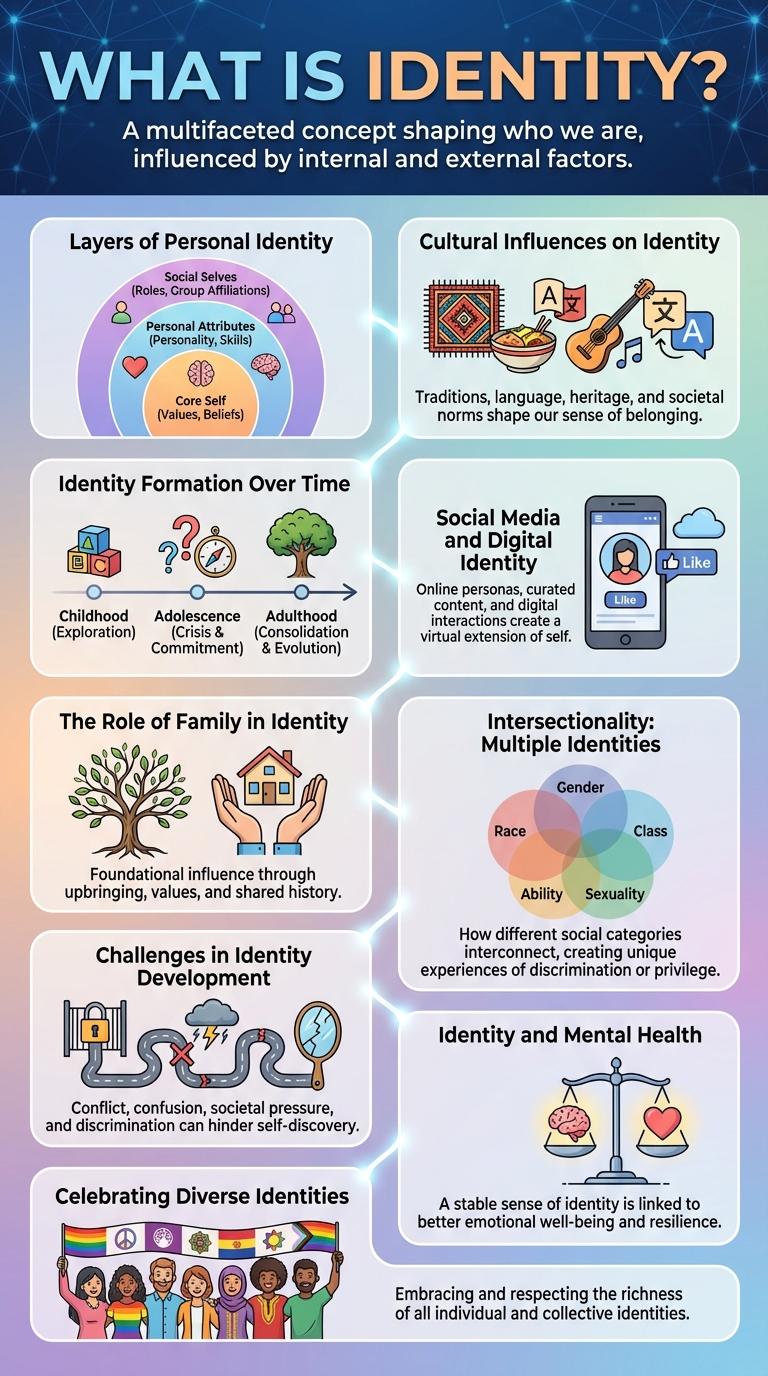
An infographic about identity visually breaks down the complex elements that shape who we are, from personal traits and cultural background to social roles and experiences. It highlights key concepts such as self-perception, values, and external influences that collectively define individual identity. By presenting this information in a clear and engaging format, the infographic helps readers grasp the multifaceted nature of identity quickly and effectively.
What Is Identity?
| What Is Identity? | Identity is the collection of characteristics, traits, beliefs, and experiences that define an individual or group. It shapes how people perceive themselves and how others perceive them. |
|---|---|
| Key Components | Personal traits, cultural background, social roles, values, memories, and physical attributes. |
| Types of Identity | Personal identity (unique individual traits) and social identity (group memberships like nationality, ethnicity, religion). |
| Importance | Provides a sense of belonging, guides behavior and decision-making, influences self-esteem and social interactions. |
| Dynamic Nature | Identity evolves over time through life experiences, social influences, and personal growth. |
Layers of Personal Identity
Personal identity is composed of multiple interconnected layers that shape who we are. These layers include our individual traits, social roles, and cultural backgrounds.
The core layer involves individual personality traits, values, and beliefs unique to each person. Surrounding this core are social identities formed through relationships, occupations, and community memberships. The outermost layer reflects cultural identity, including language, ethnicity, and shared traditions that influence one's worldview.
Cultural Influences on Identity
Identity is deeply shaped by cultural influences that affect beliefs, values, and behaviors. These cultural elements contribute to a person's sense of self and community belonging.
- Language Shapes Identity - The language spoken within a culture influences how individuals express thoughts and emotions, reinforcing cultural ties.
- Traditions and Rituals - Cultural traditions provide a framework for identity, linking individuals to their heritage and shared history.
- Social Norms and Values - Cultural values guide behavior and decision-making, helping people define what is important in their identity.
Identity Formation Over Time
Identity formation is a dynamic process that evolves through various life stages. It involves the integration of personal experiences, social interactions, and cultural influences.
During adolescence, individuals explore different roles and beliefs to establish a coherent sense of self. Over time, identity solidifies through ongoing reflection and life events.
Social Media and Digital Identity
Social media platforms shape digital identities by allowing users to create personalized profiles reflecting their interests, activities, and social connections. Digital identity encompasses the online presence formed through interactions, posts, and shared content across various social networks. Managing privacy settings and understanding data usage are essential for maintaining control over one's social media digital identity.
The Role of Family in Identity
Family plays a crucial role in shaping an individual's identity by providing early socialization and cultural values. Through interactions with family members, individuals develop a sense of belonging and self-awareness.
Family influences core aspects such as beliefs, traditions, and emotional support critical to identity formation. Strong family bonds contribute to confidence, resilience, and a stable sense of self throughout life.
Intersectionality: Multiple Identities
Intersectionality reveals how overlapping social identities impact an individual's experiences and access to resources. Understanding multiple identities helps address complex forms of discrimination and privilege.
- Multiple Dimensions - People hold diverse identities such as race, gender, ethnicity, and class that interact simultaneously.
- Complex Experiences - Intersectionality explains how combined identities create unique challenges and advantages.
- Inclusive Solutions - Recognizing multiple identities leads to more effective and equitable social policies.
Challenges in Identity Development
What are the main challenges in identity development? Identity development often involves navigating complex social and personal expectations while striving for authentic self-expression. Many individuals struggle with balancing internal values and external influences during this critical process.
How do social pressures impact identity formation? Social pressures such as peer influence, cultural norms, and family expectations can create conflicts that hinder authentic identity development. These pressures may lead to conformity or confusion about one's true self.
Why is self-exploration important in overcoming identity challenges? Self-exploration helps individuals gain clarity and confidence in their beliefs, values, and goals. This process is essential for establishing a strong, cohesive identity that withstands external challenges.
What role does mental health play in identity development? Mental health issues like anxiety and depression can disrupt identity formation by creating doubts and insecurities. Supportive environments and professional guidance can aid in overcoming these obstacles.
How does digital technology influence identity challenges? Digital platforms expose individuals to diverse perspectives but can also promote unrealistic comparisons and identity fragmentation. Managing online presence thoughtfully is key to maintaining a coherent sense of self.
Identity and Mental Health
Identity plays a crucial role in shaping mental health and emotional well-being. Understanding one's identity can provide stability and resilience during mental health challenges.
- Self-Concept - A strong, positive self-concept helps reduce anxiety and depression symptoms.
- Social Identity - Connection to social groups offers support and a sense of belonging, which aid mental health recovery.
- Identity Conflicts - Conflicting or unclear identities increase vulnerability to stress and mental health disorders.
Promoting identity clarity and acceptance is essential for improving mental health outcomes across diverse populations.