
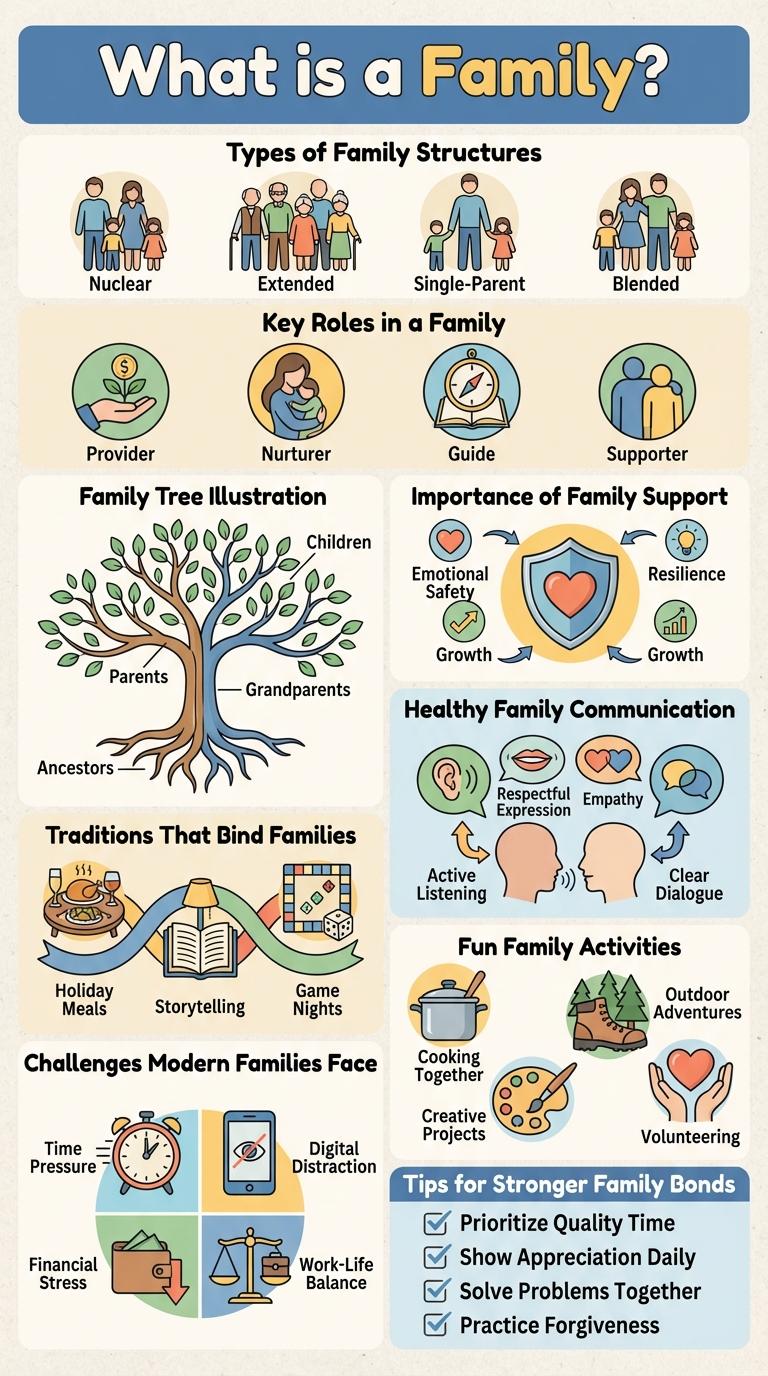
A family infographic visually represents the key aspects and dynamics of family life, highlighting relationships, roles, and common activities. It uses clear icons and concise data to illustrate family structures and interconnections effectively. This format simplifies complex information, making it accessible and engaging for all audiences.
What is a Family?
A family is a social unit consisting of individuals related by blood, marriage, or adoption. It serves as a fundamental building block of society, providing support and nurturing.
- Biological Connection - Family members share genetic ties that create a natural bond and sense of belonging.
- Emotional Support - Families offer emotional stability, care, and unconditional love to their members.
- Shared Responsibilities - Family members collaborate in daily tasks, decision-making, and raising children.
Understanding what defines a family helps recognize its vital role in individual development and social structure.
Types of Family Structures
Family structures vary widely, influencing social dynamics and individual development. Common types include nuclear families, extended families, single-parent families, blended families, and childless families. Understanding these structures helps in appreciating diverse family roles and relationships across cultures.
| Family Type | Description |
|---|---|
| Nuclear Family | Two parents and their children living together. |
| Extended Family | Includes relatives beyond the nuclear family, such as grandparents and cousins. |
| Single-Parent Family | One parent raising one or more children alone. |
| Blended Family | Combines children from previous relationships with new family members. |
| Childless Family | A couple without children, by choice or circumstance. |
Key Roles in a Family
What are the key roles in a family? Family members fulfill essential roles that support emotional, financial, and social well-being. Each role contributes uniquely to the stability and growth of the family unit.
| Role | Responsibility |
|---|---|
| Parent | Provides guidance, care, and financial support. |
| Child | Engages in learning and contributes to family dynamics. |
| Grandparent | Offers wisdom, heritage, and emotional support. |
| Guardian | Ensures safety and legal care in absence of parents. |
| Sibling | Provides companionship and social interaction. |
Family Tree Illustration
Family Tree Illustration visually represents the relationships between family members across generations. It helps trace lineage and understand ancestral connections clearly. This infographic style uses branches and nodes to map family ties efficiently.
Importance of Family Support
Family support plays a crucial role in emotional well-being and personal growth. It creates a foundation of trust and security for individuals throughout their lives.
Strong family bonds contribute to improved mental health and resilience during challenging times. Supportive families provide practical help, encouragement, and a sense of belonging. This foundation fosters confidence and motivation, enabling individuals to achieve their goals.
Healthy Family Communication
| Key Element | Description |
|---|---|
| Open Listening | Family members actively listen without interrupting to understand each other's feelings and perspectives. |
| Expressing Emotions | Encouraging honest and respectful sharing of emotions to foster empathy and connection. |
| Regular Check-Ins | Scheduling consistent family meetings or conversations to discuss concerns, achievements, and plans. |
| Positive Feedback | Offering constructive praise and appreciation to build self-esteem and reinforce supportive behavior. |
| Conflict Resolution | Addressing disagreements calmly with focus on solutions rather than blame, promoting harmony in the family. |
Traditions That Bind Families
Family traditions create lasting memories and strengthen emotional bonds among members. These customs often reflect cultural heritage and shared values passed through generations.
- Holiday Celebrations - Annual gatherings during holidays like Christmas or Thanksgiving foster unity and joy.
- Weekly Family Meals - Regular dinners provide consistent opportunities for communication and connection.
- Storytelling Evenings - Sharing family stories preserves history and deepens relationships across ages.
Challenges Modern Families Face
Modern families encounter various challenges including work-life balance and digital distractions. These factors significantly impact family cohesion and communication.
Financial pressures and evolving social expectations create additional stress within households. Addressing these issues requires adaptive strategies and strong support systems.
Fun Family Activities
Engaging in fun family activities strengthens bonds and creates lasting memories. Outdoor games, cooking together, and creative arts are popular ways to enjoy quality time.
Board games and movie nights promote teamwork and relaxation within the family unit. Exploring parks or visiting museums offers both educational and entertaining experiences for all ages.