
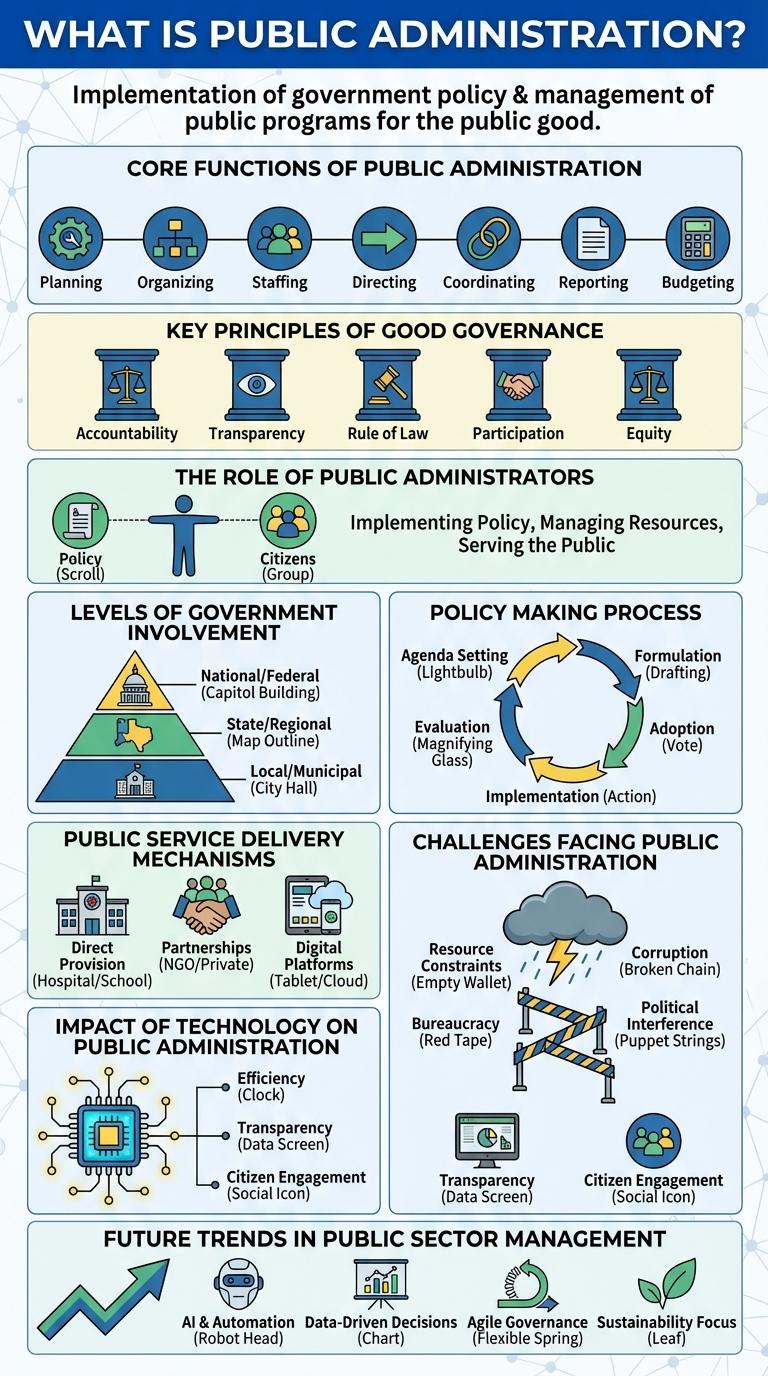
Public administration plays a crucial role in implementing government policies and delivering essential public services efficiently. This infographic highlights key functions, challenges, and innovations within the field, providing a clear overview of its impact on society. Understanding these elements helps citizens appreciate the complexity and importance of effective governance.
What Is Public Administration?
Public administration is the implementation of government policies and the management of public programs. It involves organizing resources and directing public agencies to serve society effectively.
- Government Management - Coordination of public resources to achieve policy objectives.
- Policy Implementation - Execution of laws and regulations by administrative agencies.
- Public Service Delivery - Providing essential services such as healthcare, education, and infrastructure to citizens.
Core Functions of Public Administration
Public administration is the implementation of government policies and the management of public programs. Core functions include policy formulation, organization, and public service delivery. Effective public administration ensures transparency, accountability, and citizen engagement in government operations.
Key Principles of Good Governance
Public administration is essential for implementing government policies and delivering public services efficiently. Good governance ensures transparency, accountability, and participation within administrative processes.
- Transparency - Decision-making processes and information should be open and accessible to the public.
- Accountability - Public officials must be responsible for their actions and outcomes.
- Inclusiveness - All stakeholders, including marginalized groups, should have opportunities to participate in governance.
Adhering to these key principles supports effective and equitable public service delivery.
The Role of Public Administrators
Public administrators play a critical role in implementing government policies and managing public programs. They act as a bridge between government officials and the community, ensuring effective service delivery.
Their responsibilities include planning, organizing, directing, and controlling public resources to meet societal needs. Public administrators uphold transparency, accountability, and ethical standards in government operations.
Levels of Government Involvement
Public administration operates through three primary levels of government involvement: local, state, and federal. Local governments handle community needs such as public safety and zoning, while state governments manage education systems and infrastructure development. The federal government oversees national policies, defense, and interstate matters, ensuring coordination across different levels.
Policy Making Process
| Stage | Description |
|---|---|
| Problem Identification | Recognizing public issues that require government intervention. |
| Agenda Setting | Prioritizing problems and determining which will be addressed by policymakers. |
| Policy Formulation | Developing possible solutions and evaluating alternatives to address the issues. |
| Policy Adoption | Official approval of selected policy options by legislative or executive authority. |
| Policy Implementation | Executing the adopted policies through government agencies and public programs. |
Public Service Delivery Mechanisms
What are the key public service delivery mechanisms in public administration?
Public service delivery mechanisms refer to the methods and processes used by government agencies to provide services to citizens efficiently. These mechanisms ensure accessibility, transparency, and accountability in delivering public goods and services.
| Delivery Mechanism | Description |
|---|---|
| Direct Service Provision | Government agencies directly provide services such as healthcare, education, and social welfare. |
| Partnerships | Collaboration with private sector and non-governmental organizations to extend service reach and efficiency. |
| Digital Platforms | Utilization of e-government portals and mobile apps to facilitate online service delivery and citizen engagement. |
| Decentralization | Delegation of service delivery responsibilities to local governments for tailored solutions. |
| Outsourcing | Contracting third-party providers to manage specific public services under government supervision. |
Challenges Facing Public Administration
Public administration faces significant challenges in adapting to rapid technological advancements and increasing public demand for transparency. Efficient management of resources and ensuring accountability remain critical concerns.
Addressing bureaucratic inefficiencies and corruption is essential to improve service delivery. Furthermore, public administrators must navigate complex regulatory environments while fostering citizen engagement and trust.
Impact of Technology on Public Administration
Technology has revolutionized public administration by enhancing efficiency and transparency. Digital tools enable faster service delivery and improved citizen engagement.
Automation of administrative processes reduces human error and operational costs. Data analytics supports informed decision-making and policy development. Online platforms facilitate real-time communication between government agencies and the public.