
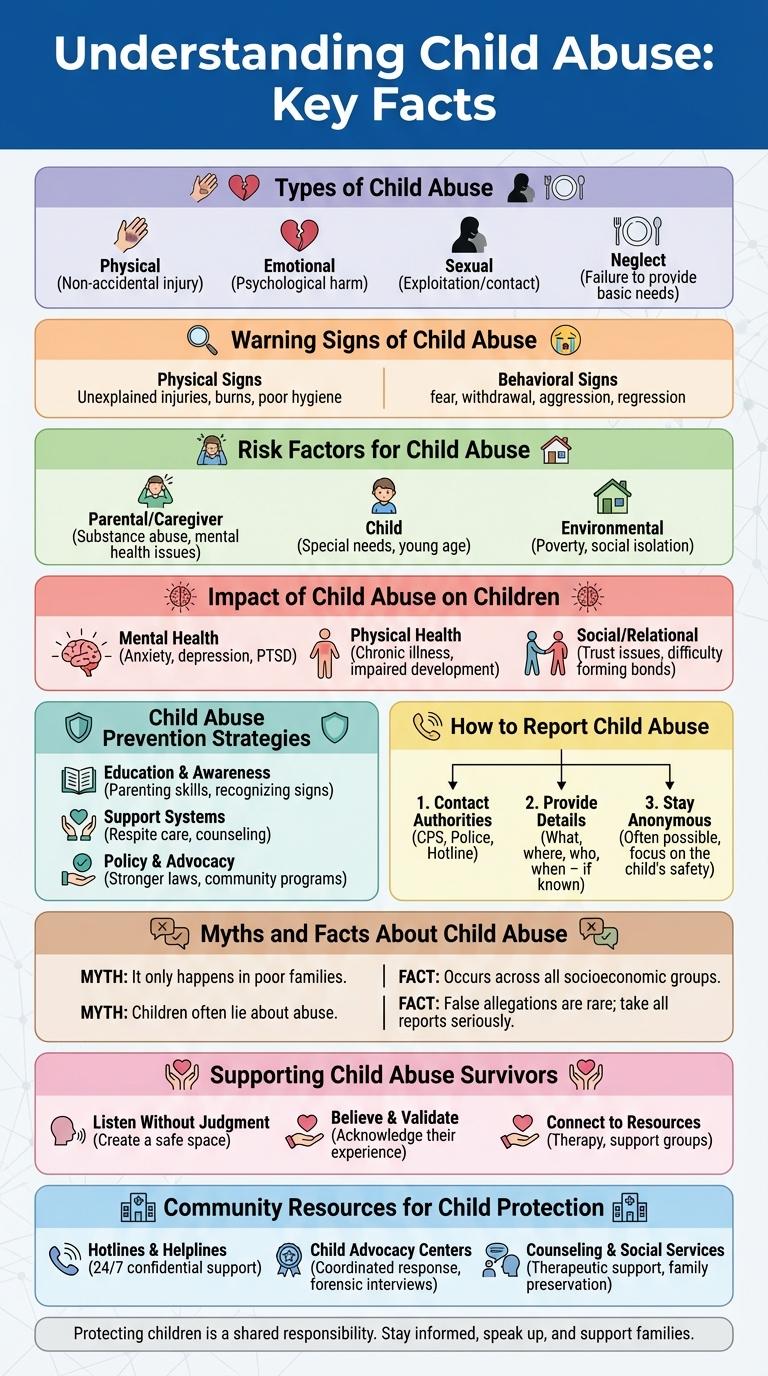
Child abuse is a critical issue affecting millions of children worldwide, with lasting physical and emotional consequences. This infographic presents key statistics and facts to raise awareness and encourage prevention efforts. Understanding the scope and impact of child abuse is essential for creating safer environments for children.
Understanding Child Abuse: Key Facts
| Key Fact | Details |
|---|---|
| Definition | Child abuse includes physical, emotional, sexual abuse, and neglect affecting a child's well-being and development. |
| Prevalence | Approximately 1 in 7 children experience abuse or neglect annually worldwide. |
| Common Forms | Neglect is the most frequent form, followed by physical and emotional abuse, then sexual abuse. |
| Significant Impacts | Child abuse leads to long-term emotional trauma, developmental delays, and increased risk of mental health disorders. |
| Prevention | Effective prevention includes education, supportive parenting, and community awareness programs. |
Types of Child Abuse
Child abuse encompasses various harmful behaviors that negatively impact a child's physical, emotional, or psychological well-being. The primary types include physical abuse, emotional abuse, sexual abuse, and neglect. Recognizing these forms is crucial for prevention and intervention efforts.
Warning Signs of Child Abuse
What are the most common warning signs of child abuse? Recognizing these signs early can help protect vulnerable children. Physical injuries, behavioral changes, and emotional distress often indicate abuse.
How can physical signs reveal child abuse? Unexplained bruises, burns, or fractures may signal physical harm. Frequent injuries or delays in seeking medical help raise concerns.
What behavioral changes might suggest a child is being abused? Withdrawal, aggression, or sudden fearfulness can indicate distress. A drop in school performance or reluctance to go home also serve as red flags.
Why are emotional symptoms important indicators of abuse? Anxiety, depression, and low self-esteem often accompany maltreatment. Children might show extreme clinginess or detachment as responses.
Where should one report suspected child abuse? Contact local child protective services or law enforcement immediately. Reporting helps ensure the child's safety and initiates intervention.
Risk Factors for Child Abuse
Child abuse is a serious issue affecting millions of children worldwide. Understanding risk factors is crucial for prevention and intervention efforts.
Risk factors for child abuse include parental substance abuse, mental health disorders, and domestic violence. Economic stress and lack of social support also increase the likelihood of abuse. Children with disabilities are more vulnerable to maltreatment compared to their peers.
Impact of Child Abuse on Children
Child abuse significantly affects the emotional and physical well-being of children, often leading to long-term psychological issues. Victims may experience anxiety, depression, and difficulty forming healthy relationships.
Physical consequences include injuries and developmental delays that can hinder growth and learning. Early intervention and support are crucial to mitigate these negative impacts and promote recovery.
Child Abuse Prevention Strategies
Preventing child abuse requires a combination of awareness, education, and community involvement. Effective strategies empower families and caregivers to create safe environments for children.
- Education Programs - Teaching children and adults about the signs of abuse and how to respond enhances early detection and intervention.
- Parental Support - Providing resources and counseling helps parents manage stress and develop healthy parenting skills.
- Community Engagement - Building supportive networks among schools, social services, and local organizations fosters a protective environment for children.
How to Report Child Abuse
Recognizing and reporting child abuse is crucial for protecting vulnerable children. Immediate action can save a child from further harm and ensure they receive the help they need.
- Identify Signs of Abuse - Look for physical, emotional, or behavioral indicators such as unexplained injuries or withdrawal.
- Contact Child Protective Services - Report your concerns to local authorities or child protective services via phone or online platforms.
- Provide Detailed Information - Include the child's name, location, nature of abuse, and any evidence or observations.
Myths and Facts About Child Abuse
Child abuse remains a critical issue affecting millions of children worldwide. Misconceptions often hinder proper prevention and intervention efforts.
- Myth: Child abuse is always physical - Abuse can be emotional, sexual, or neglectful, not just physical harm.
- Myth: Only strangers abuse children - Most abusers are family members or trusted individuals in a child's life.
- Fact: Abuse affects children of all backgrounds - Child abuse occurs across all socioeconomic, racial, and cultural groups.
- Fact: Early intervention can prevent long-term damage - Timely support and protection improve outcomes for abused children.
- Myth: Children often lie about abuse - False reports are rare; most children tell the truth when disclosing abuse.
Understanding these myths and facts is essential for protecting children and supporting survivors effectively.
Supporting Child Abuse Survivors
Supporting child abuse survivors involves providing emotional, psychological, and physical care to help them heal from trauma. Access to counseling and safe environments fosters recovery and resilience in affected children.
Community awareness and trained professionals play a critical role in identifying abuse and offering timely support. Effective interventions empower survivors to overcome challenges and build a healthy future.