
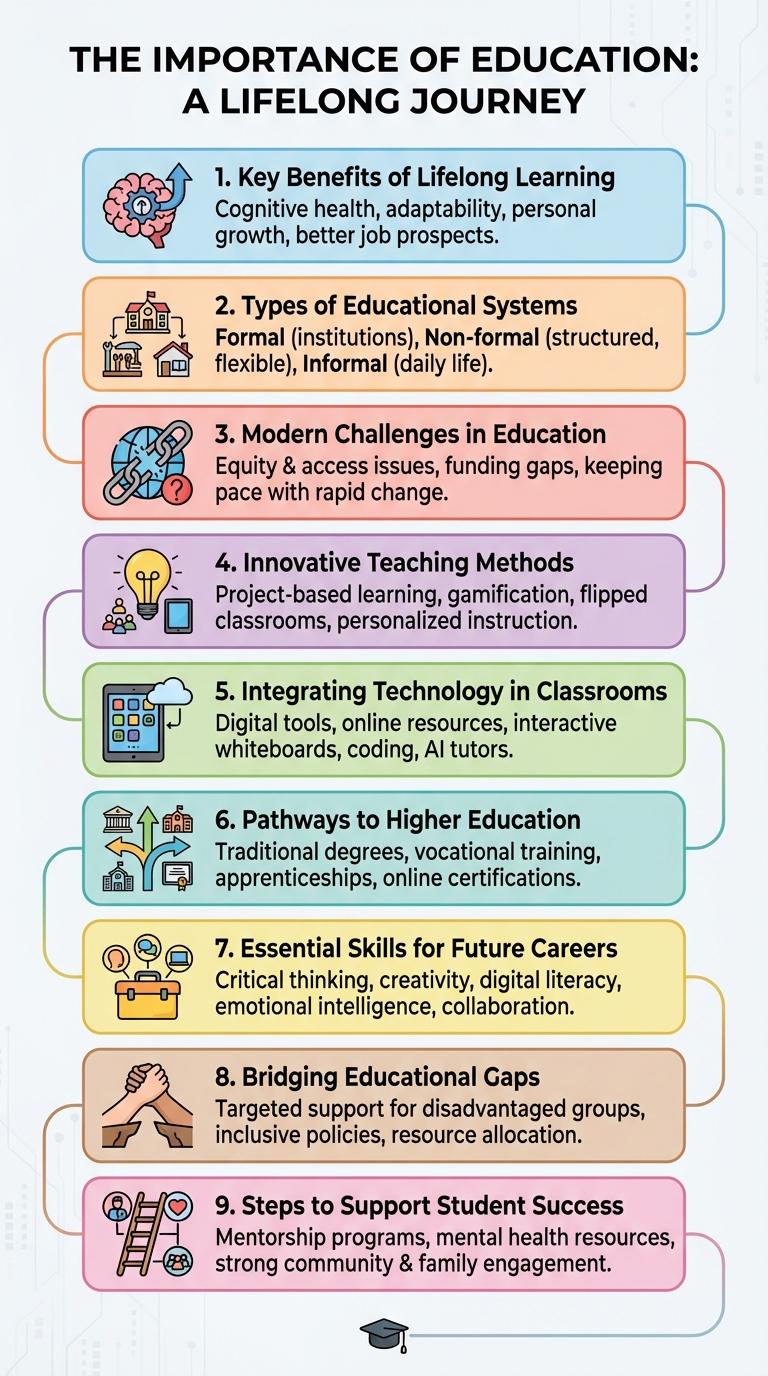
Edukasyon transforms lives by providing essential knowledge and skills for personal and professional growth. Visual representations in infographics simplify complex information, making learning more accessible and engaging. These graphics highlight key educational concepts, trends, and benefits to inspire continuous learning.
The Importance of Education
Education empowers individuals with knowledge and skills essential for personal and professional growth. It forms the foundation for a prosperous and equitable society.
Access to quality education increases opportunities, reduces poverty, and promotes sustainable development. It fosters critical thinking, creativity, and informed decision-making. Education also drives innovation and social progress across generations.
Key Benefits of Lifelong Learning
Lifelong learning enhances personal growth and professional development throughout life. It fosters adaptability and keeps skills relevant in a changing world.
- Improves Cognitive Function - Continuous learning stimulates the brain, improving memory and critical thinking skills.
- Boosts Career Opportunities - Gaining new skills increases employability and opens doors to career advancement.
- Encourages Social Engagement - Learning promotes meaningful connections and collaboration within communities.
Types of Educational Systems
Educational systems vary worldwide, reflecting diverse cultural, economic, and social contexts. Each system adopts unique teaching methods, curricula, and evaluation standards to meet the needs of its population.
Types of educational systems include formal, informal, and non-formal education. Formal education occurs in structured environments like schools, while informal learning happens through daily activities; non-formal education involves organized programs outside traditional schooling.
Modern Challenges in Education
What are the primary modern challenges in education today?
Rapid technological advancements demand continuous curriculum updates to keep students relevant. Increasing educational inequality limits access to quality learning resources for many communities.
How does technology impact modern education?
Digital tools enhance interactive learning but also create distractions and require digital literacy. Ensuring equitable technology access remains a significant challenge for schools worldwide.
What role does mental health play in education?
Student mental health concerns such as anxiety and stress affect academic performance and overall well-being. Schools are adopting support systems but face resource limitations to address these issues effectively.
How is teacher preparedness affected by modern challenges?
Teachers must adapt to new teaching methods and technologies while managing diverse classrooms. Professional development programs are essential but often underfunded or inconsistently available.
Why is addressing educational disparities critical?
Economic and geographic factors create gaps in educational quality and access, impacting lifelong learning opportunities. Targeted policies and funding are required to bridge these divides for inclusive education.
Innovative Teaching Methods
Innovative teaching methods enhance student engagement and improve learning outcomes by integrating technology and interactive activities. Techniques such as flipped classrooms, gamification, and project-based learning foster critical thinking and collaboration. These approaches adapt to diverse learning styles, making education more inclusive and effective.
Integrating Technology in Classrooms
Integrating technology in classrooms enhances student engagement and facilitates personalized learning experiences. Interactive tools like smartboards, tablets, and educational software promote collaboration and critical thinking. Effective use of technology prepares students for a digital future while supporting diverse learning styles.
Pathways to Higher Education
Higher education offers diverse pathways tailored to various learning styles and career goals. Students can choose from academic degrees, vocational training, or digital learning platforms to advance their education.
Traditional universities provide bachelor's, master's, and doctoral programs across multiple disciplines. Technical institutes and online courses offer flexible options for skill development and certification.
Essential Skills for Future Careers
Education is evolving to meet the demands of rapidly changing industries and technologies. Developing essential skills prepares students for success in future careers across various sectors.
- Critical Thinking - Enables problem-solving and decision-making in complex situations.
- Digital Literacy - Facilitates effective use of technology and understanding of digital tools.
- Communication Skills - Supports collaboration and clear expression in diverse work environments.
Building these skills early enhances adaptability and competitiveness in tomorrow's job market.
Bridging Educational Gaps
| Educational Gap | Bridging Strategy |
|---|---|
| Access to Technology | Implementing digital classrooms and providing affordable internet access |
| Quality Teaching | Teacher training programs and continuous professional development |
| Socioeconomic Barriers | Scholarships, subsidies, and community learning centers |
| Rural vs Urban Education | Mobile schools and remote learning initiatives |
| Curriculum Relevance | Incorporating local culture and practical skills into education |