
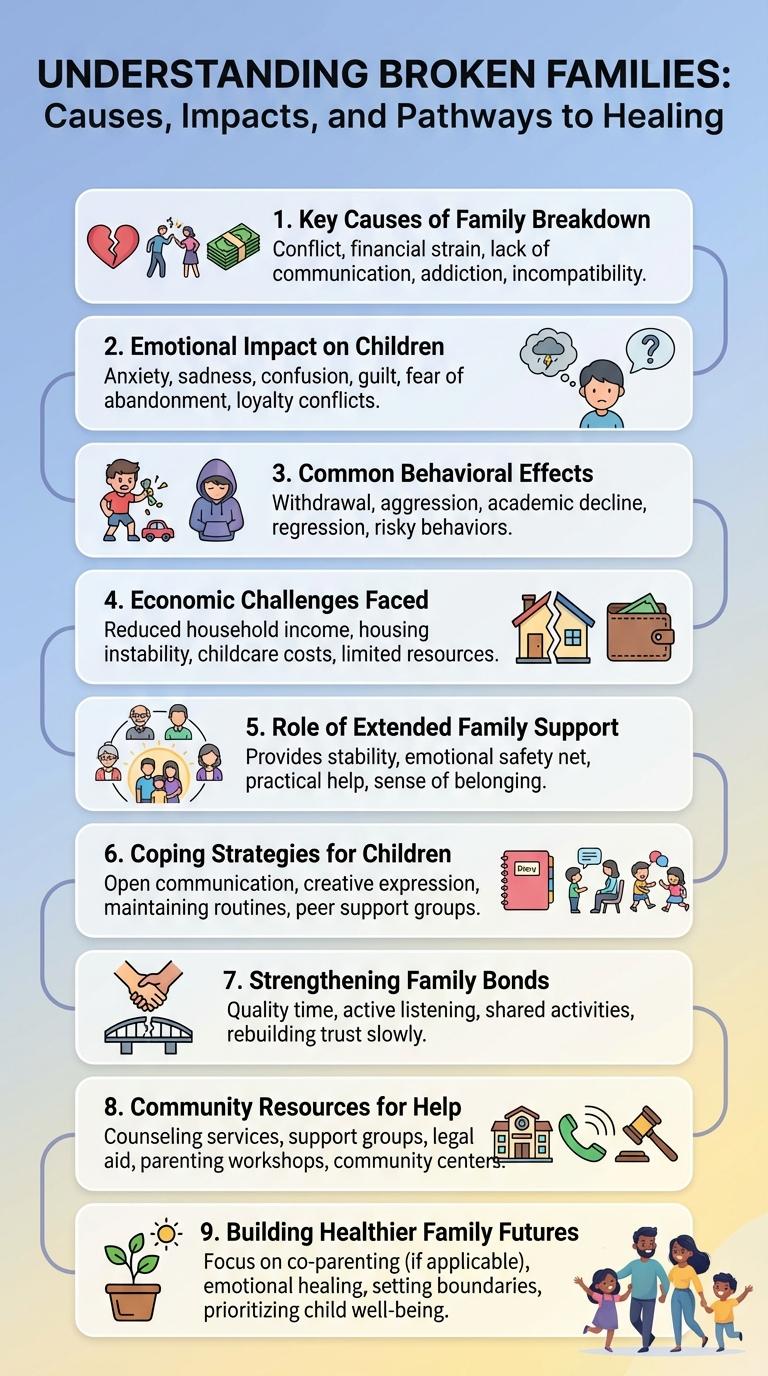
Broken families often face complex emotional and social challenges that affect both children and adults. Understanding the causes, impacts, and ways to support individuals in these situations is essential for fostering resilience. This infographic visually explores key statistics and insights to raise awareness and promote healing within broken family dynamics.
Understanding Broken Families
What defines a broken family? A broken family typically refers to a family where parents are separated, divorced, or where one parent is absent. This situation can affect children's emotional and social development.
How common are broken families? Studies show that approximately 40% of children in developed countries live in broken family structures. These numbers continue to rise due to increasing divorce rates and changing social norms.
What are the main causes of broken families? Common causes include divorce, separation, death of a parent, and abandonment. Economic stress and communication problems also contribute significantly.
What impact do broken families have on children? Children from broken families may face challenges such as lower academic performance, emotional distress, and social difficulties. Support systems and counseling can mitigate these effects.
How can society support broken families? Providing access to family counseling, parental education programs, and social support networks helps stabilize broken families. Community awareness programs also promote healthy family relationships.
Key Causes of Family Breakdown
Family breakdown is often triggered by a combination of emotional, financial, and social stressors. Understanding these key causes helps in addressing and preventing the deterioration of family relationships.
Common causes include communication failure, where misunderstandings and lack of dialogue lead to conflicts. Financial difficulties impose strain, increasing tension and reducing family stability.
Emotional Impact on Children
Children from broken families often experience feelings of confusion, anxiety, and insecurity, affecting their emotional well-being. These emotional challenges can lead to difficulties in forming trusting relationships and low self-esteem. Supportive environments and counseling play critical roles in helping children navigate these impacts and build resilience.
Common Behavioral Effects
Broken families often lead to significant behavioral changes in children, affecting their emotional and social development. Understanding these common behavioral effects helps in providing the necessary support and intervention.
Children from broken families may exhibit various coping mechanisms that influence their daily interactions and academic performance.
- Increased Anxiety - Children often experience heightened anxiety due to instability and uncertainty in their family environment.
- Trust Issues - Difficulty trusting others may develop as a result of disrupted parental relationships and inconsistent caregiving.
- Academic Decline - Emotional distress can lead to decreased concentration and lower academic achievement.
- Social Withdrawal - Some children may isolate themselves, avoiding social interactions and peer relationships.
- Behavioral Problems - Increased risk of aggression, defiance, or delinquent behavior may occur as a response to family breakdown stress.
Economic Challenges Faced
Broken families often face significant economic challenges that impact their financial stability and overall quality of life. The disruption of household income streams can lead to increased poverty rates among affected family members.
Single-parent households frequently encounter difficulties in maintaining steady employment due to childcare responsibilities. Limited income combined with higher expenses such as housing and education intensifies financial strain. Economic hardships in broken families contribute to long-term socioeconomic disadvantages for children and adults alike.
Role of Extended Family Support
Extended family members play a crucial role in providing emotional and financial support to children in broken families. Their involvement helps create a stable environment that mitigates the negative impacts of parental separation.
Grandparents, aunts, and uncles often act as caregivers and mentors, fostering a sense of belonging and security. This support network promotes resilience and healthy development among children facing family disruptions.
Coping Strategies for Children
Children from broken families often face emotional challenges that require effective coping strategies to promote resilience and mental well-being. Supportive communication, maintaining routines, and seeking professional counseling are critical methods for helping children adapt to family changes. Encouraging open expression of feelings and fostering strong relationships with caregivers and peers significantly aids in their emotional recovery.
Strengthening Family Bonds
Community Resources for Help
Broken families often face emotional and financial challenges that require external support. Community resources provide essential services to help families rebuild stability and well-being.
- Counseling Services - Professional therapists offer guidance to improve communication and resolve conflicts within broken families.
- Support Groups - Peer groups provide a safe space for sharing experiences and receiving emotional support.
- Financial Assistance Programs - Local agencies provide aid for housing, food, and childcare to alleviate economic burdens on affected families.