
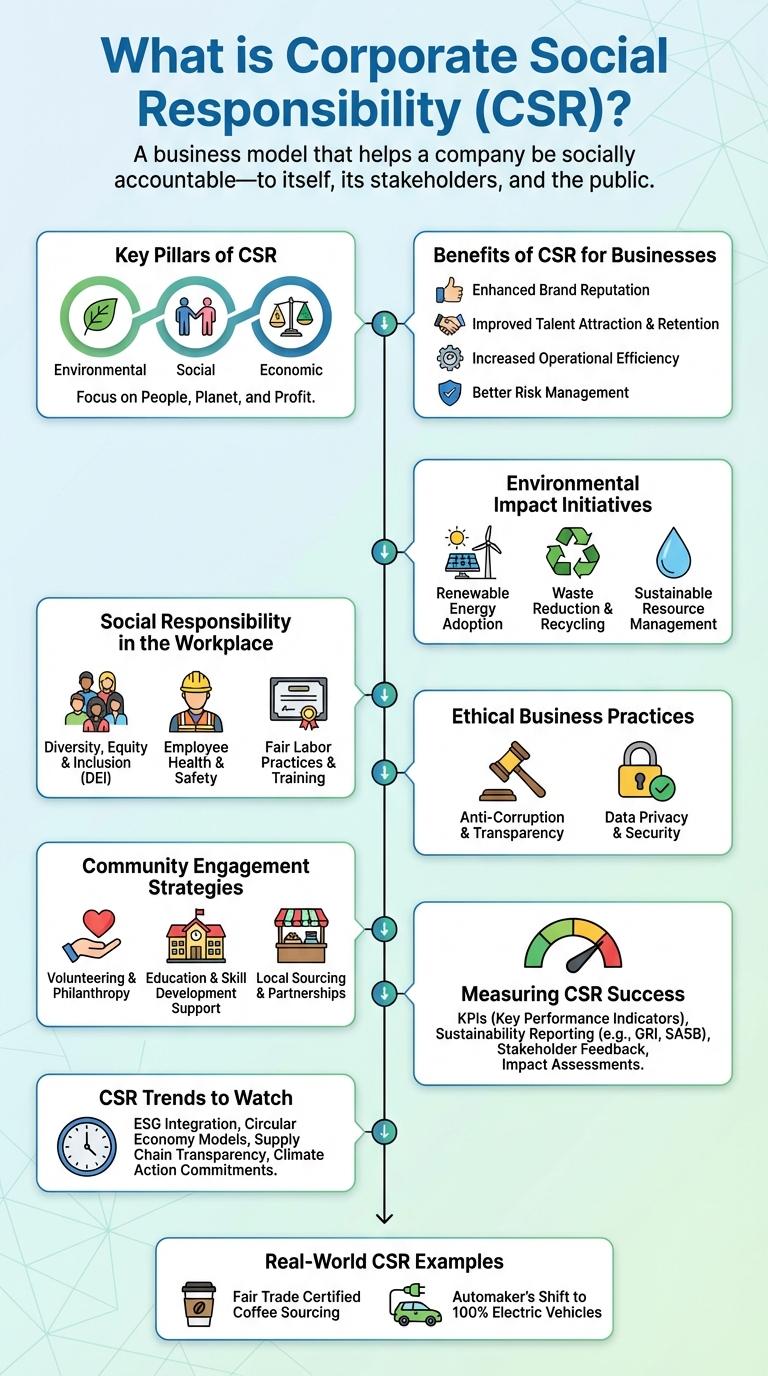
Corporate social responsibility (CSR) infographics visually represent a company's commitment to ethical practices, community engagement, and environmental sustainability. These graphics effectively communicate complex CSR initiatives, making data more accessible and engaging for stakeholders. Highlighting key metrics and achievements helps organizations showcase their positive social impact clearly and concisely.
What is Corporate Social Responsibility (CSR)?
| Aspect | Description |
|---|---|
| Definition | Corporate Social Responsibility (CSR) is a business model where companies integrate social and environmental concerns in their operations and interactions with stakeholders. |
| Purpose | CSR aims to create positive impacts on society while maintaining profitability and sustainable business growth. |
| Key Areas | Environmental protection, ethical labor practices, community engagement, and responsible sourcing. |
| Stakeholders | Employees, customers, investors, local communities, and regulatory bodies. |
| Benefits | Enhanced brand reputation, increased customer loyalty, risk management, and long-term business sustainability. |
Key Pillars of CSR
Corporate Social Responsibility (CSR) encompasses a company's commitment to ethical practices, environmental sustainability, and positive social impact. Businesses adopting CSR integrate these principles into their core operations to foster long-term value for stakeholders.
The key pillars of CSR include Environmental Responsibility, Social Equity, Economic Viability, and Ethical Governance. These pillars guide organizations in balancing profit generation with societal and ecological stewardship.
Benefits of CSR for Businesses
Corporate Social Responsibility (CSR) drives sustainable business growth and enhances company reputation. Embracing CSR helps companies create long-term value for stakeholders.
- Improved Brand Image - CSR initiatives increase customer trust and loyalty by showcasing ethical business practices.
- Attracts Talent - Companies with strong CSR commitments appeal to skilled professionals seeking meaningful work environments.
- Cost Savings - Energy-efficient operations and waste reduction through CSR lower operational expenses.
- Risk Management - Proactive CSR reduces legal risks and strengthens compliance with regulations.
- Customer Engagement - CSR programs foster stronger relationships and higher customer satisfaction.
Businesses investing in CSR benefit from enhanced competitiveness and sustained profitability.
Environmental Impact Initiatives
Corporate Social Responsibility (CSR) significantly shapes a company's environmental impact through targeted initiatives. These efforts focus on reducing carbon footprints, conserving natural resources, and promoting sustainable practices.
- Carbon Emission Reduction - Companies implement renewable energy sources and improve energy efficiency to lower greenhouse gas emissions.
- Waste Management Programs - Effective recycling and waste reduction strategies minimize landfill use and environmental pollution.
- Water Conservation Efforts - Initiatives include reducing water usage and protecting local water sources to support ecosystem health.
Social Responsibility in the Workplace
What is Social Responsibility in the Workplace?
Social Responsibility in the workplace refers to a company's commitment to ethical practices, employee well-being, and community engagement. It enhances corporate reputation and fosters a positive work environment.
How does CSR impact employee satisfaction?
CSR initiatives promote fair treatment, diversity, and inclusion, boosting morale and retention. Employees feel more motivated and connected to their company's values through responsible actions.
Which key areas define workplace social responsibility?
Workplace social responsibility includes fair labor practices, health and safety, employee development, and community involvement. These areas contribute to sustainable business success and social impact.
Why invest in health and safety programs?
Prioritizing health and safety reduces workplace accidents and related costs. It creates a secure environment that supports employee productivity and well-being.
How does community engagement enhance CSR?
Community involvement through volunteering and partnerships strengthens local relationships and corporate image. It demonstrates a business's dedication to social causes beyond profit.
Ethical Business Practices
Corporate Social Responsibility (CSR) emphasizes the integration of ethical business practices to foster trust and sustainability. Ethical conduct forms the foundation for long-term stakeholder value and societal impact.
- Transparency and Accountability - Businesses disclose accurate information and take responsibility for their actions.
- Fair Labor Practices - Ensuring safe working conditions and equitable treatment for all employees.
- Anti-Corruption Policies - Implementing strict measures to prevent bribery and unethical behavior.
Community Engagement Strategies
Community Engagement Strategies in Corporate Social Responsibility (CSR) focus on building meaningful relationships between businesses and local communities. These strategies include volunteer programs, local partnerships, and transparent communication channels to address community needs effectively. Companies investing in community engagement foster trust, enhance social impact, and support sustainable development.
Measuring CSR Success
Measuring CSR success involves evaluating environmental, social, and governance (ESG) metrics to gauge impact. Key performance indicators (KPIs) include carbon footprint reduction, community engagement levels, and ethical supply chain adherence. Data-driven insights help organizations improve strategies and demonstrate transparency to stakeholders.
CSR Trends to Watch
Corporate Social Responsibility (CSR) remains a pivotal strategy for companies aiming to enhance sustainability and social impact. Emerging trends in CSR are shaping how businesses engage with communities and the environment.
Key CSR trends to watch include increased transparency through ESG (Environmental, Social, Governance) reporting, which drives accountability. Companies are leveraging technology for better impact measurement and stakeholder engagement. There is also a growing emphasis on climate action, diversity and inclusion initiatives, and sustainable supply chain management.