
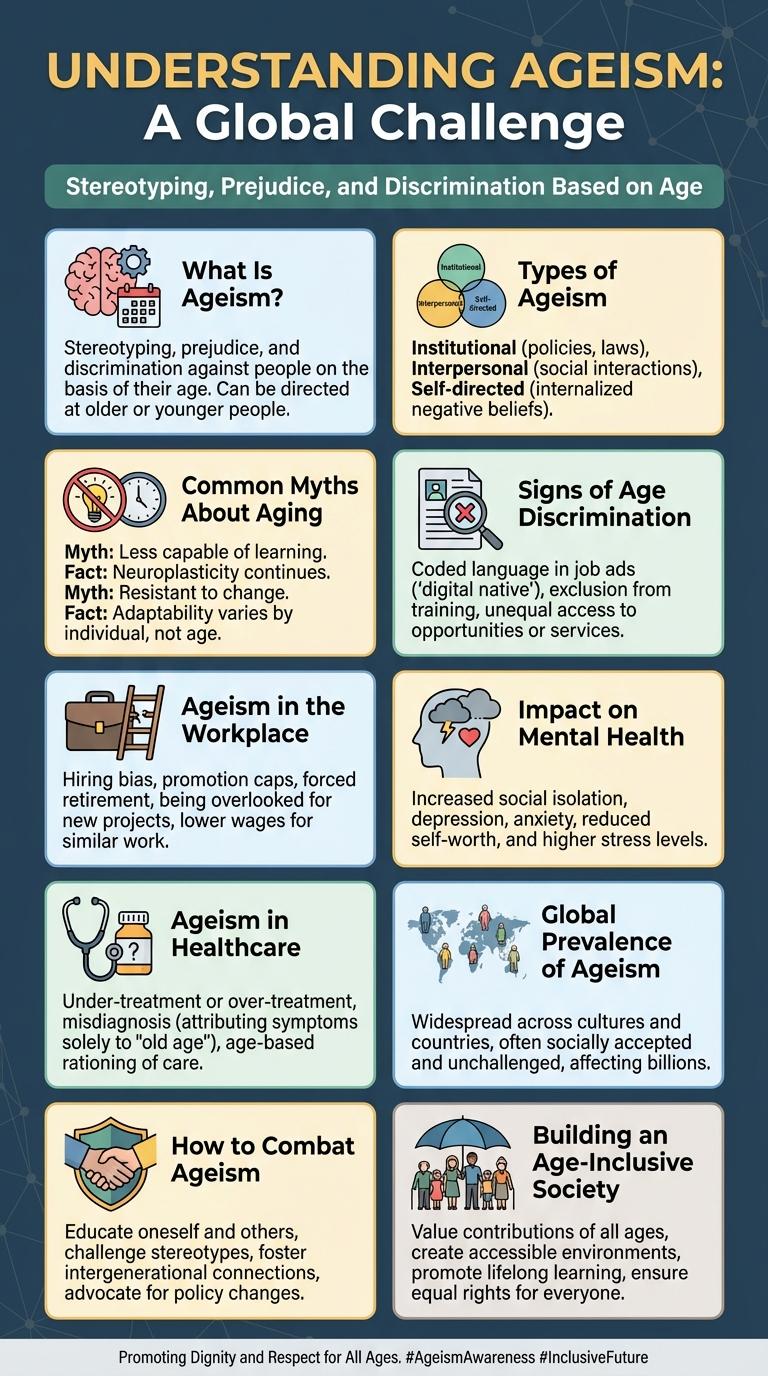
Ageism affects individuals across all stages of life, influencing employment opportunities, healthcare quality, and social interactions. Visualizing age-related stereotypes and their consequences highlights the need for increased awareness and inclusive practices. Infographics effectively communicate these insights, promoting empathy and policy change.
What Is Ageism?
| What Is Ageism? | |
|---|---|
| Definition | Ageism is prejudice or discrimination against individuals based on their age, affecting both young and older people. |
| Key Characteristics | Includes stereotyping, negative attitudes, and unfair treatment due to perceived age-related abilities or traits. |
| Common Targets | Older adults in employment, healthcare, and social settings, as well as younger people seen as inexperienced or immature. |
| Consequences | Limits opportunities, affects mental health, reduces social inclusion, and reinforces harmful societal stereotypes. |
| Examples | Job advertisements specifying age limits, dismissing older workers' capabilities, or assuming younger people lack responsibility. |
Types of Ageism
Ageism manifests in various forms, including institutional ageism, where policies and systems discriminate against older adults. Interpersonal ageism involves negative stereotypes and prejudices expressed through everyday interactions. Internalized ageism occurs when individuals adopt society's ageist beliefs, impacting their self-esteem and behavior.
Common Myths About Aging
Ageism refers to stereotypes, prejudice, or discrimination against individuals based on their age. Common myths about aging often contribute to these negative perceptions and affect the quality of life for older adults.
One widespread myth is that older people are less capable of learning new skills or adapting to change. In reality, many seniors continue to acquire knowledge and adapt effectively throughout their lives.
Signs of Age Discrimination
Ageism refers to stereotypes, prejudice, and discrimination against individuals based on their age. Recognizing signs of age discrimination is crucial for promoting equity and inclusion in various environments.
- Exclusion from Opportunities - Older adults are often overlooked for job positions or promotions despite qualifications and experience.
- Patronizing Language - Using condescending terms or tone when addressing older individuals undermines their abilities.
- Social Isolation - Older people may be unintentionally or intentionally excluded from social activities or discussions.
Addressing these signs helps create more respectful and age-inclusive communities.
Ageism in the Workplace
Ageism in the workplace involves discrimination based on a person's age, affecting hiring, promotion, and job retention. Older employees often face stereotypes that impact their employment opportunities and career growth.
- Prevalence of Ageism - 58% of workers aged 45 and older have experienced age-related bias at work.
- Impact on Hiring - Older candidates are 35% less likely to be hired than younger applicants with similar qualifications.
- Career Advancement - Employees over 50 are 45% less likely to receive promotions compared to younger colleagues.
Impact on Mental Health
Ageism negatively affects mental health by contributing to feelings of loneliness, depression, and low self-esteem among older adults. Stereotypes and discrimination based on age can lead to social isolation and reduced well-being.
Mental health issues related to ageism include increased anxiety and stress resulting from societal exclusion. Older individuals may avoid seeking help due to fear of being judged or misunderstood. Promoting positive attitudes toward aging can improve mental health outcomes and quality of life for all age groups.
Ageism in Healthcare
How does ageism manifest in healthcare settings? Ageism in healthcare often leads to underdiagnosis and undertreatment of older adults. Healthcare providers may wrongly attribute symptoms to aging rather than treatable conditions.
What impact does ageism have on medical outcomes? Older patients frequently receive fewer preventive screenings and less aggressive treatment. This can result in poorer health outcomes and reduced quality of life.
Which groups are most affected by ageism in healthcare? Elderly patients, especially those over 65, face the highest risk of bias from medical professionals. Cognitive decline and physical frailty are commonly overemphasized.
What role does education play in combating healthcare ageism? Training healthcare workers about age-related biases improves diagnosis accuracy and patient care. Awareness programs help dispel myths linking illness exclusively to aging.
How can healthcare systems reduce ageism? Implementing standardized protocols based on individual health status instead of age can minimize bias. Encouraging patient-centered care increases respect and treatment effectiveness.
Global Prevalence of Ageism
Ageism affects approximately 58% of people worldwide, manifesting in workplace discrimination, social exclusion, and healthcare disparities. Studies reveal that over 60 countries report widespread ageist attitudes, impacting both younger and older populations. Efforts to combat ageism emphasize education, policy change, and promoting intergenerational understanding globally.
How to Combat Ageism
Ageism affects individuals of all ages by perpetuating stereotypes and discrimination based on age. Combating ageism promotes inclusivity, respect, and equal opportunities in society.
- Educate Yourself and Others - Understanding ageism helps dismantle stereotypes and encourages empathy across generations.
- Promote Intergenerational Interaction - Facilitating meaningful connections between different age groups fosters mutual respect and breaks down barriers.
- Advocate for Inclusive Policies - Supporting laws and workplace practices that prevent age discrimination ensures fair treatment for all ages.