
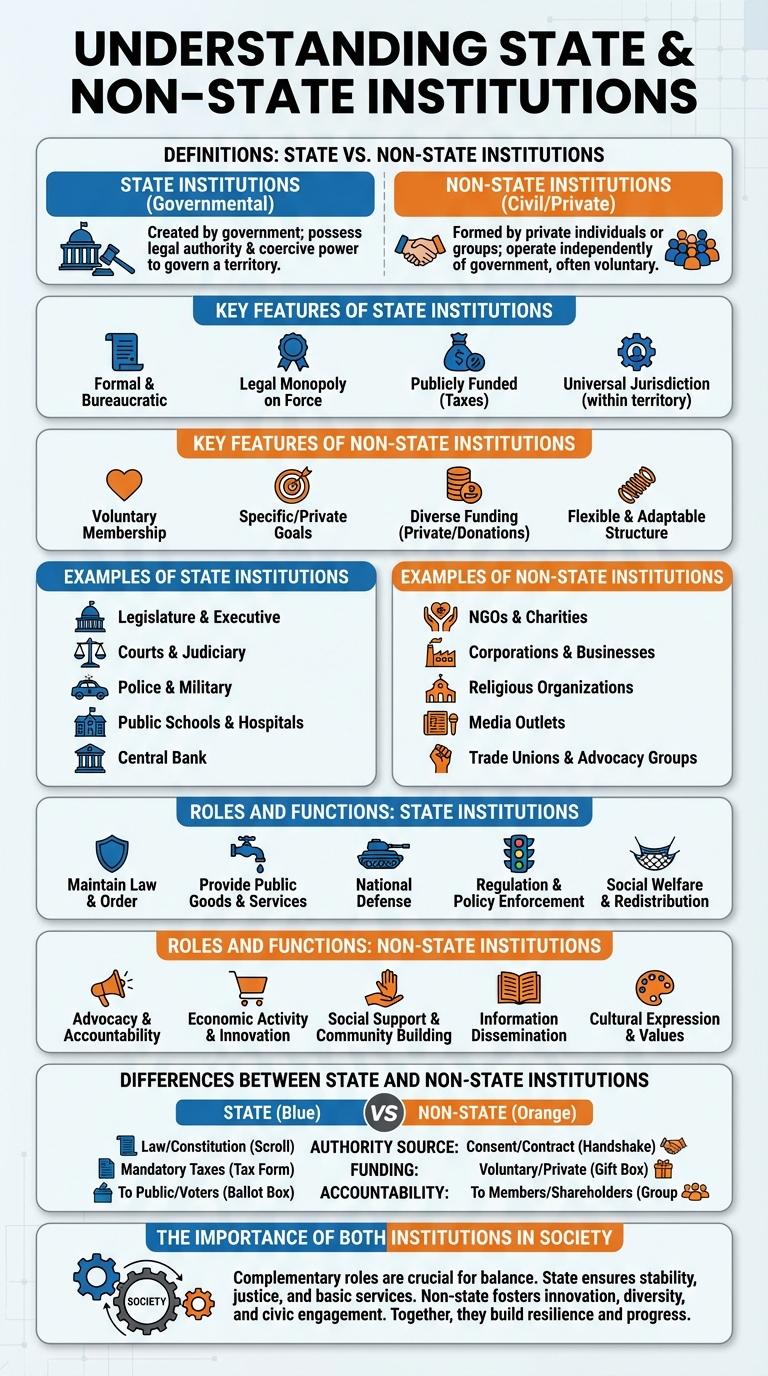
State and non-state institutions play vital roles in shaping governance and public policy. State institutions are government-established bodies responsible for implementing laws and regulations, while non-state institutions include non-governmental organizations, private companies, and civil society groups that influence social and economic development. Understanding the distinct functions and interactions between these entities is essential for grasping the complexity of modern governance systems.
Understanding State and Non-State Institutions
State and non-state institutions play crucial roles in shaping society and governance structures. Understanding their differences and functions helps distinguish their impacts on public and private sectors.
- State Institutions - Organizations established and governed by the government responsible for public administration and policy enforcement.
- Non-State Institutions - Independent entities such as NGOs, private companies, and community groups operating outside direct government control.
- Roles and Responsibilities - State institutions provide public services and maintain law, while non-state institutions often address social needs and advocate for change.
Recognizing the complementary functions of state and non-state institutions enhances collaborative development and governance.
Definitions: State vs. Non-State Institutions
State institutions are government-established organizations responsible for implementing laws, policies, and public services within a defined territory. They hold official authority and legitimacy granted by the constitution or legal framework of a country.
Non-state institutions operate independently of direct government control and include entities such as NGOs, private companies, religious groups, and community organizations. These institutions influence society through advocacy, service delivery, or cultural activities without formal governmental authority.
Key Features of State Institutions
What defines state institutions in governance? State institutions are established and operated by the government to implement laws and public policies. They have legal authority and responsibility over a specific territory and population.
How do state institutions differ from non-state institutions? State institutions possess sovereign powers granted by the constitution, while non-state institutions operate independently without governmental authority. State entities include branches like the judiciary, legislature, and executive bodies.
What are the key functions of state institutions? State institutions enforce laws, maintain public order, and provide essential services such as education, healthcare, and infrastructure. Their actions are backed by legal frameworks and official mandates.
Why is accountability important for state institutions? Accountability ensures transparency and public trust by holding state bodies responsible for their actions. Mechanisms include audits, judicial reviews, and parliamentary oversight.
What role do non-state institutions play in society? Non-state institutions such as NGOs, private companies, and community organizations support social, economic, and cultural activities without sovereign authority. They complement state functions and influence public policy indirectly.
Key Features of Non-State Institutions
Non-state institutions play a crucial role in governance and social services outside government control. They operate independently, focusing on community needs and specialized functions.
- Autonomy - Non-state institutions function independently from government authorities.
- Flexibility - They adapt quickly to social changes and community demands.
- Specialization - These institutions often address specific sectors like education, health, or advocacy.
- Funding Sources - Primarily funded through donations, grants, or private investments rather than tax revenue.
- Civic Engagement - Encourage community participation and volunteerism to support their missions.
Examples of State Institutions
State institutions are organizations established and funded by the government to implement public policies and provide essential services. They operate within a legal framework defined by the state to maintain order and support society.
Examples of state institutions include the judiciary, which interprets and enforces laws; law enforcement agencies responsible for public safety; and public schools that offer education to all citizens. Other examples are government ministries that manage various sectors such as health and finance, and legislative bodies that create laws. These institutions play a crucial role in governance and societal development.
Examples of Non-State Institutions
| State Institutions | Non-State Institutions |
|---|---|
| Government Agencies | Non-Governmental Organizations (NGOs) |
| Public Schools | Religious Organizations |
| Judicial Courts | Private Corporations |
| Law Enforcement | Trade Unions |
| Military | Community-Based Organizations |
Roles and Functions: State Institutions
State institutions play a crucial role in maintaining law and order, ensuring public safety, and implementing government policies. These institutions are responsible for governance, regulation, and providing essential public services such as education, healthcare, and infrastructure development. By upholding citizens' rights and enforcing legal frameworks, state institutions contribute to social stability and national development.
Roles and Functions: Non-State Institutions
Non-state institutions play a crucial role in shaping society by providing services and advocating for various groups. These organizations operate independently from government control but significantly influence social, economic, and political landscapes.
- Advocacy and Representation - Non-state institutions represent the interests of specific communities or causes to influence public policy and social change.
- Service Provision - Many non-state institutions deliver essential services such as education, healthcare, and humanitarian aid to support underserved populations.
- Community Building - These institutions foster social cohesion by organizing networks, cultural activities, and support systems within communities.
Differences Between State and Non-State Institutions
State institutions are government-run organizations funded by public resources to provide services and enforce laws. Non-state institutions operate independently from government control, relying on private funding or community support.
State institutions have formal authority and legal power granted by the government to implement policies. Non-state institutions often focus on specialized areas such as education, healthcare, or advocacy without direct government intervention.