
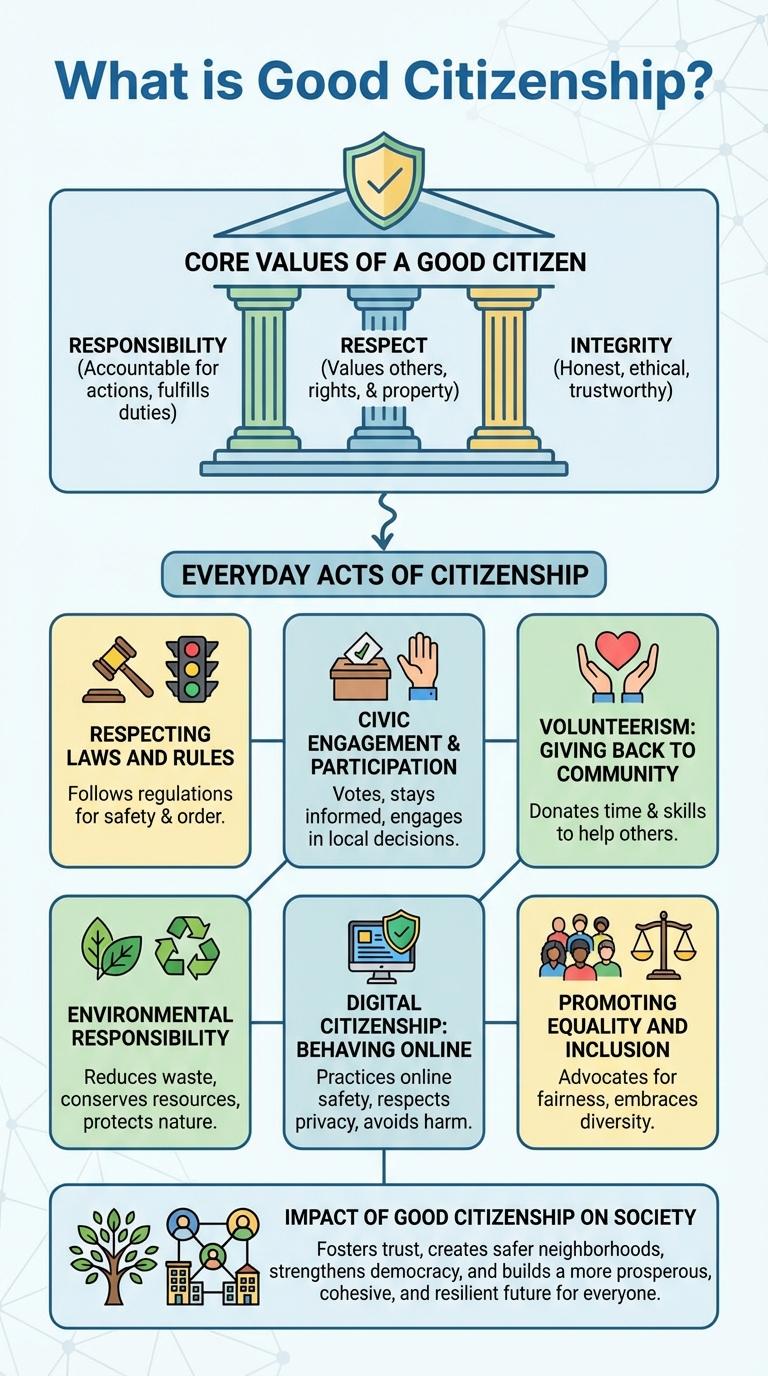
Good citizenship involves actively participating in your community and respecting others' rights and responsibilities. Being a good citizen means contributing positively through volunteering, following laws, and promoting kindness and fairness. This infographic highlights essential qualities and actions that define responsible and engaged citizenship.
What is Good Citizenship?
Good citizenship means actively participating in the community and respecting the rights and responsibilities that come with being a member of society. It involves following laws, voting in elections, and helping to improve the community through volunteer work. Practicing good citizenship strengthens social bonds and promotes a safe, fair, and inclusive environment for everyone.
Core Values of a Good Citizen
Good citizenship is grounded in values that promote community well-being and respect for others. Understanding these core values helps individuals contribute positively to society.
- Respect - Valuing others' rights and beliefs fosters harmony within a diverse community.
- Responsibility - Taking accountability for actions ensures trust and reliability in society.
- Participation - Engaging in civic activities strengthens democratic processes and community development.
- Justice - Upholding fairness and equality protects the rights of all citizens.
- Compassion - Showing empathy and support nurtures a caring and inclusive environment.
Everyday Acts of Citizenship
Good citizenship involves simple, everyday actions that contribute positively to the community. Small acts of kindness and responsibility build a stronger society.
Everyday citizenship includes respecting laws, volunteering time, and helping neighbors. Voting in local elections shows commitment to democratic processes. Practicing environmental care preserves resources for future generations.
Respecting Laws and Rules
Good citizenship involves understanding and respecting laws and rules that maintain order and safety in society. Following these regulations helps build trust and harmony among community members.
Respecting laws promotes fairness and protects individual rights, ensuring everyone can enjoy a secure environment. Being a responsible citizen means abiding by rules and encouraging others to do the same.
Civic Engagement & Participation
Civic engagement is the active participation of individuals in the political and community life of their society. This includes voting, volunteering, and attending public meetings to influence decisions that affect the community.
Participation in civic activities strengthens democracy by ensuring diverse voices are heard and considered. Informed and engaged citizens contribute to the development of policies that address local needs and promote social well-being.
Volunteerism: Giving Back to Community
What is volunteerism and why is it important for good citizenship?
Volunteerism involves giving your time and skills to help others and improve your community without expecting payment. It strengthens social bonds and creates a positive impact on society.
How does volunteerism benefit local communities?
Volunteers support essential services, such as education, healthcare, and environmental conservation. Their efforts increase community resources and foster a culture of cooperation.
Who can participate in volunteer activities?
People of all ages and backgrounds can engage in volunteerism, contributing their unique talents. Inclusive participation enhances diversity and solidarity within the community.
What are some common volunteer opportunities?
Typical volunteer roles include tutoring, food bank assistance, park clean-ups, and organizing local events. These activities address various community needs effectively.
How does volunteerism influence personal growth?
Volunteering builds skills like leadership, communication, and empathy. It also promotes a sense of fulfillment and civic responsibility among participants.
Environmental Responsibility
Good citizenship involves actively caring for the environment to ensure a sustainable future. Environmental responsibility means making choices that reduce harm and promote the health of our planet.
- Reduce Waste - Minimize the use of disposable items and recycle materials whenever possible.
- Conserve Energy - Use energy-efficient appliances and switch off lights and devices when not in use.
- Protect Natural Resources - Support conservation efforts and avoid practices that deplete water, soil, and air quality.
Being environmentally responsible helps build healthier communities and preserves resources for future generations.
Digital Citizenship: Behaving Online
Good digital citizenship involves respecting others and protecting personal information while using the internet. Behaving online means avoiding cyberbullying, sharing accurate information, and practicing kindness in all digital interactions. Maintaining privacy settings and reporting harmful content ensures a safe and positive online environment for everyone.
Promoting Equality and Inclusion
| Aspect | Details |
|---|---|
| Definition | Good citizenship involves actively supporting equality and fostering an inclusive environment for all individuals regardless of background. |
| Promoting Equality | Encouraging fair treatment, equal opportunities in education, work, and community participation without discrimination. |
| Inclusion Actions | Welcoming diverse cultures, accessible facilities, and listening to underrepresented voices in decision-making processes. |
| Benefits | Stronger communities, reduced social disparities, enhanced cooperation, and greater social harmony. |
| Examples | Supporting anti-discrimination laws, participating in diversity training, volunteering for inclusive groups and events. |