
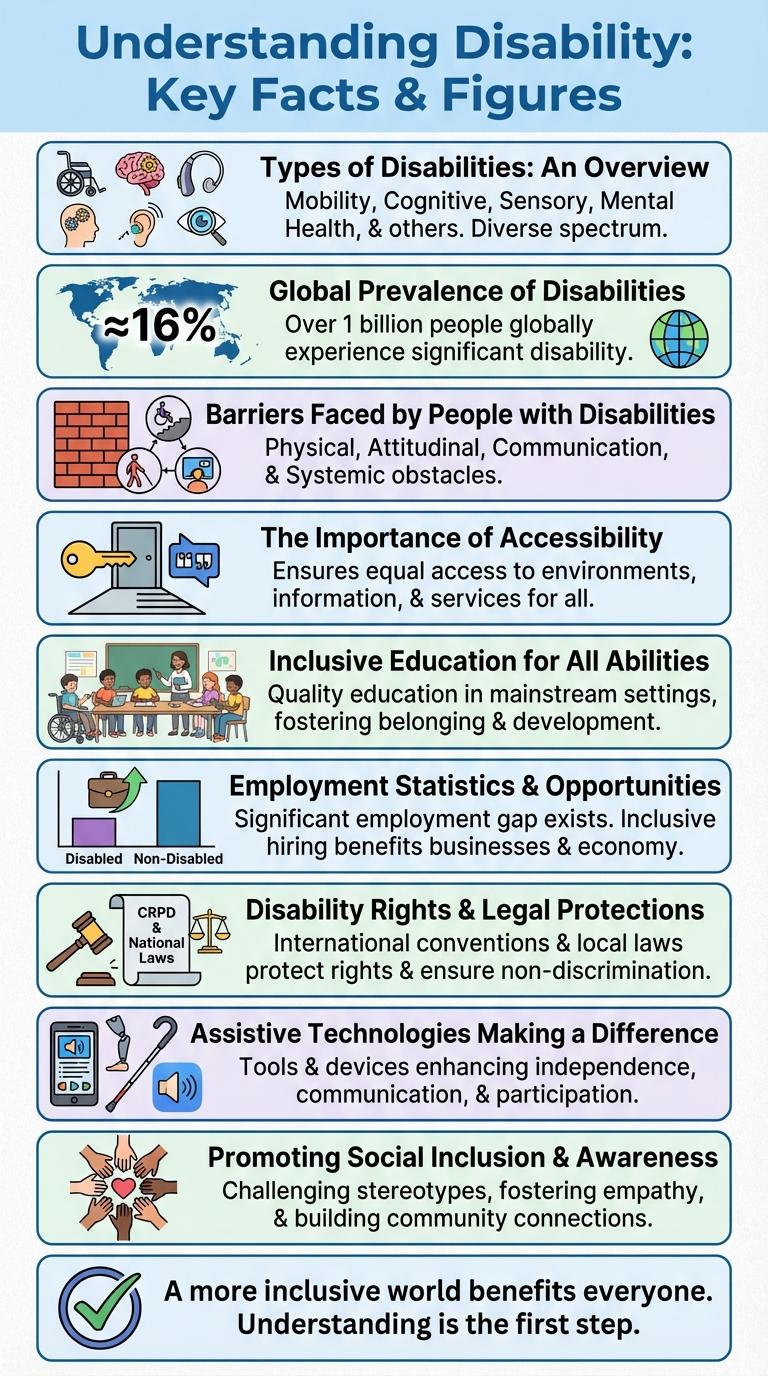
Visualizing the diverse experiences of people with disabilities highlights their challenges and achievements. Infographics effectively communicate vital statistics, promote awareness, and foster inclusion. This visual approach bridges information gaps and encourages empathy within society.
Understanding Disability: Key Facts & Figures
Approximately 1 billion people worldwide experience some form of disability, representing about 15% of the global population. Disabilities vary widely, including physical, sensory, intellectual, and mental health conditions. Understanding key statistics helps promote inclusion and accessibility for people with disabilities in society.
Types of Disabilities: An Overview
What are the main types of disabilities affecting people worldwide? Disabilities can be categorized into physical, sensory, intellectual, and mental health disabilities. Each type presents unique challenges that impact daily living and accessibility needs.
How do physical disabilities differ from sensory disabilities? Physical disabilities involve impairments that limit mobility or physical capacity. Sensory disabilities affect one or more senses, such as vision or hearing.
What defines intellectual disabilities among individuals? Intellectual disabilities are characterized by limitations in cognitive functioning and adaptive behaviors. These disabilities affect learning, reasoning, and problem-solving skills.
What role does mental health disability play in overall disability statistics? Mental health disabilities include conditions that affect mood, thinking, and behavior. They require awareness and support similar to other types of disabilities.
Why is it important to understand the variety of disabilities? Understanding different disability types promotes inclusivity and helps tailor support services. Awareness influences policy making and fosters an accessible environment for all.
Global Prevalence of Disabilities
Approximately 15% of the world's population lives with some form of disability, equating to over 1 billion people globally. The prevalence varies by region, with higher rates observed in low-income countries due to limited access to healthcare and rehabilitation services. Disabilities encompass a broad range of conditions, including physical, sensory, intellectual, and mental health impairments.
Barriers Faced by People with Disabilities
People with disabilities encounter numerous obstacles that limit their full participation in society. Understanding these barriers is crucial for creating inclusive environments.
- Physical Barriers - Inaccessible buildings and transportation systems restrict mobility and access to essential services.
- Communication Barriers - Lack of accessible formats and assistive technologies hinders effective information exchange.
- Social Barriers - Stigma and discrimination lead to exclusion and reduced opportunities in employment and education.
Addressing these barriers requires comprehensive policies and community commitment to ensure equal rights and inclusion.
The Importance of Accessibility
Accessibility is essential for empowering people with disabilities, ensuring equal opportunities in all areas of life. Inclusive design fosters independence, social participation, and improved quality of life.
- Equal Access - Accessibility removes barriers, allowing people with disabilities to access education, employment, and public services.
- Social Inclusion - Accessible environments promote community engagement and reduce social isolation for individuals with disabilities.
- Legal Compliance - Implementing accessibility standards ensures compliance with disability rights laws and promotes fairness.
Inclusive Education for All Abilities
| Statistic | Data |
|---|---|
| Global Percentage of Children with Disabilities Out of School | 50% |
| Benefits of Inclusive Education | Improves academic outcomes, social skills, and self-esteem |
| Percentage of Schools Implementing Inclusive Practices | 30% worldwide |
| Key Barriers to Inclusive Education | Lack of trained teachers, inadequate resources, and stigmatization |
| International Framework Supporting Inclusion | UN Convention on the Rights of Persons with Disabilities (CRPD) |
Employment Statistics & Opportunities
People with disabilities face unique challenges in the workforce, with an employment rate of approximately 21.3% in the United States as of 2022. This rate is significantly lower than the 65.9% employment rate among those without disabilities.
Employment opportunities for people with disabilities have been increasing due to inclusive hiring practices and government incentives. Industries like technology, healthcare, and education show promising growth in hiring individuals with diverse abilities.
Disability Rights & Legal Protections
Disability rights ensure equal opportunities and protection under the law for individuals with disabilities. Legal frameworks safeguard their access to education, employment, and public services.
Key legislation like the Americans with Disabilities Act (ADA) prohibits discrimination based on disability. The Individuals with Disabilities Education Act (IDEA) guarantees free appropriate public education for children with disabilities. Enforcement agencies, such as the Equal Employment Opportunity Commission (EEOC), handle complaints related to disability discrimination.
Assistive Technologies Making a Difference
Assistive technologies empower people with disabilities to overcome daily challenges and enhance independence. These tools transform lives by providing greater access to education, employment, and social interaction.
Innovations in assistive devices continue to improve accessibility and quality of life worldwide.
- Screen Readers - Software that converts text to speech, enabling visually impaired individuals to access digital content.
- Hearing Aids - Devices that amplify sound, improving communication for people with hearing loss.
- Mobility Aids - Equipment like wheelchairs and prosthetics that enhance physical movement and independence.