
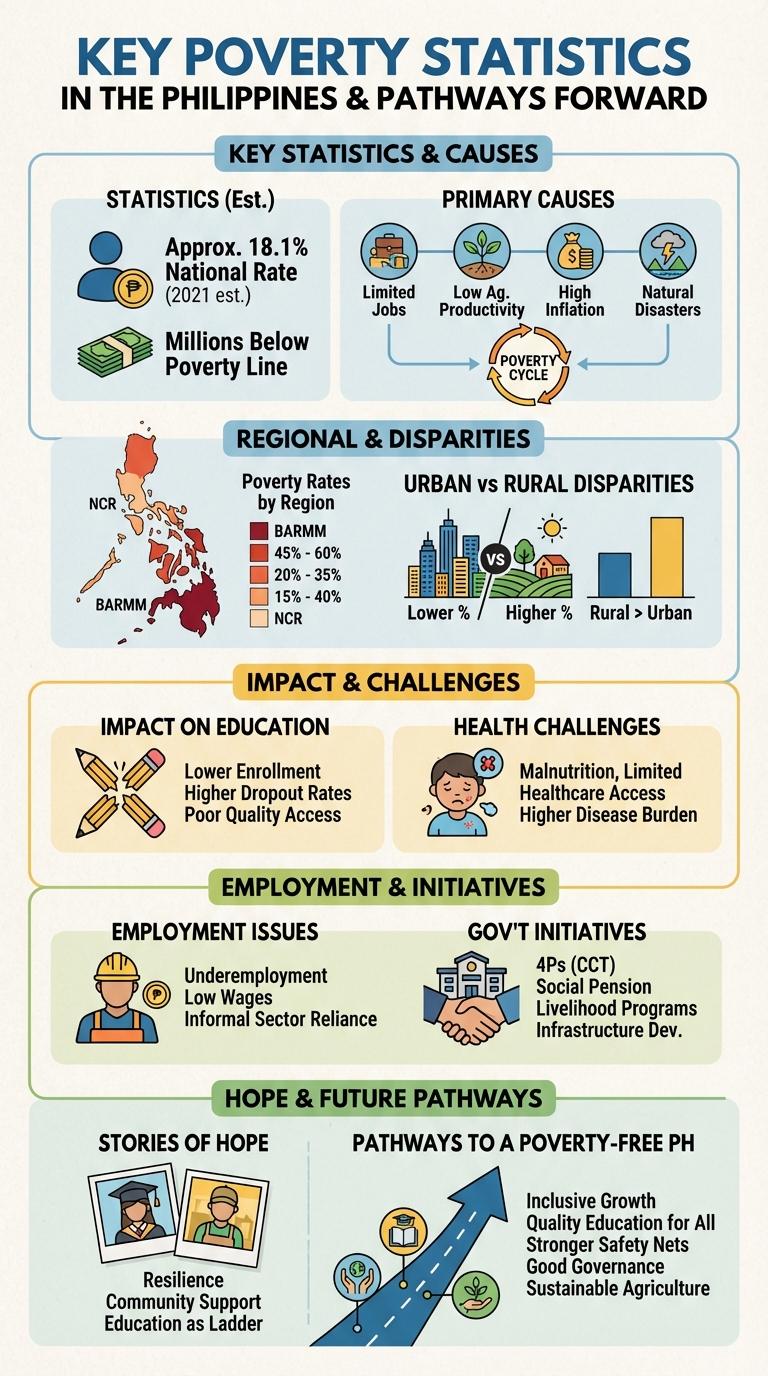
Poverty in the Philippines affects millions, impacting access to basic needs such as food, education, and healthcare. The infographic illustrates key statistics on income disparity, unemployment rates, and regional poverty levels. Understanding these data points is essential for addressing the root causes and creating effective social programs.
Key Poverty Statistics in the Philippines
Poverty remains a significant challenge in the Philippines, affecting millions of Filipinos nationwide. Recent data highlights persistent income disparities and access limitations to basic services.
The Philippine Statistics Authority reported a poverty incidence of 18.1% in 2022, equivalent to approximately 19 million people living below the poverty line. Rural areas experience higher poverty rates at 22.7% compared to 12.5% in urban settings. Major factors contributing to poverty include unemployment, limited educational opportunities, and inadequate infrastructure.
Causes of Poverty in the Philippines
Poverty in the Philippines remains a persistent challenge, influenced by a variety of social, economic, and environmental factors. Understanding the root causes is essential for effective policy-making and sustainable development.
- Unemployment and Underemployment - Many Filipinos face job scarcity or work in low-paying, unstable positions, limiting income growth and quality of life.
- Limited Access to Education - Lack of affordable, quality education restricts skills development, reducing employment opportunities and social mobility.
- Inequitable Land Distribution - Concentration of land ownership among a few hinders agricultural productivity and keeps rural communities impoverished.
- Rapid Population Growth - High population increase strains resources, infrastructure, and social services, exacerbating poverty conditions.
- Natural Disasters and Climate Vulnerability - Frequent typhoons and floods disrupt livelihoods, destroy properties, and undermine economic stability in vulnerable areas.
Poverty Rates by Region
The Philippines faces significant regional disparities in poverty rates, highlighting the need for targeted economic policies. Understanding these variations is crucial for effective poverty alleviation efforts.
- Caraga Region - Records one of the highest poverty rates, reflecting challenges in infrastructure and access to services.
- Bangsamoro Autonomous Region - Experiences substantial poverty due to ongoing conflicts and limited economic opportunities.
- National Capital Region (NCR) - Shows the lowest poverty rates, driven by urbanization and diverse employment prospects.
Regional poverty data guides policymakers to allocate resources efficiently and implement tailored development programs.
Urban vs Rural Poverty Disparities
Poverty in the Philippines presents significant disparities between urban and rural areas. Rural poverty remains more severe, with limited access to essential services and economic opportunities compared to urban centers.
In urban areas, poverty often manifests through overcrowded informal settlements and underemployment. Rural poverty is driven by poor infrastructure, agricultural dependency, and lower income levels, affecting nearly 40% of the rural population.
Impact of Poverty on Education
Poverty in the Philippines significantly hinders access to quality education, limiting resources for students and schools. Many children from low-income families face dropout risks due to financial constraints and the need to work. This educational gap perpetuates the cycle of poverty, reducing opportunities for socio-economic advancement.
Health Challenges Linked to Poverty
Poverty in the Philippines significantly impacts health outcomes, with malnutrition and inadequate access to healthcare being prevalent. Many impoverished communities face higher rates of infectious diseases and chronic conditions due to limited medical resources. Poor sanitation and lack of clean water further exacerbate health challenges among the population living below the poverty line.
Employment and Livelihood Issues
Poverty in the Philippines remains a critical challenge, with employment and livelihood issues as key contributors. Many Filipinos face underemployment and lack access to stable, well-paying jobs.
Informal sector workers make up a significant portion of the labor force but often lack job security and social protection. Efforts to improve job quality and create sustainable livelihoods are essential to reducing poverty nationwide.
Government Initiatives to Reduce Poverty
What steps has the Philippine government taken to alleviate poverty? The government has implemented various programs targeting education, health, and livelihood to improve living standards across the country. Key initiatives focus on social protection, inclusive growth, and infrastructure development to address root causes of poverty.
| Initiative | Description |
|---|---|
| Conditional Cash Transfer Program (Pantawid Pamilya) | Provides cash grants to poor families, conditional on children's school attendance and health check-ups. |
| Philippine Health Insurance Corporation (PhilHealth) | Ensures affordable healthcare access for indigent families to reduce financial burden caused by medical expenses. |
| Comprehensive Agrarian Reform Program | Supports farmers with land redistribution and assistance to increase agricultural productivity and income. |
| Universal Access to Quality Tertiary Education | Allows poor youth to pursue college education free of charge, promoting human capital development. |
| Build, Build, Build Infrastructure Program | Invests in infrastructure projects to generate jobs and improve connectivity in rural and urban poor areas. |
Stories of Hope: Rising Above Poverty
Poverty in the Philippines remains a critical challenge, yet inspiring stories of resilience and hope emerge every day. These stories highlight how individuals and communities are rising above hardship through determination and support systems.
- Community Farming Initiatives - Small groups in rural areas have increased crop yields by adopting sustainable farming practices, leading to improved food security and income.
- Microfinance Success Stories - Access to micro-loans has empowered low-income families to start small businesses and escape poverty cycles.
- Educational Upliftment - Scholarships and community learning programs help youth from impoverished backgrounds achieve academic success and better job prospects.